
FFS PP Bags: Optimizing Food Packaging with Bajaj Masterbatch
Introduction
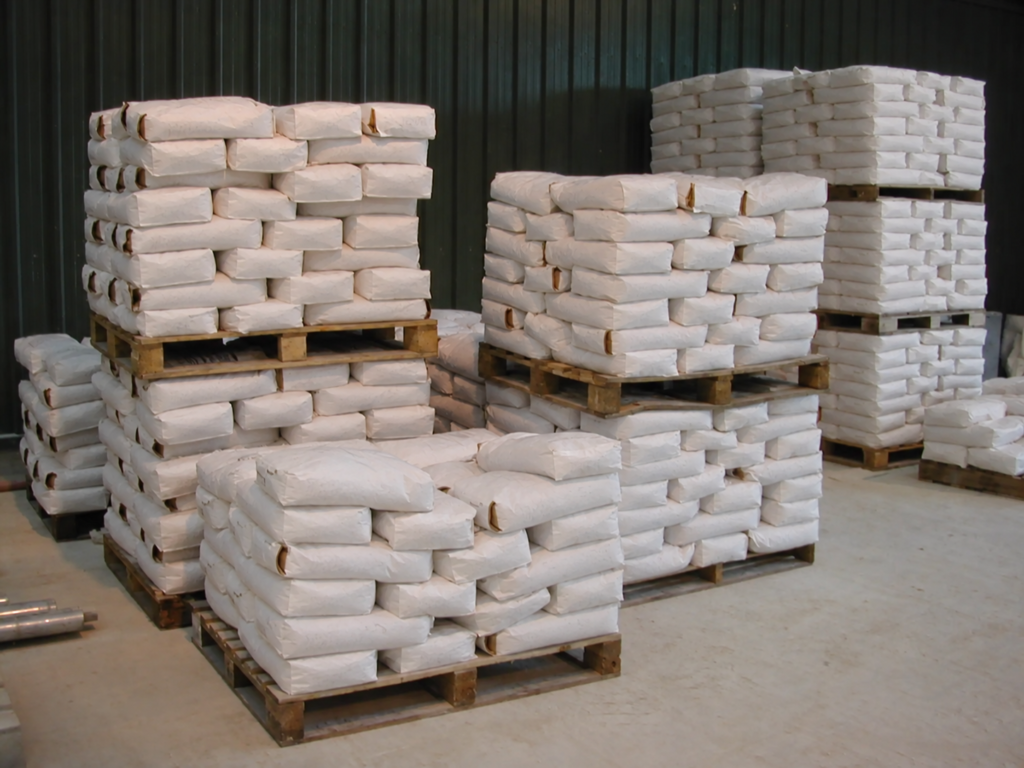
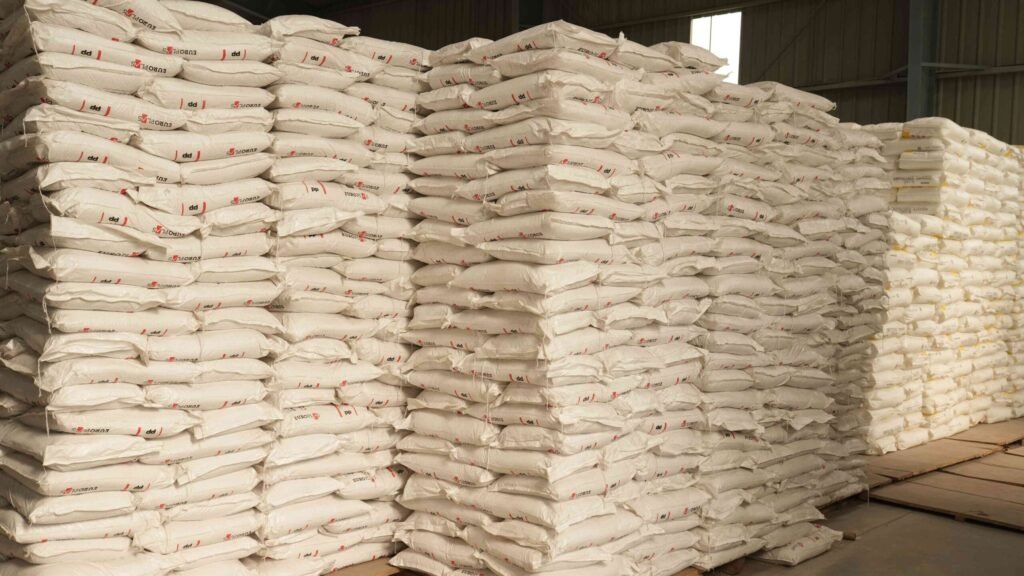
Food packaging must perform throughout filling, storage and transportation. For dry products such as rice, grains, flour, sugar and animal feed, the bag needs sufficient strength, a suitable protective structure and reliable closure.
Form-Fill-Seal, or FFS, integrates bag formation, product filling and sealing into an automated packaging process. In woven polypropylene packaging, successful performance depends on the complete construction: the stretched PP tapes, woven fabric, coating or laminate, sealable surfaces and any internal liner.
Bajaj Masterbatch supplies colour, filler and additive solutions for woven-sack and raffia applications. These solutions help manufacturers develop the appearance, processing behaviour and functional properties required for the finished packaging.
Start with the Product, Then Design the Bag
Different foods place different demands on packaging. A bag suitable for dry grain may require changes before it can protect fine flour or an oil-rich feed formulation.
| Packaging application | Main requirement | Bag-design priority |
|---|---|---|
| Rice, cereals and pulses | Strength during lifting, stacking and transport | Tape strength, fabric construction and durable closures |
| Flour and powdered ingredients | Control of powder leakage and moisture exposure | Suitable coating or liner, sealed joints and controlled venting |
| Sugar and dry granular foods | Protection against humidity and handling damage | Moisture-resistant construction and dependable seals |
| Poultry and livestock feed | Resistance to abrasion and product loss | Strong woven fabric, suitable barrier layers and secure closure |
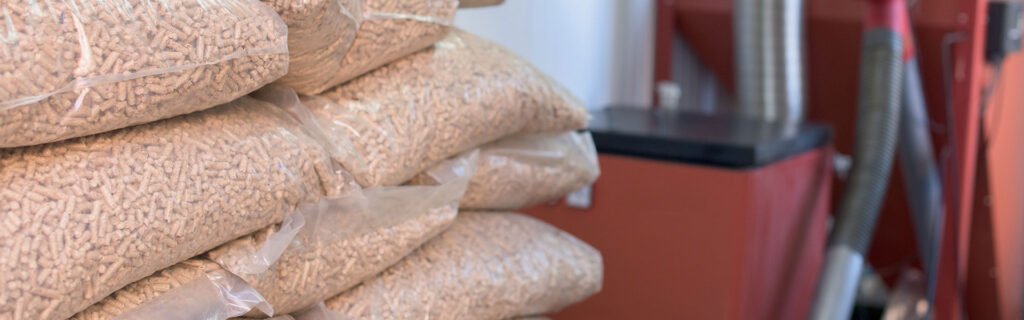
| Aquaculture pellets | Protection against moisture and puncture | Liner or coating selection, puncture resistance and seal integrity |
| Premixes and sensitive additives | Protection tailored to light, moisture or oxygen sensitivity | Validated barrier structure and compatible food- or feed-contact materials |
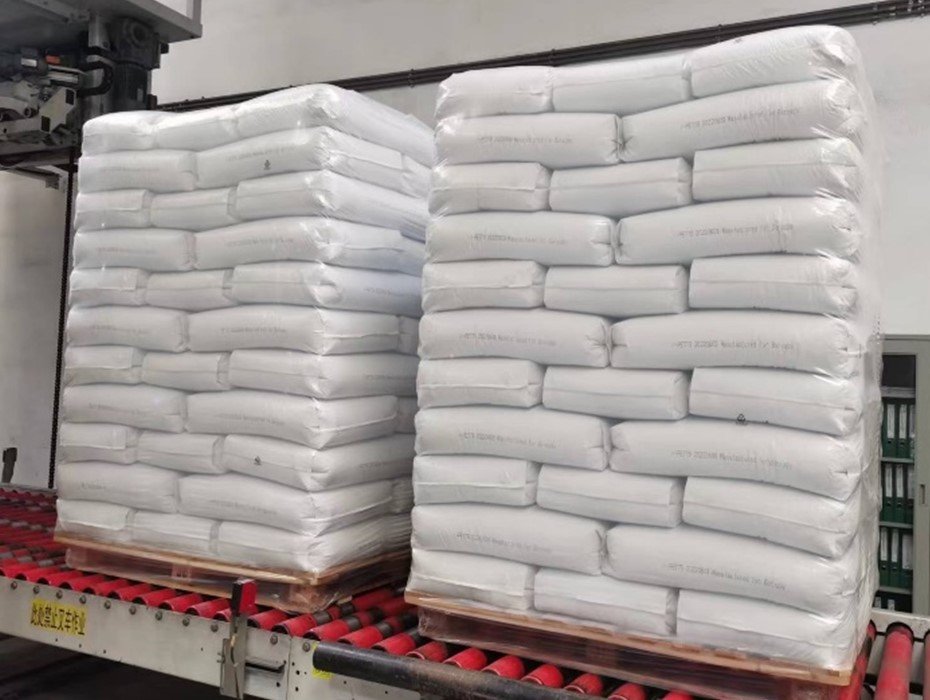
Woven PP packaging is widely used for dry bulk products, including rice, flour, cereals and animal feed. The specific bag format must also suit the filling equipment.
Key Features and Their Practical Benefits
Strength from Oriented PP Tapes
The woven structure distributes loads through interlaced tapes. Tape dimensions, stretching conditions, weave density and formulation influence the finished bag’s mechanical performance.
Benefit:
A correctly designed fabric helps bags withstand routine handling and reduces the risk of tearing or product spillage.
Protective Coatings and Liners
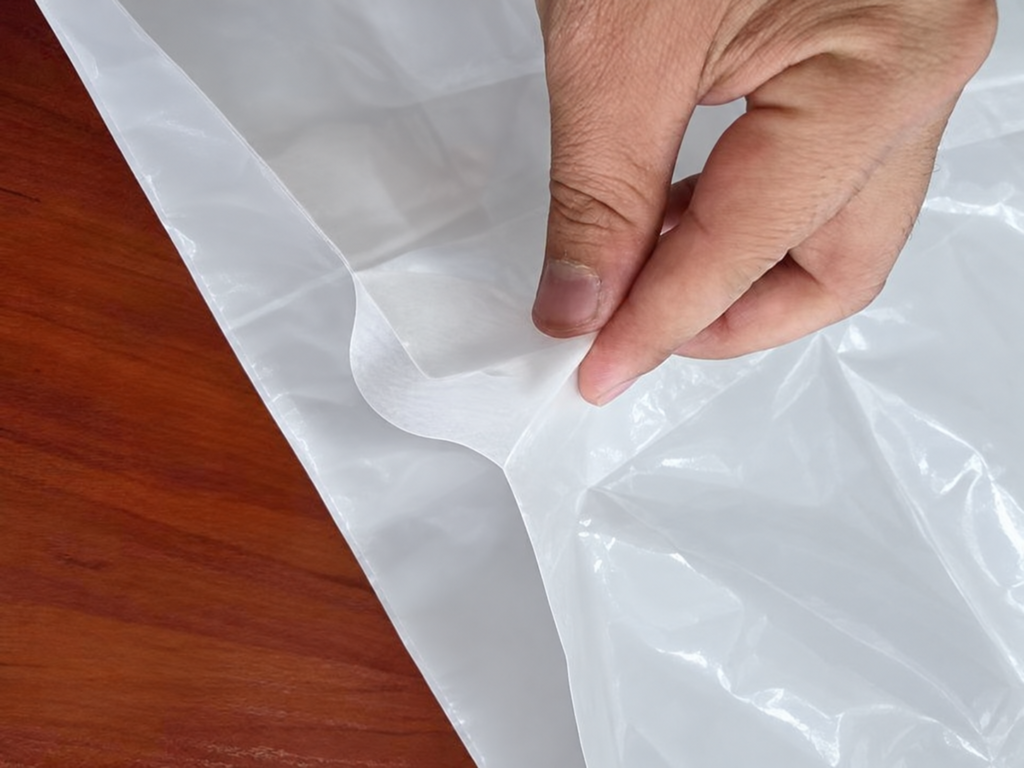
Uncoated woven fabric contains openings between its tapes. A coating, laminate or internal liner can provide additional protection where the contents require it.
Benefit:
The appropriate construction helps control moisture exposure and leakage of fine particles. Barrier performance must be measured on the complete package.
Consistent Appearance
White and colour masterbatches help manufacturers produce the required background shade, opacity and visual identity.
Benefit:
Consistent colour supports recognisable packaging and a uniform appearance across production batches.
Controlled Surface Friction
The bag must move through guides and conveyors while remaining stable during pallet stacking. These requirements call for a defined coefficient of friction rather than simply the lowest possible friction.
Benefit:
Balanced surface properties support machine handling and reduce the likelihood of bags sliding during storage.
Compatibility with Automated Closing
FFS packaging needs a construction that can form a dependable closure within the machine’s operating conditions.
Benefit:
Appropriate sealable layers and controlled sealing conditions support consistent pack quality.
Which Bajaj Masterbatches Can Be Used?
Masterbatch selection should follow the function of each layer. A grade intended for PP raffia tapes should not automatically be used in a PE liner or a thin sealant layer.
The following are candidate product families for formulation trials, rather than a fixed recipe for every FFS bag.
| Bajaj masterbatch family | Potential placement | Purpose and selection consideration |
|---|---|---|
| TiO₂ White Masterbatch | PP tapes or compatible coating/film layer | Provides whiteness and opacity; select dispersion and loading for the layer thickness |
| Colour Masterbatch | Tapes or compatible outer layer | Provides identification colours and shade consistency; confirm heat stability and contact suitability |
| Raffia Filler Masterbatch | PP tape formulation | Supports cost and stiffness optimisation; validate tape tenacity, elongation and bag strength |
| Plast Modifier | PP tapes, where grade suitability is confirmed | Consider where flexibility or toughness needs improvement; evaluate drawability and mechanical properties |
| Plast UV | Exposed tapes or outer layer | Helps protect the polymer against sunlight-related degradation where outdoor exposure is expected |
| Plast Antioxidant | Suitable polymer layers | Supports polymer stability during processing; does not act as an antioxidant for the packaged food |
| Plast Slip | Compatible film, liner or selected surface layer | Adjusts friction for handling; excessive slip can affect stacking and converting |
| Plast Antislip | Suitable outer surface formulation | Consider where greater stacking friction is required |
| Plast AntiBlock | Film or liner layers | Helps reduce adhesion between contacting film surfaces and supports opening |
| Plast AntiStat | Suitable film or surface layer | Consider for reducing static accumulation and dust attraction; verify electrical performance |
| Plast PPA | Compatible extrusion layer | Consider where extrusion defects or die buildup require a processing-aid solution |
| Plast Desiccant | Selected moisture-affected processing formulations | Controls residual moisture during processing; it does not replace the bag’s moisture barrier |
Bajaj lists these colour, mineral-filled and additive solution families within its product range. Exact grade availability, carrier compatibility and application suitability should be confirmed before production.
Not every bag needs every additive. Confirm the selected grade’s carrier compatibility, recommended dosage and food-contact suitability before production. Validate the formulation for printing, lamination, sealing, surface friction and finished-bag strength.
Application Process: From PP Resin to a Filled Bag
1. Define the Packaging Specification
Begin with product weight, particle size, storage conditions, transport route and filling-machine requirements. Identify whether the food needs protection against moisture, light or oxygen.
2. Blend Resin and Masterbatches
Meter PP resin and the selected masterbatches consistently. Confirm material cleanliness, compatibility and recommended handling conditions.
3. Extrude and Orient the Tapes
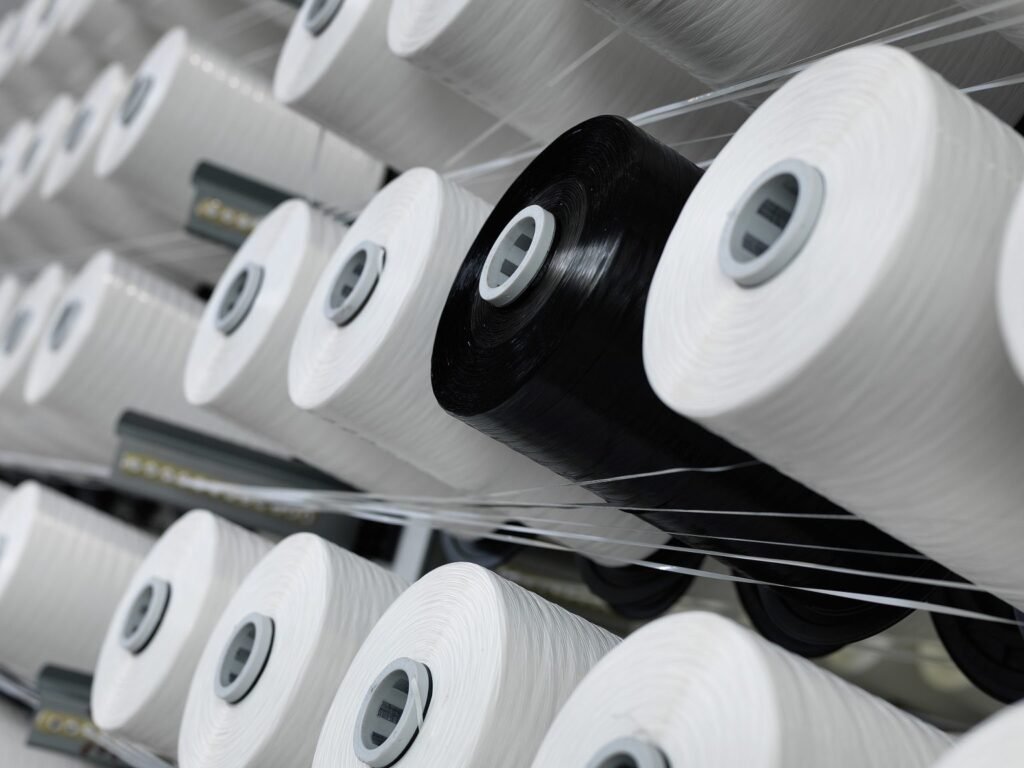
The blend is extruded into film, cooled and slit into tapes. Stretching develops orientation, followed by heat setting and winding.
Control tape dimensions, draw conditions and tensile properties. These influence both weaving performance and finished-bag strength. Bajaj’s raffia application information describes extrusion, slitting, stretching, annealing and winding as core production stages.
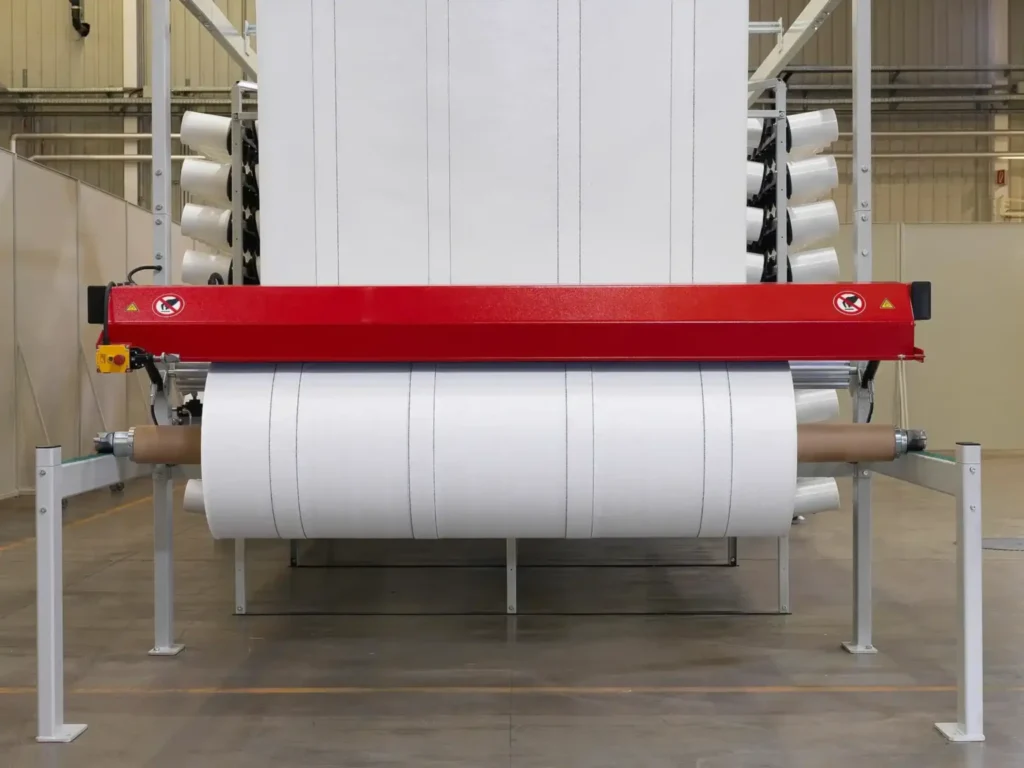
4. Weave the Fabric
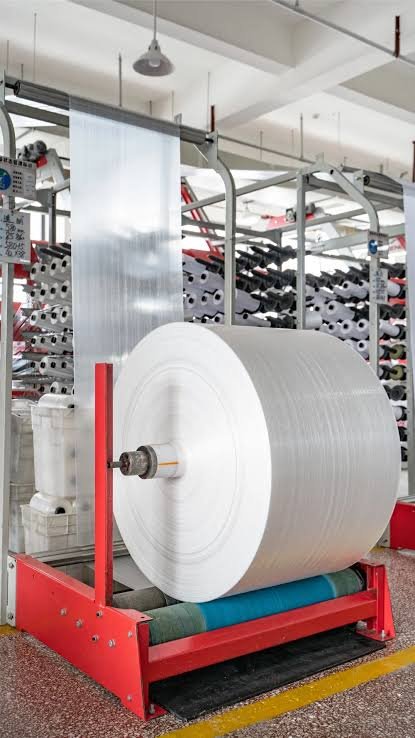
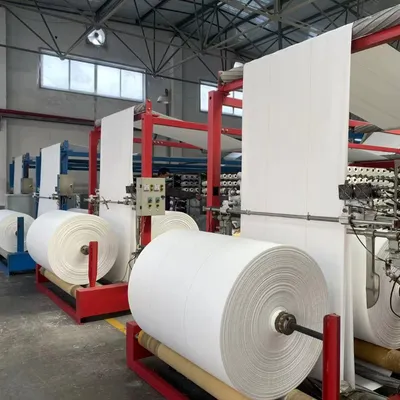
The tapes are woven into the specified fabric. Fabric weight, weave density and dimensional consistency must meet the packaging design.
5. Add the Required Protective Structure
Apply coating, lamination or a liner according to the product’s protection needs. Any printing treatment and adhesive system must be compatible with the selected formulation.
6. Prepare the FFS-Compatible Material
Produce the rollstock or tubular structure required by the filling system. Control dimensions, winding quality, surface friction and sealable areas.
7. Form, Fill and Seal
The packaging line forms the bag, doses the product and completes the closure. Sealing temperature, pressure, dwell time and cleanliness of the sealing area determine closure quality.
8. Verify the Finished Pack
Check filled bags under conditions representative of actual distribution. Useful assessments include drop testing, seal strength, leakage, puncture resistance and pallet stability.
Food Protection Requires More Than an Additive
Several distinctions are important when designing FFS PP food packaging:
White opacity is not an oxygen barrier
TiO₂ can reduce light transmission, but oxygen-sensitive products may need a separate barrier structure.
UV stabilisation protects the plastic.
It does not establish a food shelf-life claim.
Micro-perforation changes barrier performance
Venting may help release trapped air, but it can also allow moisture or contaminants to enter.
Antistatic performance does not prove explosion safety.
Dust hazards require assessment of the complete filling operation.
Antimicrobial additives require specific evaluation.
They should not be included as a routine food-contact recommendation without relevant documentation and testing.
Food-contact suitability is grade-specific.
Resin, pigments, additives, inks, adhesives and liners must all be appropriate for the intended use.
A bag should be described as hermetically sealed only when its complete construction and closures have been validated for that claim.
How to Choose Dosage and Bag Specifications
There is no universal masterbatch dosage, bag thickness or fabric weight for all FFS PP food bags. The selection depends on:
Required load capacity and handling conditions.
Resin grade and masterbatch active content.
Tape thickness, stretch ratio and weaving conditions.
Coating, laminate and liner construction.
Sealing requirements and operating speed.
Storage duration and environmental exposure.
Applicable food- or feed-contact requirements.
For woven constructions, specify fabric weight, tape properties and coating or liner thickness separately. A single overall thickness value does not fully describe the bag.
Start with the selected grade’s technical recommendation, then validate the formulation on the production line and in finished-pack tests.
Cost Efficiency and Recycling Considerations
Cost optimisation should focus on the cost per acceptable filled bag. Material savings offer limited value if they increase tape breakage, seal failures, leakage or transport damage.
A balanced formulation can help manufacturers explore lower material consumption, stable processing and consistent appearance while maintaining the required performance.
For recycling, consider the complete structure. PP tapes combined with compatible PP-based layers can support a mono-material design. PE liners, foil, adhesives and other components change the recycling assessment. Actual recyclability also depends on collection, sorting and available recycling facilities.
Bajaj Masterbatch: Supporting Better Packaging Formulations
Bajaj Masterbatch helps woven-packaging manufacturers select solutions for colour, opacity, processing stability, surface performance and exposure protection.
The strongest formulation begins with a clear application requirement and ends with a validated bag. By matching the masterbatch to the polymer layer and checking the complete package, manufacturers can develop FFS PP bags that support dependable filling, attractive presentation and secure product handling.
Bajaj Masterbatch — Quality That Builds Trust.
About Bajaj Plast Pvt. Ltd.
Bajaj Plast Pvt. Ltd. is a leading manufacturer of high-quality masterbatch solutions, dedicated to innovation, sustainability, and excellence. With a strong focus on customer satisfaction and cutting-edge technology, we are committed to delivering superior products that meet the evolving needs of the polymer industry.

 BAJAJ PLAST PVT LTD