
Filler Masterbatch.
Feel the quality. Love the cost.
What is Filler Masterbatch?
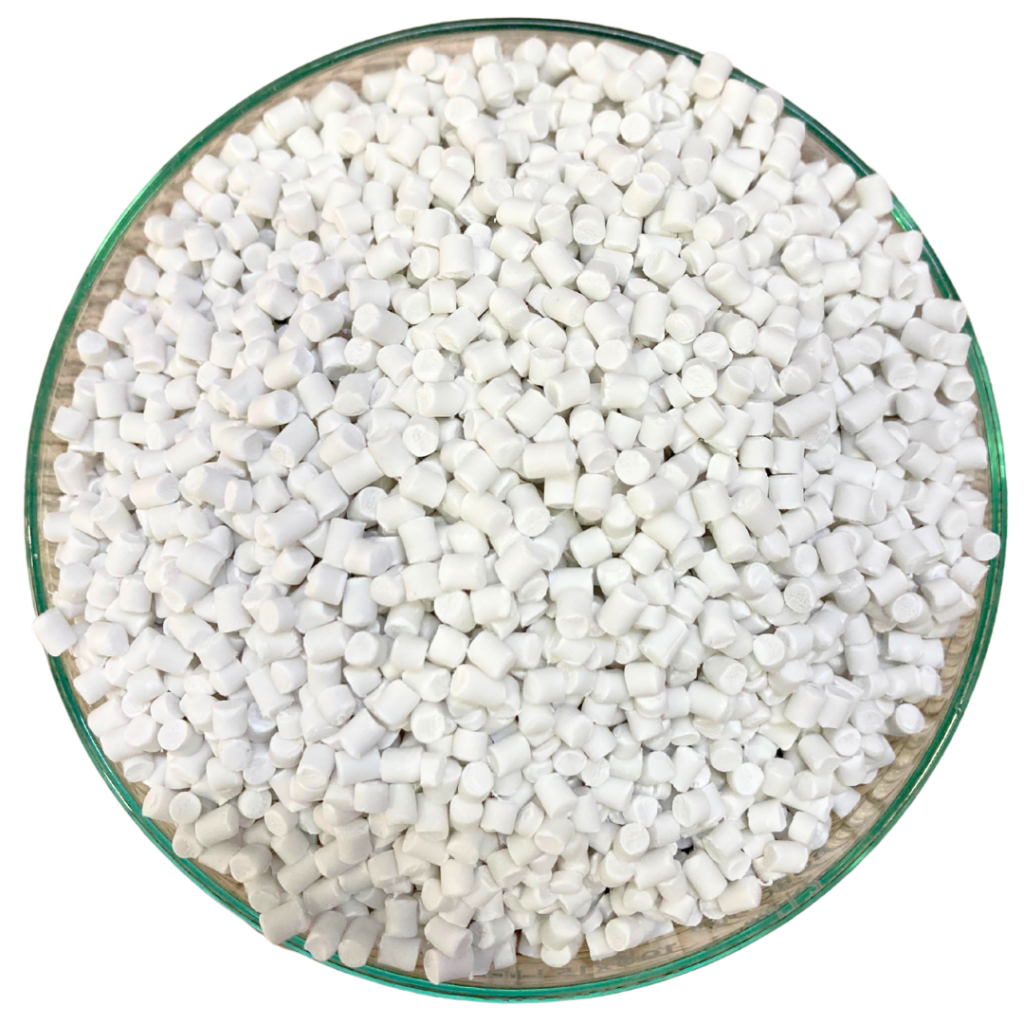
A filler masterbatch is a precision-engineered polymer concentrate built around ultra-fine, surface-treated calcium carbonate (CaCO₃) or talc, carried in a virgin resin base — PP, LDPE, LLDPE or HDPE — together with a tuned additive package.
Instead of adding raw mineral powder directly into a production line, the mineral is pre-dispersed at controlled particle size inside a carrier resin. This lets converters substitute part of the virgin polymer in a formulation without losing the mechanical, optical or thermal behaviour the final part needs.
Bajaj Plast formulates its filler range across four carrier chemistries — PP Base, PE Base, HDPE Base and Talc Base — so the mineral loading, particle coating and additive system can be matched precisely to the resin and the process it will run through.
One group. Four plants. One quality standard.
Bajaj Plast operates as part of an integrated masterbatch group headquartered in Nagpur, Maharashtra — with dedicated R&D and quality departments validating every batch before it leaves the plant.

Bajaj Plast Pvt Ltd
Bajaj Polyblends Pvt Ltd
Bajaj Masterbatches Pvt Ltd
Bajaj Superpack India Ltd
Engineered into every pellet.
Across the PLAST STIFF, PLAST FAB, PLAST FILL, PLAST WHITE, PLAST MODIFIER, PLAST HIGHMIX and PLAST CLEAR ranges, these performance characteristics recur by design.
Anti-fibrillation
Reduces tape splitting during high-speed drawing on woven-sack and raffia lines.
Low powder generation
Controlled particle coating minimises fines shedding during extrusion and winding.
Dimensional stability
Suppresses post-extrusion shrinkage across film, tape and moulded parts.
Increased stiffness
Raises tensile modulus for structural applications like box strapping and injection parts.
Anti-slip surface
Improves handling and stacking friction on finished tapes and sacks.
Even melt flow
Maintains uniform back-pressure through the die for a stable, repeatable process window.
Heat resistance
Retains structural integrity at elevated processing and end-use temperatures.
Whiteness & gloss
Modifier grades lift shine, luster and opacity without additional pigment.
Higher elongation
Improved stretch reduces tape and film breakage under tension.
Throughput gain
Optimised flow behaviour reported to lift machine output by roughly 25–30%.
Nucleating action
Talc-based Plast Clear grades act as a nucleating agent while preserving transparency.
Anti-black defects
Improved film structure with anti-black-speck property in coated laminations.
What it changes on the line.
Every feature above translates into a measurable outcome for the converter — in cost, in consistency, or in output.
Lower resin cost per kilogram
Calibrated CaCO₃/talc loading displaces virgin polymer volume while holding target properties, directly reducing formulation cost.
Consistent dispersion, fewer defects
Uniform particle distribution reduces melt fracture, gels and die-lip build-up across long production runs.
Tighter dimensional tolerances
Controlled shrinkage behaviour keeps injection and blow moulded parts within spec batch after batch.
Higher machine throughput
Smoother melt flow and stable back-pressure allow lines to run faster with fewer stoppages.
Better print and lamination surface
Improved film structure and gloss support cleaner ink lay-down and stronger adhesive bonding.
Application-specific tuning
Independent PP, PE, HDPE and Talc platforms let each grade be optimised for its resin and its end process.
Built-in stability package
Heat stability, UV resistance, light-fastness, environmental stability and food-contact grades are available across the range.
Built to hold up under real conditions.





From raw mineral to finished pellet.
Every batch moves through a controlled sequence designed to lock mineral particles evenly into the carrier resin before a single pellet reaches a customer's hopper.
Mineral micronisation
CaCO₃ or talc is ground to a controlled, ultra-fine particle size distribution suited to the target application.
Surface treatment
Particles are coated to improve compatibility and bonding with the polyolefin carrier during melt mixing.
Precision dosing
Treated mineral, virgin carrier resin and the additive package are metered at exact ratios for the target grade.
Compounding
High-intensity mixing and extrusion disperse the mineral uniformly through the molten resin matrix.
Pelletising & QC
Strands are cut to pellet form, then tested for dispersion, melt flow and mechanical performance before dispatch.
Four carrier platforms. One quality bar.

PP Base Filler
Plast Stiff · Plast Fab · Plast Modifier

PE Base Filler
Plast Fill · Plast White · Plast Modifier LL

HDPE Base Filler
Plast Highmix PRM · Plast Highmix Super
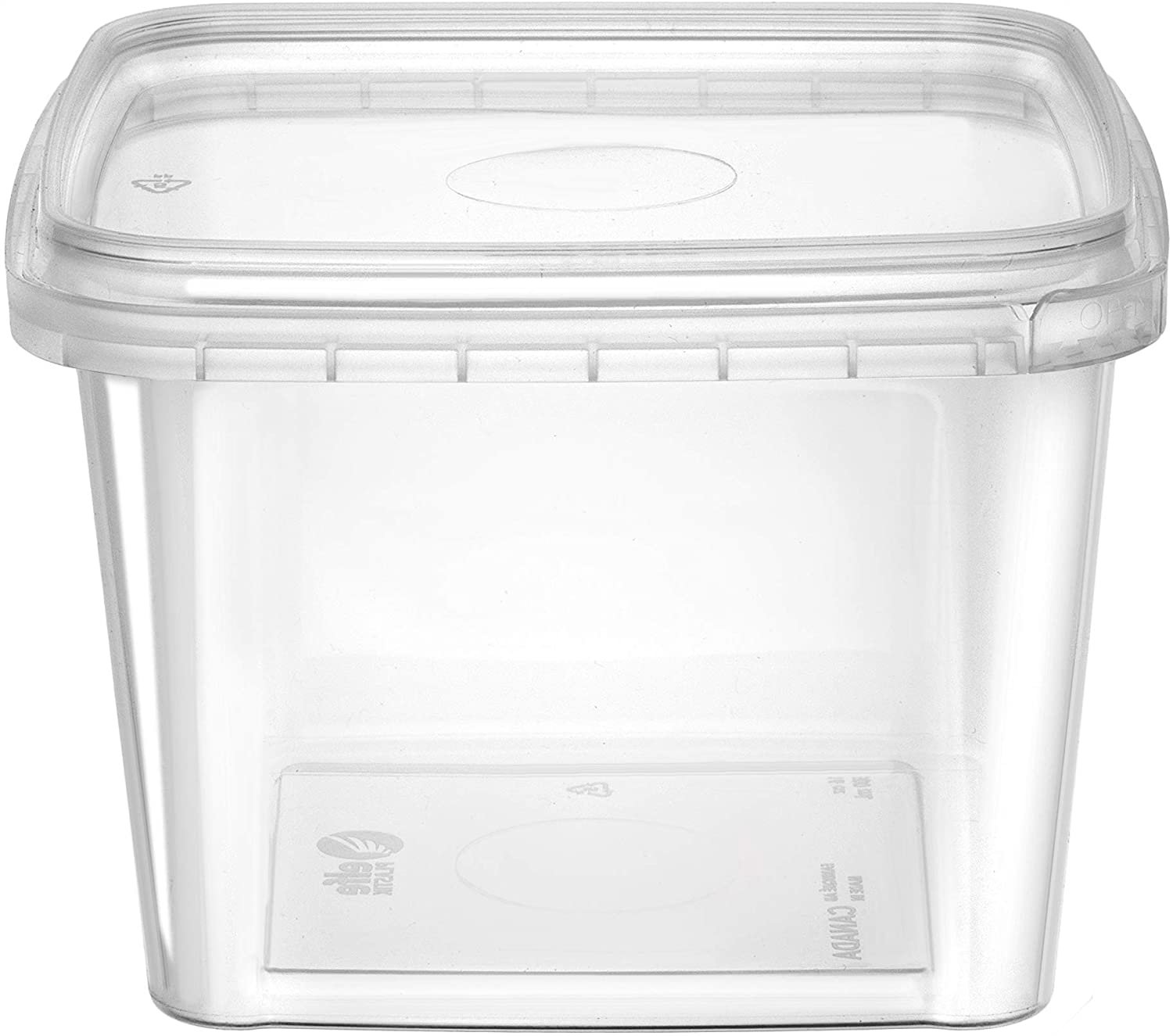
Transparent Filler
Plast Clear ·Plast Crystal ·Plast BA80 ·Plast Clear Film
One masterbatch family. Ten converting processes.
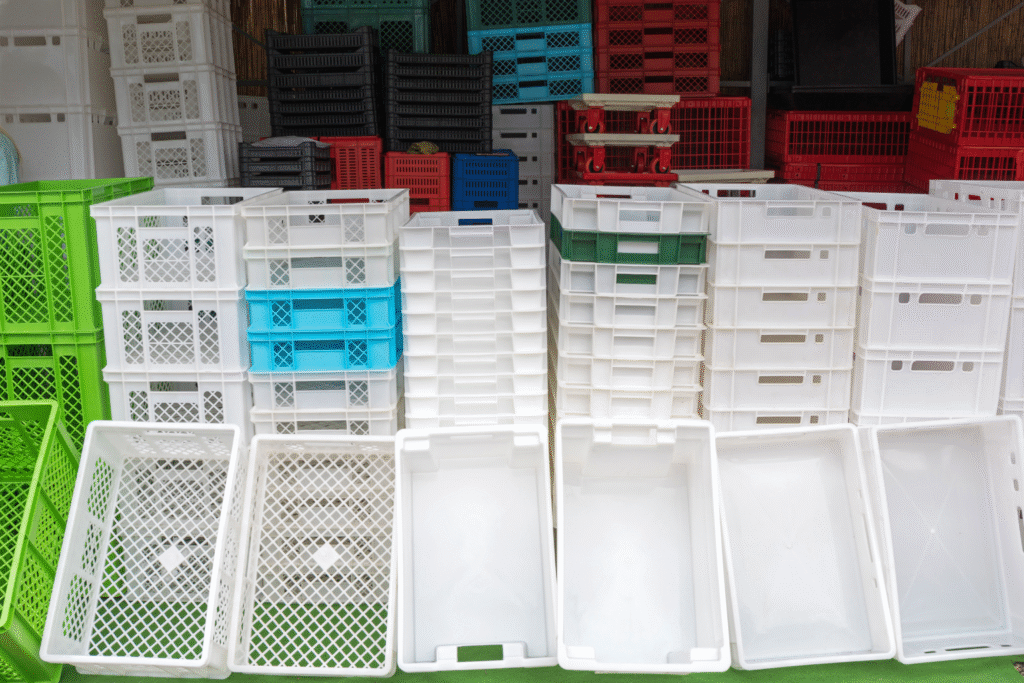
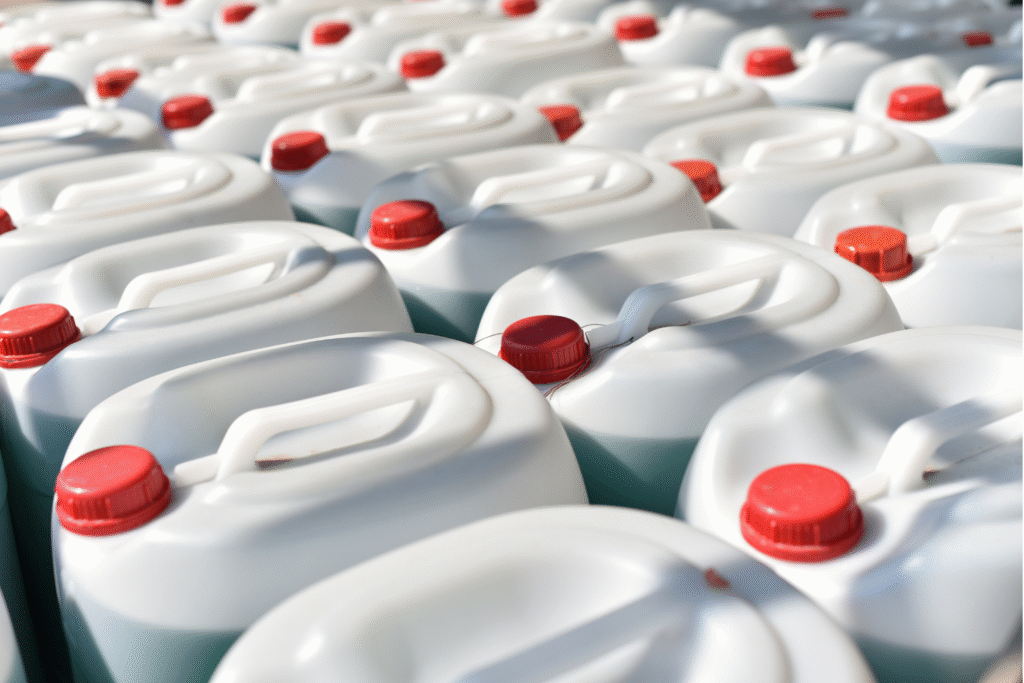
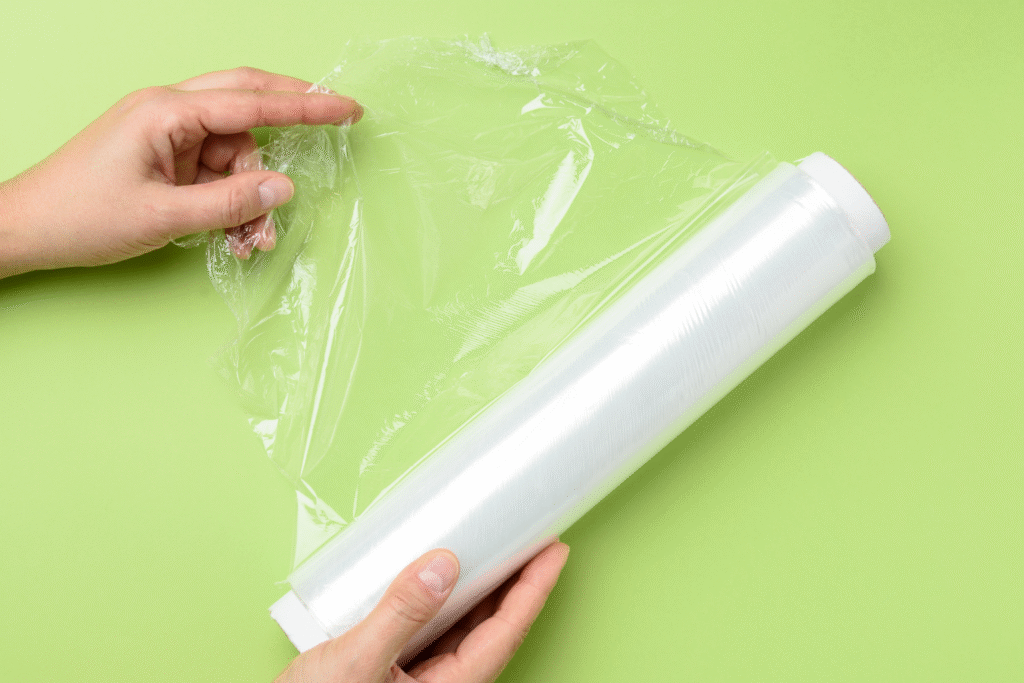
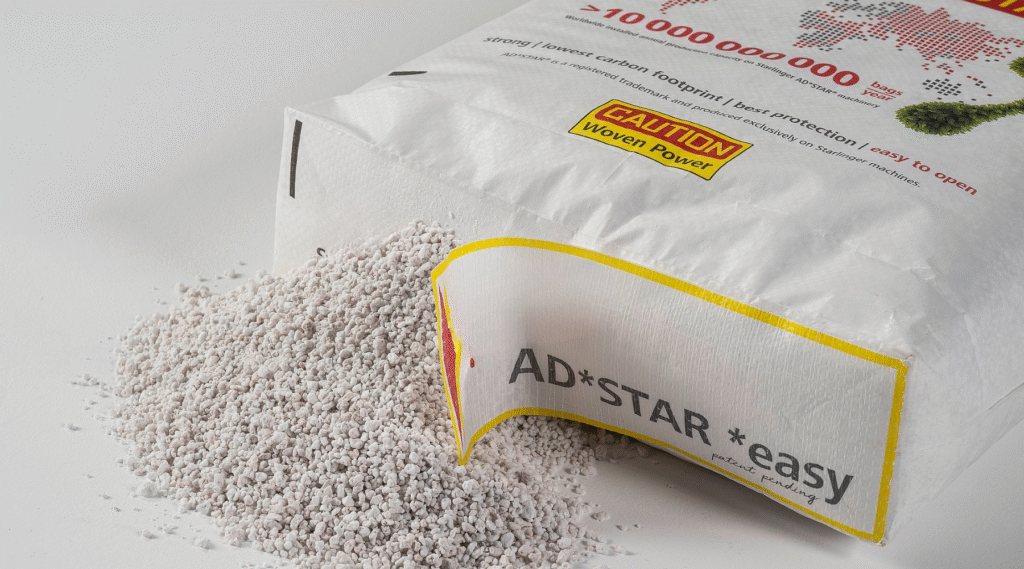
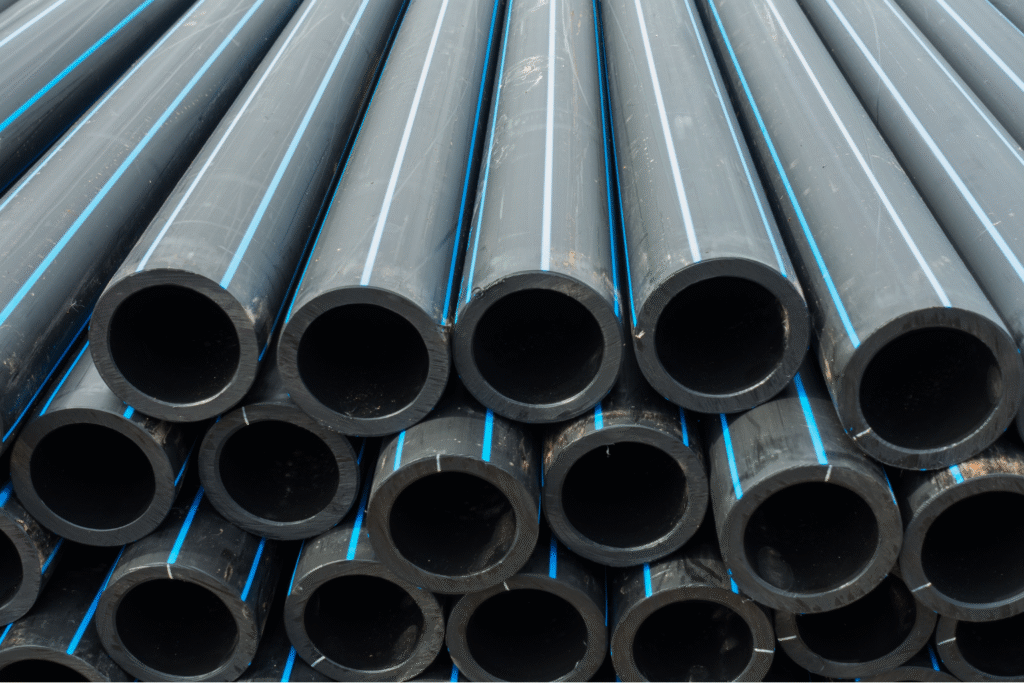
Grades from the filler range are formulated to run across the full breadth of polyolefin conversion — from precision injection parts to heavy-duty bulk packaging.




Feel the quality. Love the cost.
Filler Masterbatch by Bajaj Plast — formulated for consistent dispersion, engineered stability, and a cost curve that works with your process, not against it.
Know More detailed about Bajaj Filler Masterbatch Gardes.
