
Masterbatches for
FIBC Bulk Bags
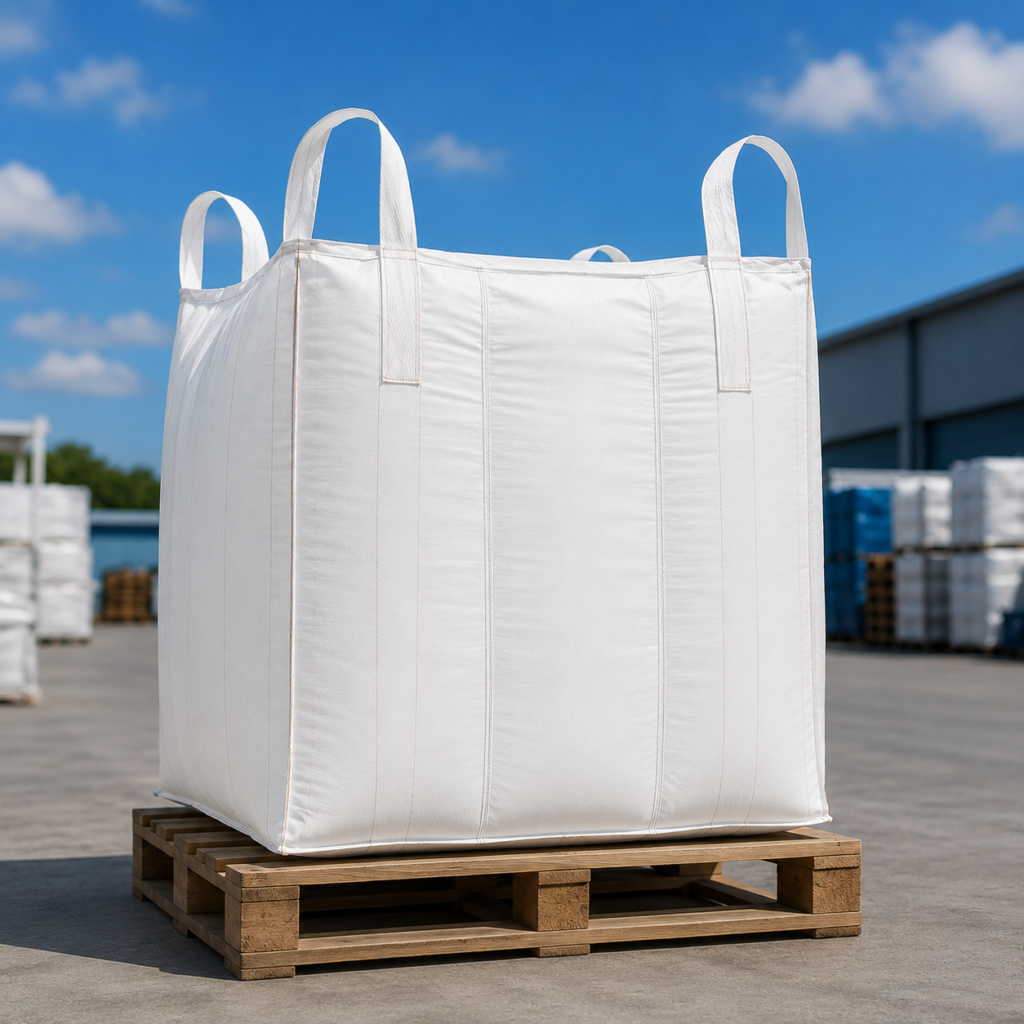
Engineered polypropylene additive masterbatch systems that transform raw PP tape into high-performance Flexible Intermediate Bulk Containers rated for 500–2000 kg SWL under ISO 21898 compliance.
Why Masterbatch is Non-Negotiable in FIBC Manufacturing
Polypropylene homopolymer provides exceptional tensile strength but degrades rapidly under photo-oxidation, static discharge, and tribological stress. Additive masterbatches compensate these fundamental polymer limitations at the molecular level.
Photodegradation Kinetics
UV radiation (290–400 nm) initiates Norrish Type I & II photo-oxidative chain scission in PP. Unstabilized tape loses 30–50% elongation-at-break within 300 hours of xenon arc exposure (ISO 4892-2). HALS-loaded MB intercepts peroxy radical propagation, extending service life 4–6×.
Electrostatic Charge Accumulation
PP's volume resistivity (>10¹⁶ Ω·cm) makes it a perfect triboelectric charge accumulator. During pneumatic filling of fine powders (<150 μm), surface charge densities can reach 10⁻⁴ C/m², generating ignition-capable sparks exceeding 1 mJ threshold for combustible dust clouds.
Thermal-Oxidative Degradation
Extrusion temperatures (220–260°C) and prolonged heat storage trigger peroxide-initiated chain scission. Antioxidant packages (primary + secondary synergy — Irganox/Irgafos chemistry) protect MFI stability, ensuring consistent tape denier (1100–1500 dtex) and tensile uniformity ±5%.
Coefficient of Friction Management
Unmodified woven PP fabric exhibits COF values of 0.4–0.6 (static). In high-speed filling lines running at 2000 bags/hr, this creates bridging, inadequate discharge flow (especially in food powders), and stacking misalignment. Slip MB targets COF 0.15–0.25 through erucamide migration.
Mechanical Integrity Under Dynamic Load
ISO 21898 requires Type A bags to pass 5-drop tests at 1.2 m height with full SWL payload. Without nucleating agents and reinforcement additives, PP crystallinity and spherulite formation create stress concentration sites leading to inter-lamellar delamination and zip failure.
TiO₂ Opacity & Printability
White masterbatch incorporating rutile TiO₂ achieves L* values >95 at 5–8% loading, providing opacity >90% for UV-blocking inner liners and enabling 6-colour flexo-printing registration precision at 40 lpi screen frequency.
Structural Anatomy of a FIBC Bulk Bag
An FIBC is a multi-layer engineered textile system. Each structural component demands specific masterbatch formulation — mismatched additive loading compromises the entire load-bearing matrix.
- Woven Fabric Shell: PP flat tape (width 2.5–5 mm, denier 1100–3600 dtex) woven at 10–14 ends/cm × 10–14 picks/cm. Primary structural member carrying radial and axial loads.
- Liner System: PE or PP film (25–200 μm) laminated or inserted for moisture/chemical barrier. Requires slip and anti-block MB for processability.
- Coating Layer: PP or LDPE extrusion coating (15–30 g/m²) for dust-proofing. Requires adhesion promoter MB for peel strength >2.5 N/cm.
- Lifting Loops: HDPE or PP webbing (rated 5× SWL), woven strap requiring UV + antioxidant package identical to shell fabric.
- Fill/Discharge Spouts: Tubular woven PP attached by lock stitching; requires color coding MB for food/chemical identification compliance.

Types of FIBC Bulk Bags
IEC 61340-4-4 classifies FIBC bags by their electrostatic dissipation properties and construction type. Each classification mandates a distinct masterbatch additive package.
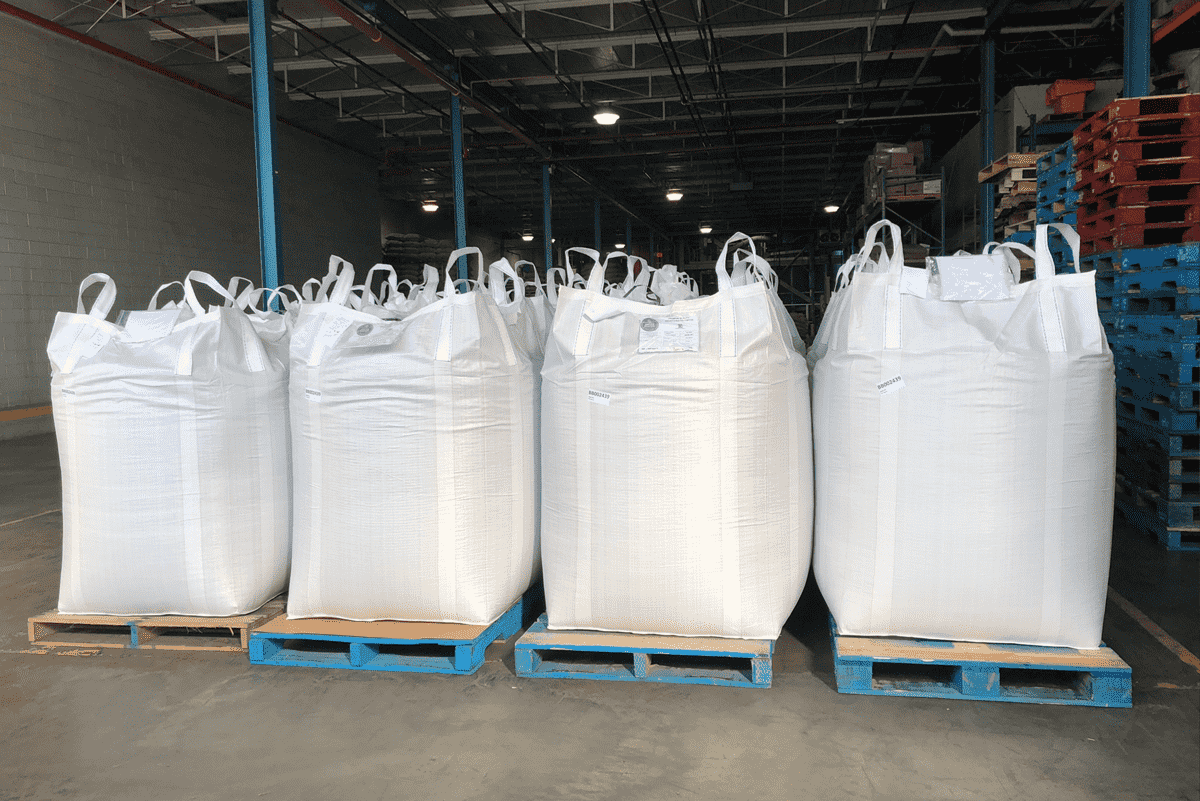
Standard woven PP without antistatic properties. No electrostatic protection. Surface resistivity >10¹¹ Ω/sq. Used for non-flammable, non-combustible bulk solids.
UV + White MB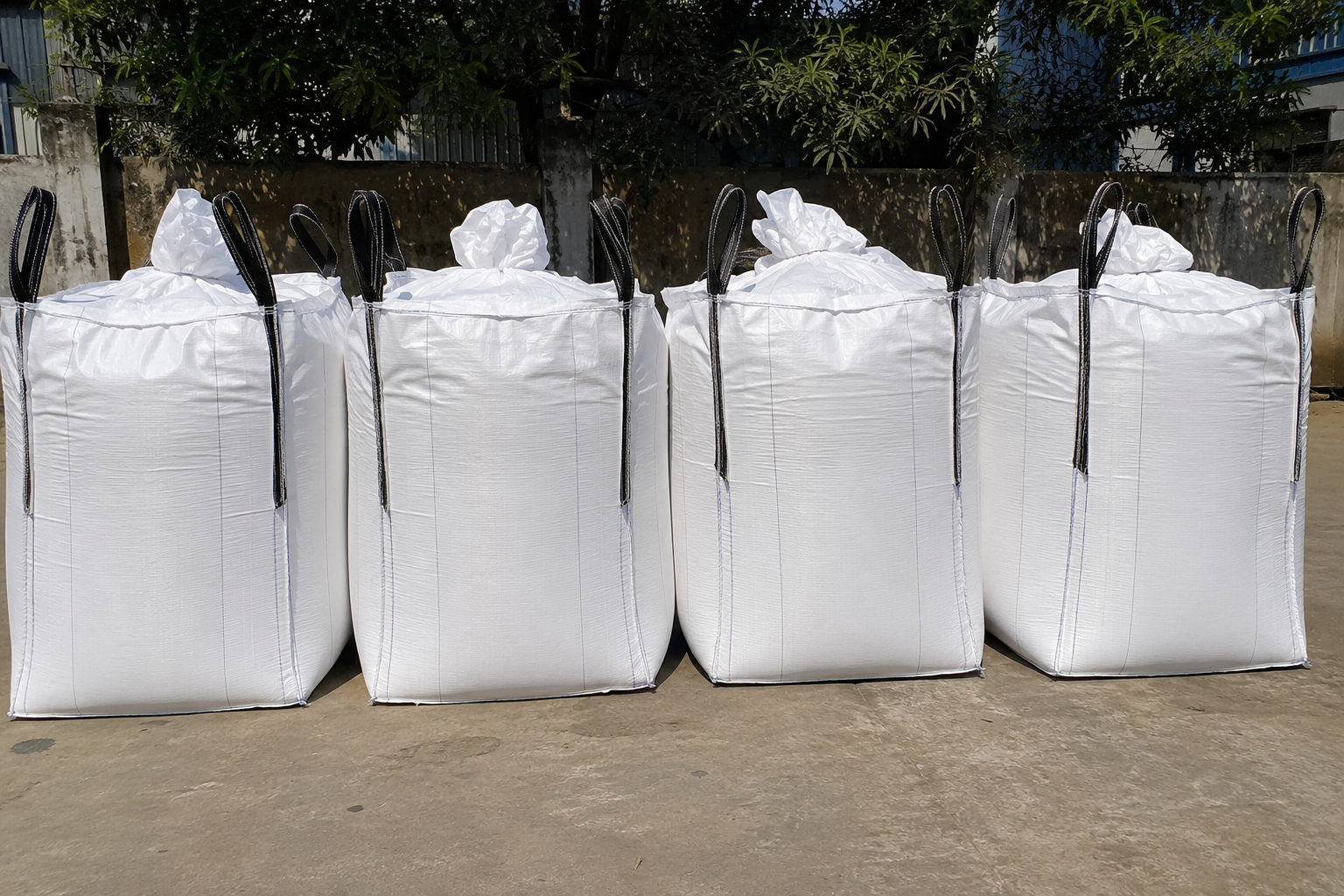
Similar to Type A but fabricated from materials with breakdown voltage <4 kV. Prevents propagating brush discharges. No groundable antistatic requirement. Used with flammable solvents.
UV + Slip MB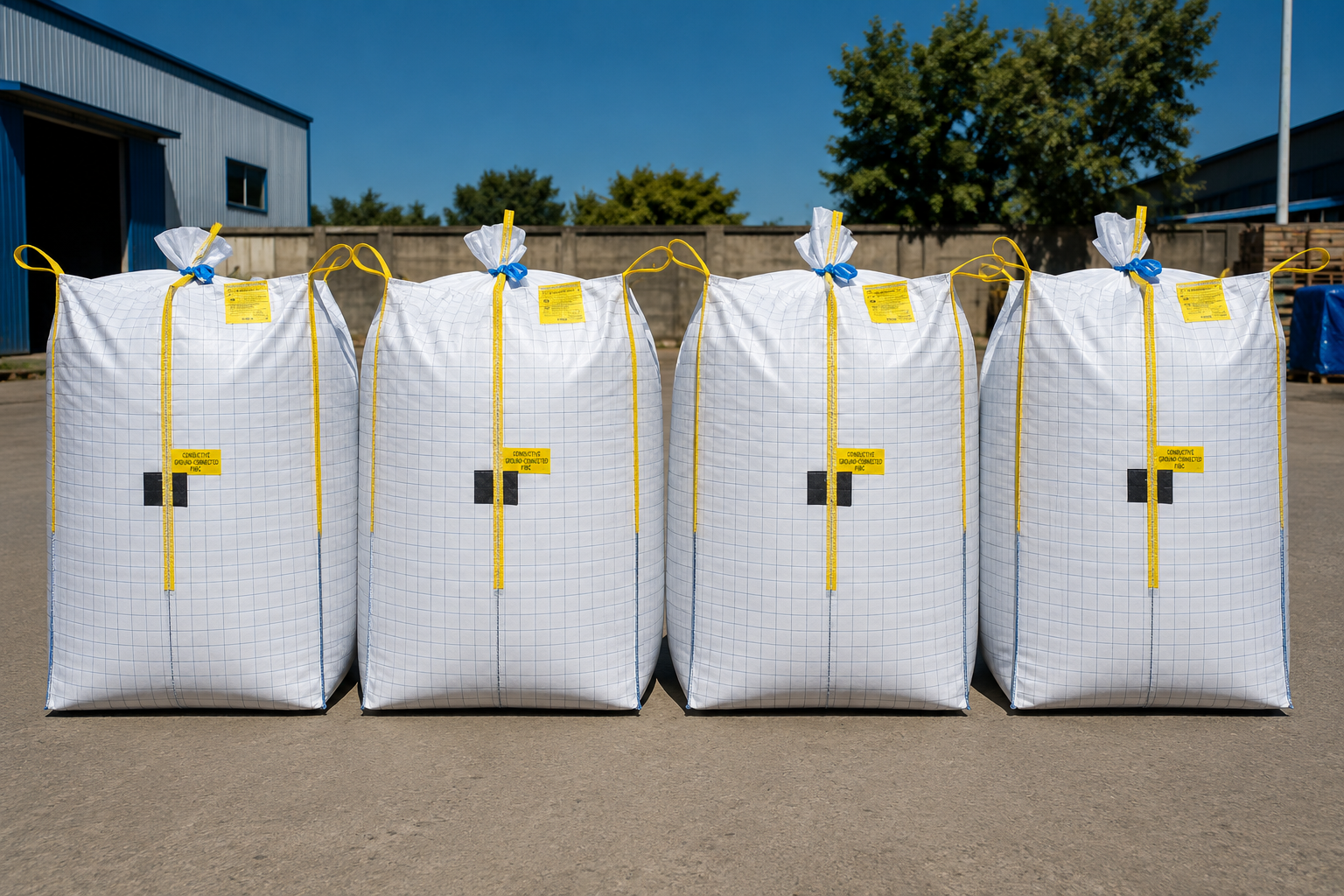
Groundable bag with conductive threads (carbon-filled PP) woven in grid pattern (≤200 mm spacing). Surface resistivity 10⁶–10⁸ Ω/sq to ground. Mandatory for explosive dust Zones 20/21/22.
Conductive MB + UV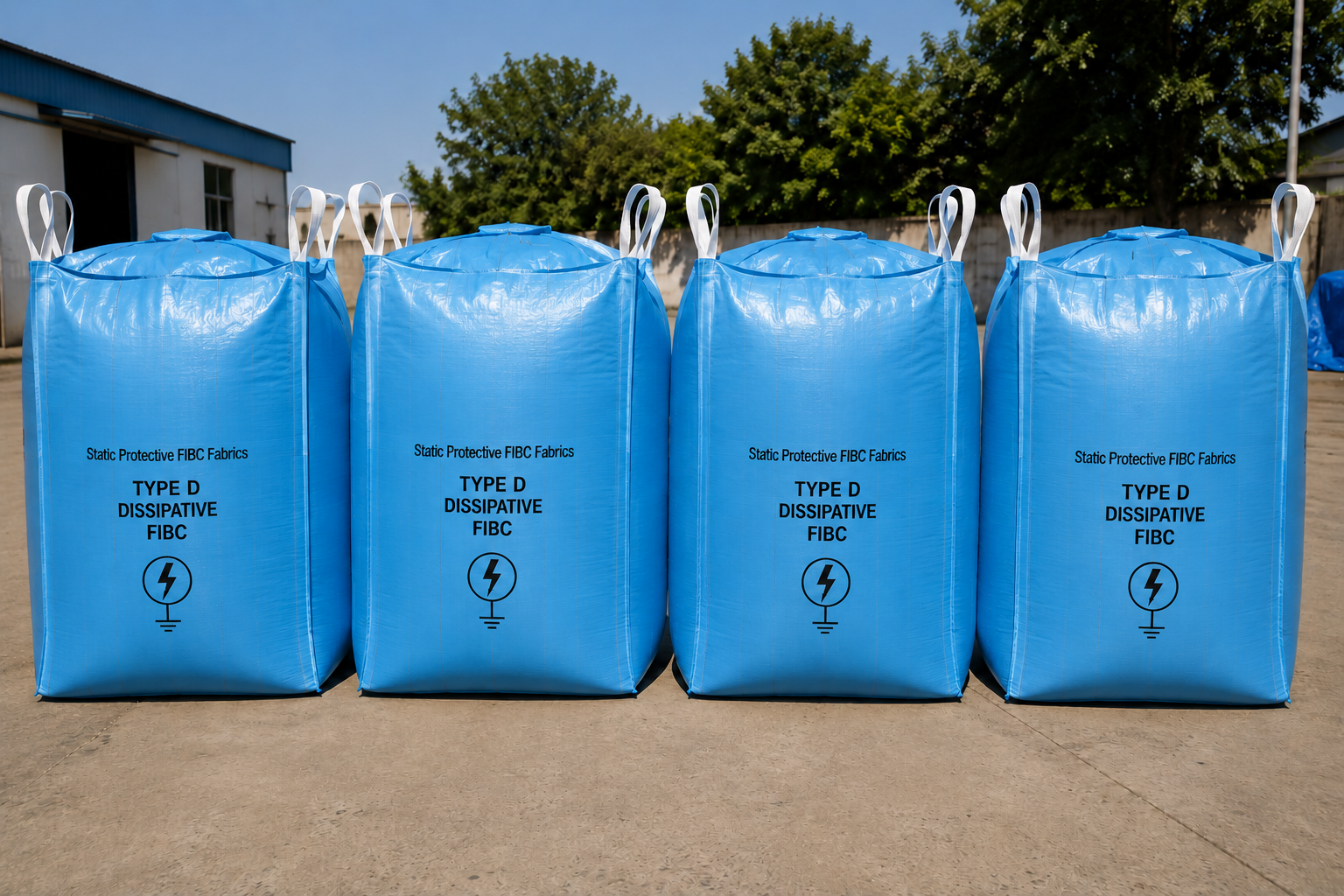
Quasi-conductive bag using static dissipative materials. Does NOT require grounding. Dissipates charge through corona discharge (Faraday cage equivalent). Surface resistivity 10⁸–10¹¹ Ω/sq.
Permanent Antistatic MBMasterbatch Systems for FIBC Bulk Bags
Bajaj's FIBC masterbatch portfolio is engineered around PP homopolymer and copolymer matrices with MFI compatibility matched to tape extrusion line parameters (die swell, draw-down ratio, quench bath configuration).

UV Stabilizer Masterbatch
HALS (bis-TEMPO-based, CAS 52829-07-9) + UVA (benzotriazole or benzophenone) combination in PP carrier. Designed for outdoor FIBC with 6–24 month service life requirement. Photostabilization via radical scavenging without catalyst poisoning in Ziegler-Natta PP systems.
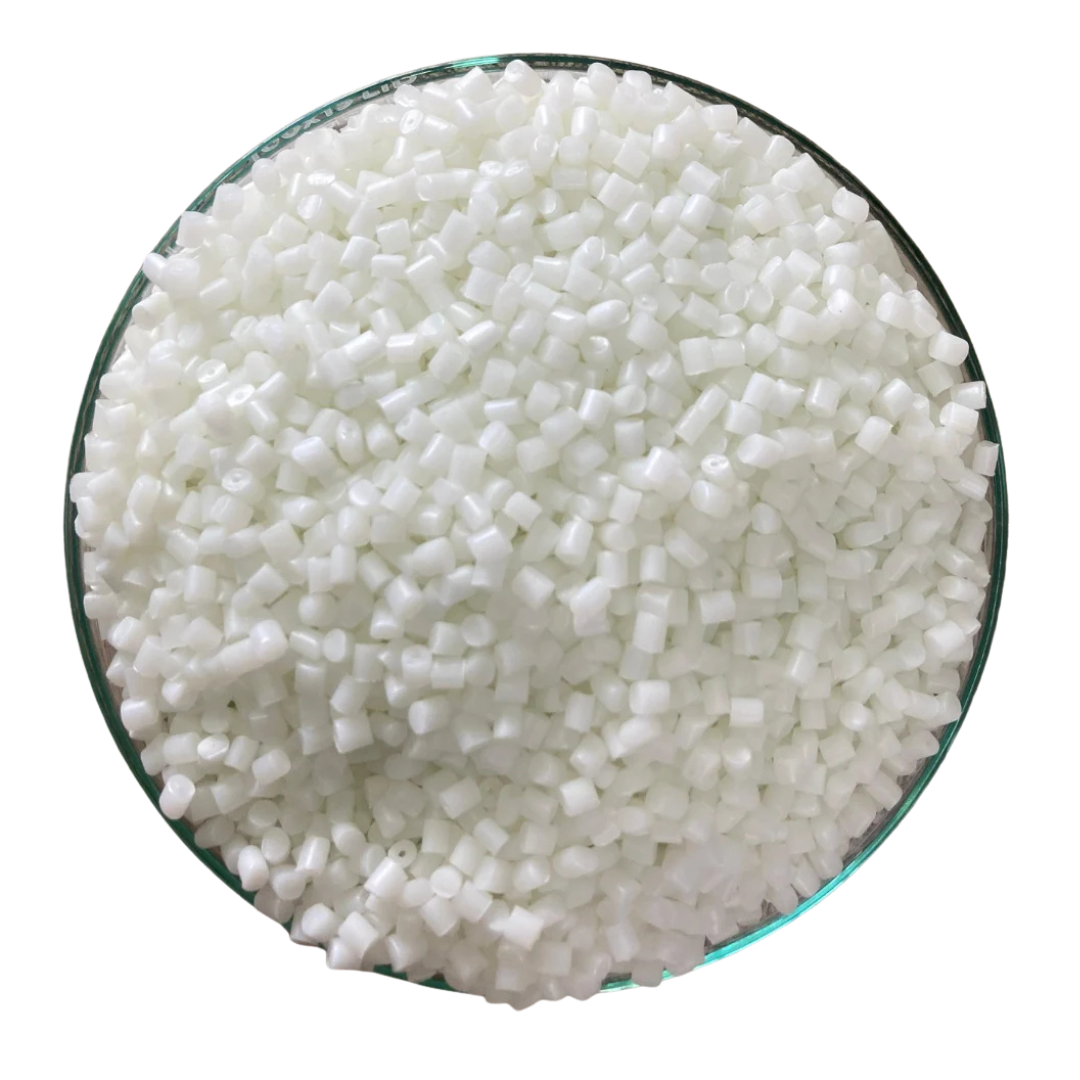
Anti-Static Masterbatch
Migratory EAS (glycerol monostearate derivatives) and non-migratory permanent antistatic agents (polyether amide block copolymers, conductivity ≥10 S/m). Quaternary ammonium salt-free formulation for pharmaceutical applications. Bloom-free at 40°C/75% RH for 30 days.
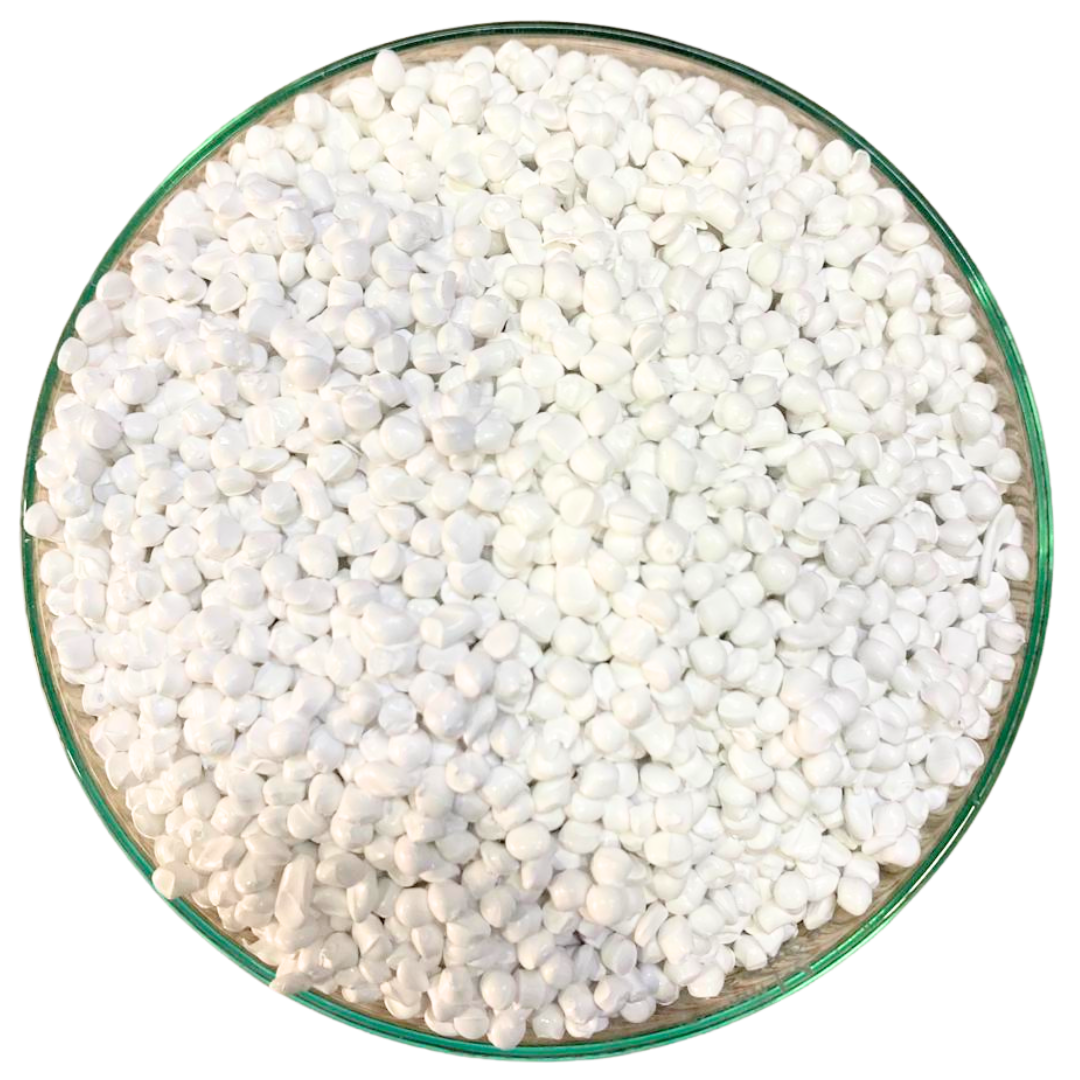
White / TiO₂ Masterbatch
Rutile TiO₂ (R-902 grade, surface-treated Al₂O₃/SiO₂) at 60–70% loading in PP carrier. Ultra-fine particle size distribution (D50 = 0.25 μm) for high scattering coefficient. Provides UV-reflection barrier (up to 95% UV reflectance) and L* >95 for brand printing substrate.
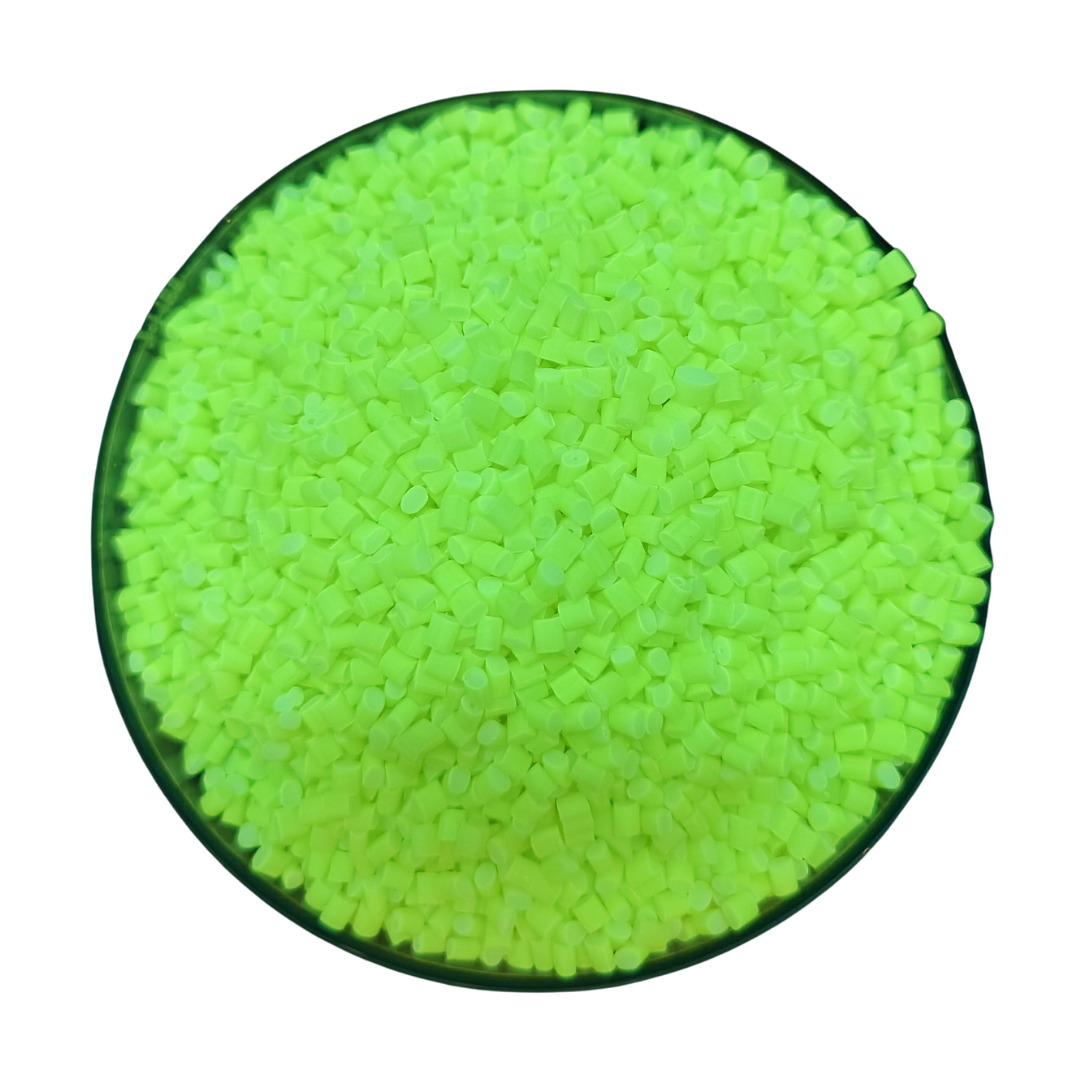
Optical Brightner Masterbatch
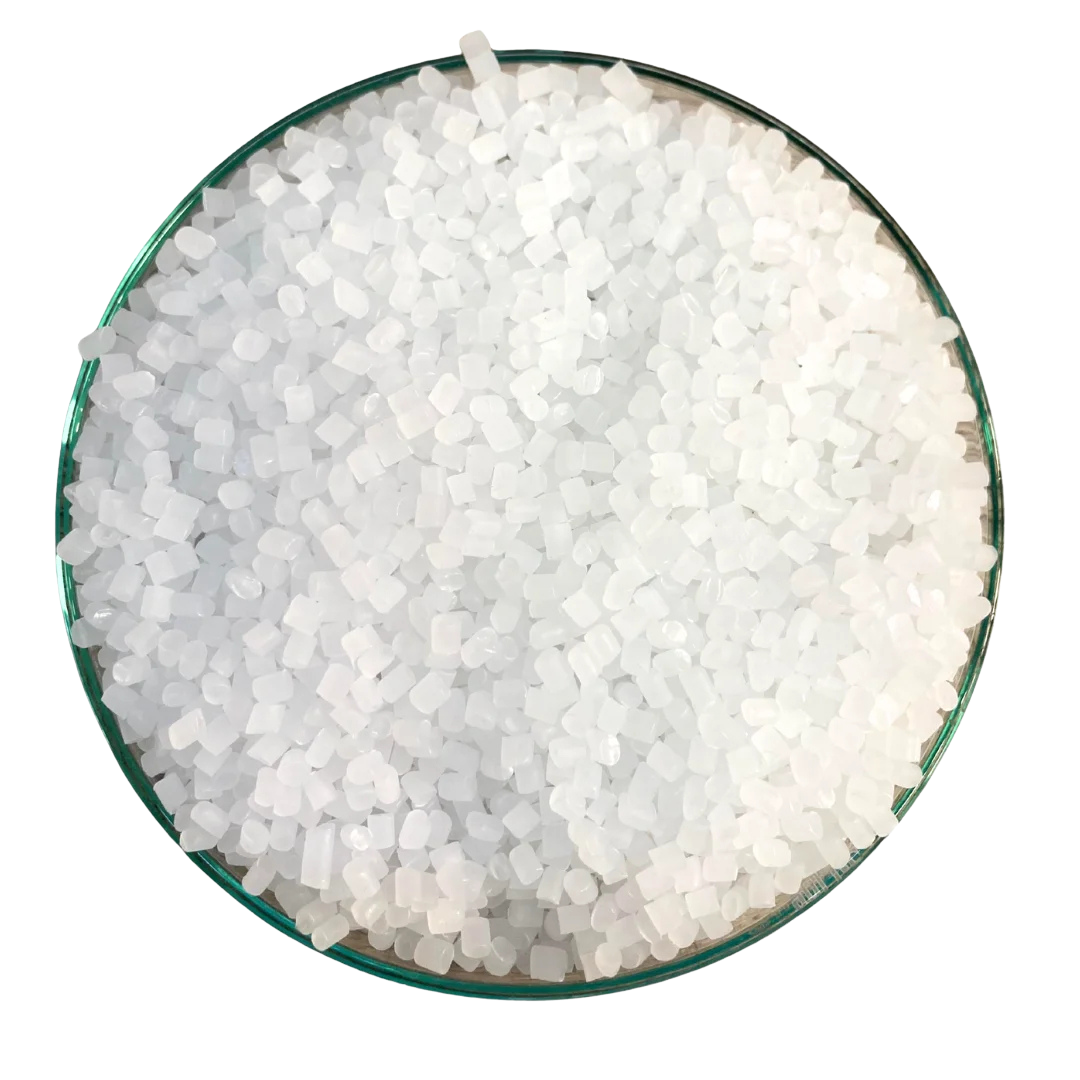
dvanced optical brightening agents in PP carrier. Enhances whiteness, brightness, and surface gloss by absorbing UV light and re-emitting visible blue light. Helps mask yellowing and ageing effects in PP-based products while maintaining excellent dispersion and processing stability.
Antioxidant Masterbatch
Hindered phenol (primary AO — Irganox 1010 equivalent) + phosphite (secondary AO — Irgafos 168 equivalent) synergistic blend in PP carrier. Protects MFI stability during multi-pass extrusion (±10% MFI variation target). FDA 21 CFR compliant grades available for food-contact FIBC liners.
Color Masterbatch
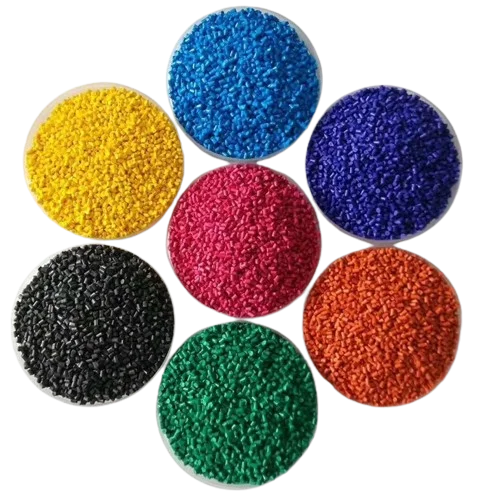
PP-based carrier with high-performance organic & inorganic pigments selected for FIBC tape extrusion. Lightfastness rating ≥7 (ISO 105-B02 Blue Wool Scale). Pigment particle size ≤0.5 μm ensuring uniform dispersion without agglomeration affecting tape tensile. Heavy metal-free (EU 94/62/EC).
FIBC Manufacturing Process — Masterbatch Integration Points
Understanding the 8-stage FIBC production sequence is essential for correct masterbatch selection, dosage calibration, and process parameter alignment to achieve consistent functional performance.
PP Tape Extrusion — Primary MB Incorporation
PP homopolymer blended with UV, antioxidant, slip, and color masterbatch via gravimetric or volumetric dosing at 2–4% total addition. Single-screw extruder (L/D 28–32:1) processes melt at 220–260°C. Die swell, melt pressure ±5 bar, and melt temperature uniformity ±2°C critical. Tape draw ratio 1:6–1:8 determines final denier.
Tape Quenching & Annealing
Extruded tape passes through water bath (quench temp 20–40°C) for rapid crystallization control, then enters hot air oven (annealing zone 120–140°C) for stress relief. HALS antioxidant MB prevents thermally-induced chain scission during annealing. Birefringence measurement confirms crystalline orientation — target: δn = 0.015–0.025.
Circular Loom Weaving — Fabric Construction
PP flat tapes woven on circular looms (400–800 rpm) at 10–14 ends/cm warp × 10–14 picks/cm weft density. Slip MB ensures smooth tape movement over loom heddles and reed, minimizing abrasion-induced fibrillation. Fabric GSM (grams/m²) specification: 100–200 g/m² for standard FIBC. Anti-static MB ensures safe operation in classified zones.
Extrusion Coating / Lamination
PP or LDPE melt coating (15–30 g/m²) applied at 280–320°C via T-die onto fabric. Adhesion promoter masterbatch (maleic anhydride-grafted PP at 0.5–1.5% MA%) enhances peel strength >2.5 N/cm. Anti-block MB in coating prevents roll blocking at winding tension. Coated FIBC rated for moisture-sensitive contents with WVTR <5 g/m²/24hr.
Cutting, Stitching & Bag Assembly
Woven fabric cut to panel dimensions (±2 mm tolerance). Polyethylene or PP thread stitching (stitch density 5–7 stitches/cm) joins body panels, lifting loops, fill/discharge spouts. Conductive thread weaving for Type C bags must maintain thread continuity resistance <1 kΩ. UV-stabilized thread essential for seam integrity matching fabric service life.
Liner Insertion & Fitment
PE liner (25–200 μm, depending on content sensitivity) inserted as tubular or gusseted sleeve. Liner film produced with slip MB (COF <0.2) and anti-block MB (silica-based, 3–5 μm particle) ensuring easy insertion and no sticking during filling. For pharmaceutical FIBC, liner uses virgin FDA/EU grade PE with certificate of conformity.
Flexographic Printing
6-colour water-based or solvent-based flexographic printing at 40–60 m/min on coated fabric. White TiO₂ masterbatch substrate ensures ink adhesion (ASTM D3359 cross-hatch test ≥4B). Color MB in fabric must not bleed into ink layer. Print durability: 500+ rubs without visible wear (Sutherland Rub Test). UV or EB curing for food-grade inks.
Quality Testing & Certification
Completed FIBC undergoes full ISO 21898 / UN test protocol: SWL proof load test (6× SWL), topple test (height 0.8 m), drop test (1.2 m, 5 drops), stacking test (2× stacking load × 40 days), tear propagation (ASTM D1004), UV accelerated weathering (ISO 4892-2, 200 kJ/m²). Anti-static testing per IEC 61340-4-4.
Key Features of FIBC After Bajaj Masterbatches
Quantified performance improvements measured against unmodified PP homopolymer tape baseline under standardised testing protocols.
Extended Outdoor Lifespan via Photo-Stabilization
Bajaj HALS + UVA combination masterbatch (BJM-UV-3) provides synergistic protection through dual-mechanism stabilization. HALS intercepts alkoxy and peroxy radicals in the Norrish cycle while UVA absorbers prevent chromophore formation. Xenon arc testing (ISO 4892-2, 300W/m²) demonstrates tensile strength retention of 82±4% after 1000 hours — equating to 18–24 months outdoor service in Indian subcontinent conditions (solar irradiance 5–7 kWh/m²/day).
Superior Load-Bearing Capacity
Nucleating agent MB enhances PP crystallinity from ~42% to ~52%, reducing spherulite size and increasing tie-molecule density between crystalline lamellae. Result: +15–20% improvement in warp/weft tensile strength.
Certified Electrostatic Discharge Control
BJM-AS permanent antistatic MB achieves surface resistivity 10⁸–10¹⁰ Ω/sq regardless of ambient relative humidity (15–80% RH range). Unlike migratory agents that bloom to surface and wash off, permanent antistatic uses inherently conductive polymer segments dispersed in PP matrix via reactive compounding. IEC 61340-4-4 Type D qualification testing passed with 12-month shelf stability confirmation. Charge decay from 5kV to <500V within 2 seconds.
Friction-Optimized Handling
Slip MB reduces static COF to 0.17±0.02, enabling automated bag filling at 2400 bags/hr without bridging or jam incidents.
Thermal Process Stability
Antioxidant MB maintains MFI within ±8% across 3 extrusion passes, ensuring consistent tape properties in regrind-incorporated production runs.
Regulatory Compliance Assurance — FDA, EU, UN
Bajaj maintains complete additive traceability under SAP ERP with batch-specific Certificates of Analysis (CoA) covering: FDA 21 CFR §178.3297 (PP food contact), EU Regulation 10/2011 (plastic food contact materials), REACH SVHC compliance (no restricted substances), UN transport certification, and RoHS Annex II (heavy metal-free). CoA provided with every shipment including full additive declaration, supplier qualification records, and incoming QC data (FTIR, DSC, XRF).
Performance Benchmark — Bajaj MB vs Unmodified PP
FIBC Performance: With vs. Without Bajaj Masterbatch
Key Benefits & Strategic Importance of FIBC Bulk Bags
From supply chain logistics to regulatory compliance, additive-enhanced FIBC bulk bags deliver measurable operational and economic advantages across every vertical.
Cost Efficiency
FIBC cost/tonne-km is 30–40% lower vs. rigid drums. Reusable Type D bags yield 5–8× reuse cycles, reducing packaging cost by 60–75%.
Volumetric Efficiency
Empty FIBC collapses to 2% of filled volume. 1 ton of FIBC stores 20× more cargo in the same warehouse footprint vs. rigid containers.
Sustainability Metrics
PP FIBC carbon footprint: 2.1 kgCO₂e/kg. 30% lower than steel drums (3.8 kgCO₂e/kg). Recyclable (PP code 5) — circular economy compliant.
Tamper & Contamination Control
Liner + coating combination achieves WVTR <3 g/m²/24hr and OTR <10 cc/m²/24hr, protecting hygroscopic and oxidation-sensitive bulk materials.
Global Logistics Compatibility
ISO 21898 compliant FIBC accepted by carriers worldwide. Forklift, crane, and hook compatible. Temperature rated: -25°C to +70°C continuous.
Chemical Resistance
PP FIBC resists pH 2–12 acids/bases, aliphatic solvents, inorganic salts. Chemical resistance masterbatch extends service to aggressive wet bulk materials.
Automation Integration
RFID-compatible printing, bar-code labels, and slip-optimized surfaces enable automated palletizing, ASRS compatibility, and ERP-driven traceability.
Regulatory Compliance
UN-certified FIBC enables export of Dangerous Goods Class 4–9. FDA/EU food-contact certification opens pharmaceutical and nutraceutical markets.
Why Choose Bajaj Masterbatch for FIBC Applications
Dedicated FIBC R&D Laboratory
In-house characterization: DSC, FTIR, MFI, TGA, tensile testing (ISO 527), UV weatherometer (ISO 4892-2), static decay meter (ESD STM 11.31). Full additive performance validation before commercial launch.
PP-Specific Carrier Technology
All FIBC masterbatches use PP homopolymer carrier (MFI 25–35 g/10 min) matched to tape extrusion base resin. Eliminates melt incompatibility, gels, and die drool common with PE-carrier products.
Precision Dosage Calibration Service
Bajaj application engineers provide on-site dosage optimization for gravimetric dosing systems. Process validation report issued per customer's extruder configuration, screw design, and tape specification.
Complete Regulatory Documentation
Every batch includes: CoA (14 parameters), MSDS/SDS, REACH SVHC declaration, FDA letter of guarantee, EU 10/2011 compliance statement, UN additive qualifier documentation for hazmat certification.
Pan-India Supply Chain with Export Capability
Manufacturing at Nagpur + Gwalior + Chennai warehousing. Lead time 3–7 working days. Export to 22+ countries. Air freight emergency supply for critical production line scenarios.
All masterbatch formulations manufactured under documented QMS protocols. SPC (Statistical Process Control) for critical parameters: loading rate, MFI, dispersion grade, and pigment content. Cpk >1.33 for key performance indicators.
Three decades of formulation expertise in PP masterbatch systems. Over 500 FIBC manufacturer partners across India, Southeast Asia, Middle East, and Europe. 1200+ active formulations in production portfolio across tape, film, moulding, and fiber applications.
Custom MB development for specific FIBC end-use: sterile pharmaceutical, UN hazmat, food-grade Type D, extreme cold storage (−40°C), tropical climate UV packages. Development cycle: 4–6 weeks from specification to validated trial.
Industries Relying on Bajaj-Enhanced FIBC Bags
Additive-engineered FIBC bulk bags serve as critical packaging across high-value industrial, agricultural, and regulated verticals where contamination, structural failure, or electrostatic hazard carry significant economic and safety consequences.
UV + moisture barrier MB for hygroscopic fertilizer (urea, DAP), seed storage. Prevents caking and loss of germination viability during outdoor storage.
High-UV, high-puncture-resistance formulation for sand, gravel, aggregates, cement, fly ash. Outdoor storage 12–18 months required.
Type C/D anti-static MB for flammable powders. Chemical-resistant PP + LDPE liner combination for corrosive granular materials (pH 2–12).
FDA/EU-compliant food-contact MB. Anti-static + Type D FIBC for API powders. Zero-migration antioxidant system. GMP-manufactured masterbatch.
FSSC 22000 supply chain. FDA 21 CFR + EU 10/2011 slip/white MB for sugar, starch, flour, rice, food additives. Odour-neutral, bloom-free formulation.
Anti-static MB preventing polymer pellet contamination from dust attraction. Slip MB for smooth pellet discharge in vacuum conveying systems.
FIBC Manufacturing — Masterbatch Troubleshooting Guide
Systematic root cause analysis and corrective action protocols for the most common masterbatch-related defects encountered in FIBC tape extrusion and bag manufacturing.
| # | Problem / Symptom | Root Cause Analysis | Masterbatch Factor | Corrective Action | Preventive Measure | Severity |
|---|---|---|---|---|---|---|
| 01 | Tape brittleness after outdoor storage (<6 months) | Insufficient UV stabilization — photo-oxidative chain scission reaching critical MW reduction (<50,000 g/mol) | UV MB under-dosed or wrong HALS grade for geography | Increase UV MB to 3.0–4.0%. Switch to HALS Gen II (NOR-HALS) for high irradiance zones. Verify dose with xenon arc test. | Pre-qualify UV package via accelerated weathering (200 kJ/m² per ISO 4892-2) before production run. Document geography-specific dosage. | Critical |
| 02 | MFI variation >15% across extrusion runs — inconsistent tape denier | Thermal-oxidative degradation in barrel/die. Inadequate antioxidant protection. Contaminated regrind ratio. | AO MB insufficient — primary:secondary ratio imbalanced or dosage <0.5% | Increase AO MB loading to 1.0–1.5%. Review primary AO (hindered phenol) + secondary AO (phosphite) ratio — target 1:2 molar ratio. Reduce regrind content to <15%. | Measure OIT (ASTM E1782) on each production lot. Set minimum OIT specification of 45 min @ 200°C. Track MFI on SPC chart with ±10% control limits. | Critical |
| 03 | Anti-static performance fails after wash or 90 days storage | Migratory anti-static agent bloomed to surface then leached off. Humidity-dependent GMS system ineffective in dry climates. | Wrong AS MB type — migratory agent used where permanent antistatic required | Switch from BJM-AS-1 (GMS) to BJM-AS-3P (PEEA permanent antistatic). Increase dosage to 4–6%. Re-test surface resistivity per IEC 61340-4-4. | Specify humidity-independent permanent antistatic for all Type D FIBC. Confirm IEC test at 12%, 50%, and 80% RH before shipment approval. | Critical |
| 04 | Black specks or gels visible in tape — print defects, tensile weak spots | Degraded PP forming carbonized particles. MB carrier incompatibility causing agglomeration. Die lip contamination. | MB MFI mismatch with base resin — insufficient melt mixing and dispersion | Select MB with carrier MFI 20–40 g/10 min (matched to base resin). Purge extruder with commercial purge compound. Reduce residence time by increasing throughput. | Qualify MB dispersion grade A per DIN 53775 before production. Run gel test (pressure screen pack test ASTM D3364) on every new MB lot. | High |
| 05 | Ink adhesion failure — flexo print peeling <2B in cross-hatch test | Low surface energy of PP substrate (<36 mN/m dyne level). Slip agent bloom reducing ink wet-out. | Excess slip MB (>1.5% loading) or early bloom rate causing wet surface | Reduce slip MB to 0.5–0.8%. Increase corona treatment to 44–48 mN/m. Apply corona within 72 hrs of printing. Use wax-free ink system. | Monitor dyne level daily on coated fabric before printing. Specify slip MB with controlled bloom rate (>48 hr equilibration). Use ink adhesion test (ASTM D3359) as release criterion. | High |
| 06 | Premature seam failure — stitching breaks at <70% expected load | UV degradation of stitching thread. Incompatible thread and fabric UV stabilization packages. Stress concentration at needle holes. | Thread not stabilized with matching UV MB — fabric and thread photostabilization mismatch | Specify UV MB in both tape and stitching thread at equivalent HALS dosage. Verify thread tensile retention after 500 hr xenon arc. Use needle size 23–25 for minimum hole diameter. | Submit thread + fabric composite sample for ISO 21898 seam efficiency testing (target: ≥80%). Document HALS loading for both components in quality record. | Critical |
| 07 | White MB causes tape tensile strength reduction >10% | TiO₂ particle agglomeration acting as stress concentrators. High loading causing crystallinity disruption. | Excess white MB (>8%) or inadequate dispersion grade (particle size >1 μm agglomerates) | Reduce white MB loading to 4–6%. Verify dispersion: particle size D90 <0.5 μm by laser diffraction. Switch to surface-treated R-902 grade TiO₂ with Al₂O₃/SiO₂ coating. | Run tensile test matrix at 0%, 3%, 5%, 8% white MB loading to establish property retention curve. Set maximum loading limit in material specification. | High |
| 08 | FIBC FDA food contact compliance rejection | Non-compliant additives used. Insufficient documentation. Migration testing not performed. | MB additives not verified for FDA 21 CFR §178.3297 compliance | Replace all MBs with Bajaj Food-Contact Series. Obtain full CoA with FDA reference for each additive. Commission migration testing per EN 1186 (overall migration) and specific migration if required. | Maintain Bajaj-supplied compliance documentation pack. Re-validate annually. Track any MB lot changes through formal change control with re-testing. | Critical |
| 09 | Static decay fails IEC 61340-4-4 Type D qualification | Inadequate charge dissipation pathway. Insufficient permanent antistatic loading. Humidity too low during test (<12% RH). | AS MB loading insufficient or wrong grade selected for Type D | Increase BJM-AS-3P loading to 5–7%. Confirm testing at 12% RH (worst-case conditioning per IEC 61340-4-4). Measure surface resistivity AND charge decay time independently. | Include static decay test (5kV charge to <500V in <2s) as production QC release criterion. Test every 50th bag in production lot. | Critical |
| 10 | Color inconsistency — shade variation between production lots | Color MB dosing variation. Feeder calibration drift. Pigment settle-out in concentrate. Temperature variation affecting pigment dispersion. | Gravimetric feeder calibration drift or poor MB pigment dispersion stability | Calibrate gravimetric feeder monthly. Agitate MB silo before use. Measure ΔE (CIELAB) — accept ΔE <1.5 vs master standard. Standardize melt temperature ±3°C. | Define ΔE colour tolerance in product specification. Measure colour on every production roll using handheld spectrophotometer. Trace back to MB lot on colour deviation. | Medium |
 BAJAJ PLAST PVT LTD