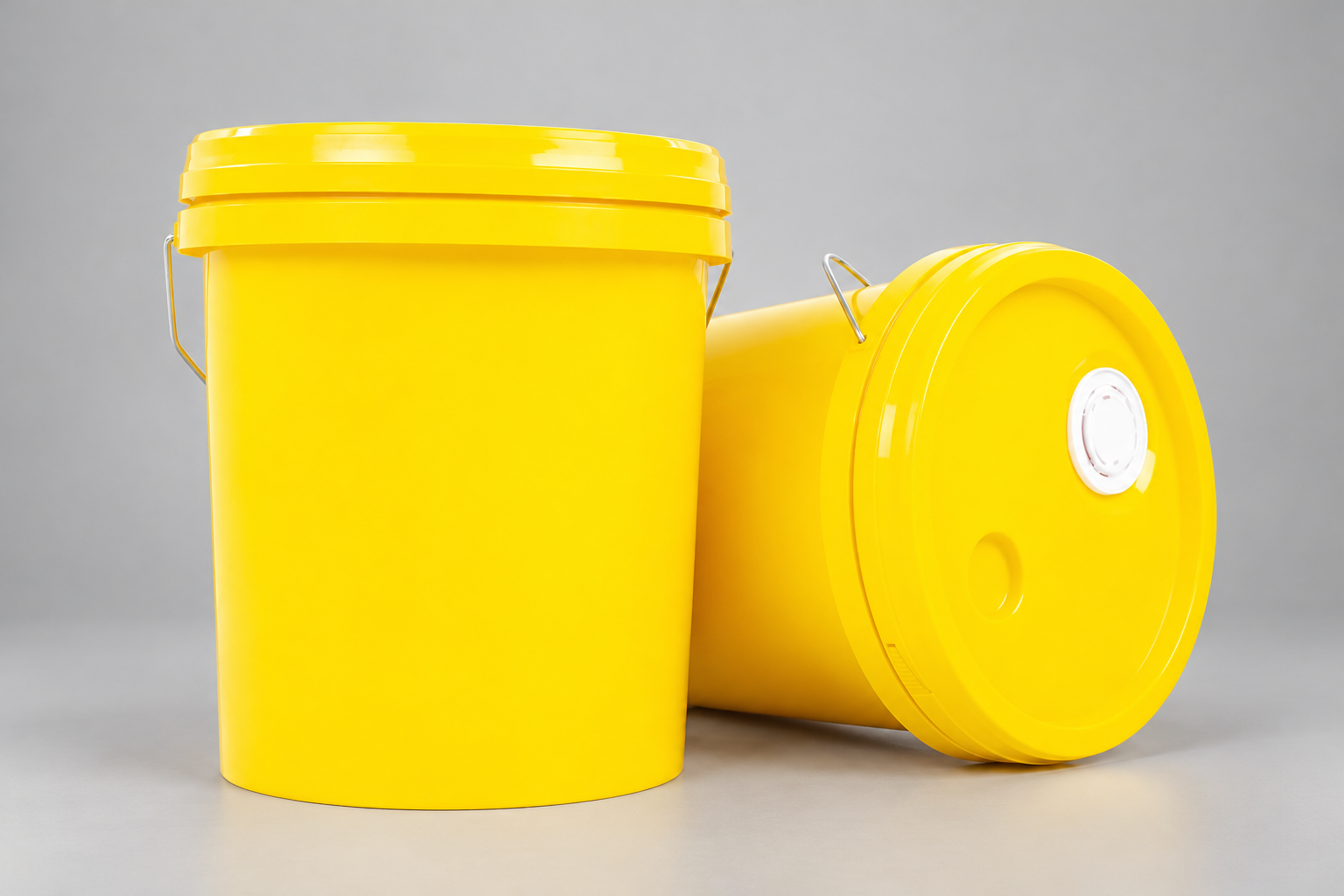
Masterbatches for PP & HDPE Plastic Pails and Buckets: Enhancing Strength, Colour Consistency, Processing Efficiency and Packaging Performance
Introduction
Plastic pails and buckets are essential rigid packaging solutions used across the paint, chemical, lubricant, construction, food processing, dairy and industrial sectors. As packaging requirements become increasingly demanding, manufacturers must achieve a balance between mechanical strength, dimensional stability, chemical resistance, surface finish, colour consistency and production economics.
Polypropylene (PP) and High-Density Polyethylene (HDPE) are widely used polymers for manufacturing injection-moulded plastic pails and buckets. However, the performance of these containers depends not only on the base polymer but also on the selection of suitable masterbatches, additive systems, formulation parameters and injection-moulding conditions.
At Bajaj Masterbatches, our portfolio of White, Colour, Black, Mineral Filler and Functional Additive Masterbatches supports manufacturers in developing application-specific PP and HDPE pails and buckets with consistent appearance, controlled processing and optimised performance.
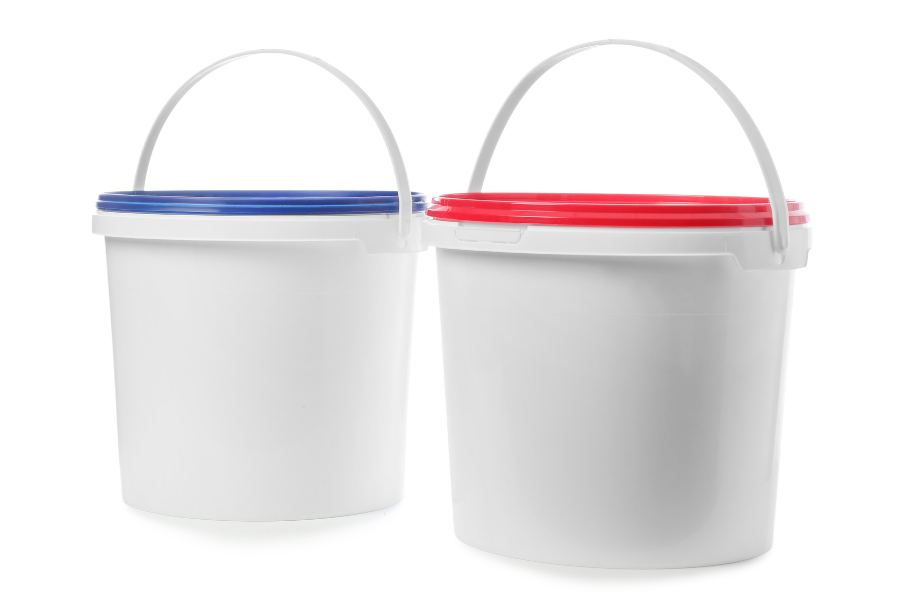
1. Understanding PP and HDPE in Injection-Moulded Plastic Pails and Buckets
Polymer selection is one of the most critical decisions in rigid packaging manufacturing. PP and HDPE offer different mechanical, thermal and chemical properties, influencing their suitability for particular pail applications.
Polypropylene (PP) is commonly selected for its high stiffness-to-weight ratio, good surface finish and mouldability. Impact copolymer grades are particularly relevant for pails that require a balance of rigidity, drop-impact resistance and dimensional stability.
For PP pail manufacturers, key processing considerations include melt flow rate (MFR), crystallisation behaviour, mould shrinkage, impact resistance and the dimensional precision required for lid engagement and stacking performance.
High-Density Polyethylene (HDPE) is valued for its toughness, moisture resistance and chemical resistance under appropriately selected service conditions. HDPE grades designed for injection moulding are frequently used in industrial pails, chemical containers and handling buckets.
For HDPE packaging, important technical parameters include environmental stress-crack resistance (ESCR), impact strength, melt flow characteristics, dimensional stability and compatibility with the packed formulation.
Masterbatch carrier selection is equally important. PP-based masterbatches are generally preferred where polypropylene compatibility is critical, while PE-compatible masterbatches are commonly selected for HDPE applications. Cross-polymer compatibility should be established through production trials.
A correctly engineered masterbatch formulation supports pigment dispersion, controlled melt processing and repeatable product quality without compromising the required characteristics of the base resin.
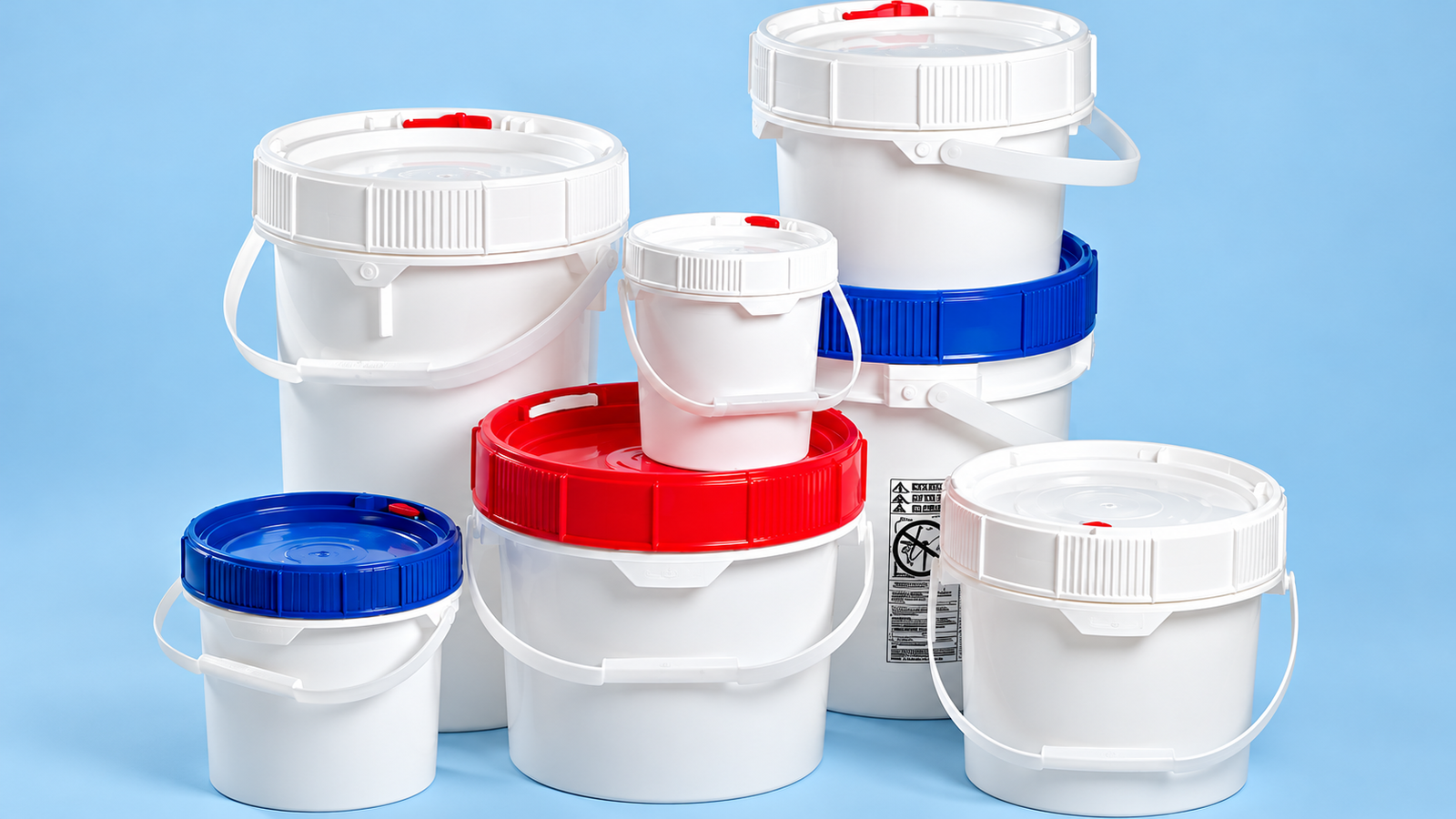
2. Essential Masterbatches for PP and HDPE Pails and Buckets Manufacturing
The selection of masterbatches directly influences the appearance, functionality and processing economics of injection-moulded containers. Different packaging applications require specific combinations of pigment concentrates and performance additives.
White Masterbatch – High Opacity, Whiteness and Surface Uniformity
Titanium Dioxide (TiO₂) White Masterbatch plays a critical role in producing opaque white pails used for paints, ghee, dairy products, chemicals and industrial packaging.
High-quality TiO₂ dispersion helps manufacturers achieve uniform whiteness, consistent hiding power and reduced visual variation across moulded surfaces.
Bajaj's PLAST SUPER White Masterbatch portfolio includes grades with different TiO₂ concentrations to address varying opacity requirements and processing conditions.
The final selection should consider pigment concentration, let-down ratio, container wall thickness, base resin and colour undertone.
Colour Masterbatch – Precise Shade Matching and Brand Consistency
Colour Masterbatches are extensively used in branded pails, lubricant containers, paint buckets and household utility products.
Optimised pigment selection and dispersion help achieve repeatable shade development, uniform colour distribution and consistent visual appearance across production batches.
Colour matching should be validated on actual moulded parts, considering polymer grade, wall thickness, surface texture and processing temperature.
Black Masterbatch – Deep Black Colour and Functional Performance
Carbon Black Masterbatch is suitable for black industrial buckets, lubricant packaging, utility containers and selected outdoor applications.
Appropriate carbon black loading and dispersion can deliver strong black colouration and, where formulated for the purpose, contribute to UV protection.
Mineral Filler Masterbatch – Formulation Cost and Stiffness Optimisation
Calcium Carbonate (CaCO₃) and other mineral-based filler masterbatches can be evaluated for cost optimisation and stiffness modification in suitable PP and HDPE industrial packaging applications.
The use of mineral fillers can influence flexural modulus, density, shrinkage and dimensional behaviour. However, excessive or unsuitable loading may adversely affect impact strength, hinge performance, lid flexibility and drop resistance.
Therefore, filler loading must be optimised through mechanical testing and actual filled-container performance rather than raw material cost alone.
Functional Additive Masterbatches – Targeted Polymer Performance
Bajaj's additive portfolio provides further formulation options for specific manufacturing and service requirements:
- UV Stabilizer Masterbatch: Supports resistance to ultraviolet exposure in outdoor pails and utility buckets.
- Antioxidant Masterbatch: Helps minimise thermo-oxidative polymer degradation during processing and service.
- Optical Brightener Masterbatch: Can improve the perceived brightness and undertone of selected white formulations.
- Desiccant Masterbatch: Helps address certain moisture-related processing defects in appropriate recycled or moisture-affected feedstocks.
- Nucleating and Antistatic Additives: May be evaluated where crystallisation control or defined surface properties are required.
Each additive should be selected according to the actual polymer, packed product, processing conditions and finished-container specification.
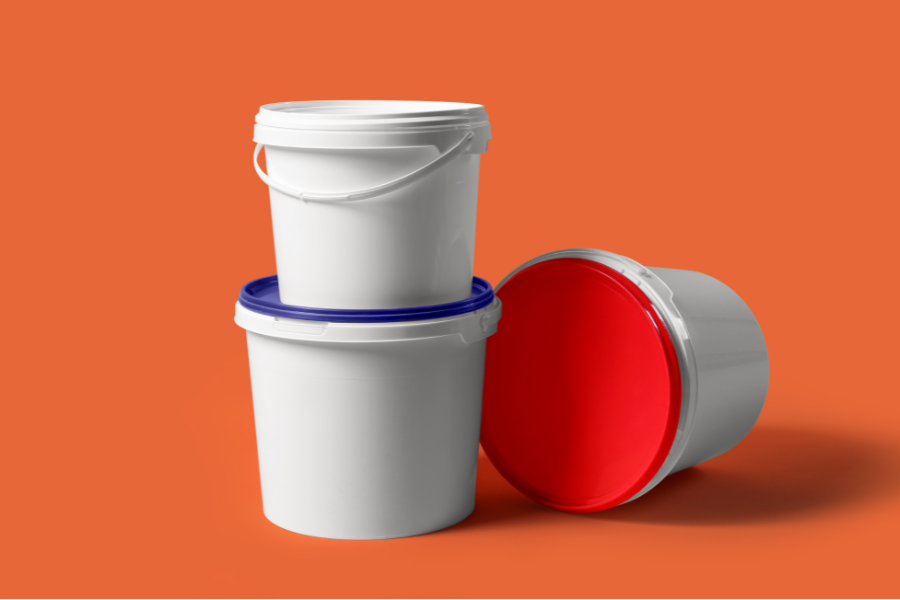
3. Application-Specific Masterbatch Solutions for Industrial, Chemical, Paint and Food Packaging
Different pail applications place different demands on the polymer formulation. A masterbatch suitable for a general-purpose utility bucket may not be appropriate for a chemical container or a food-contact packaging application.
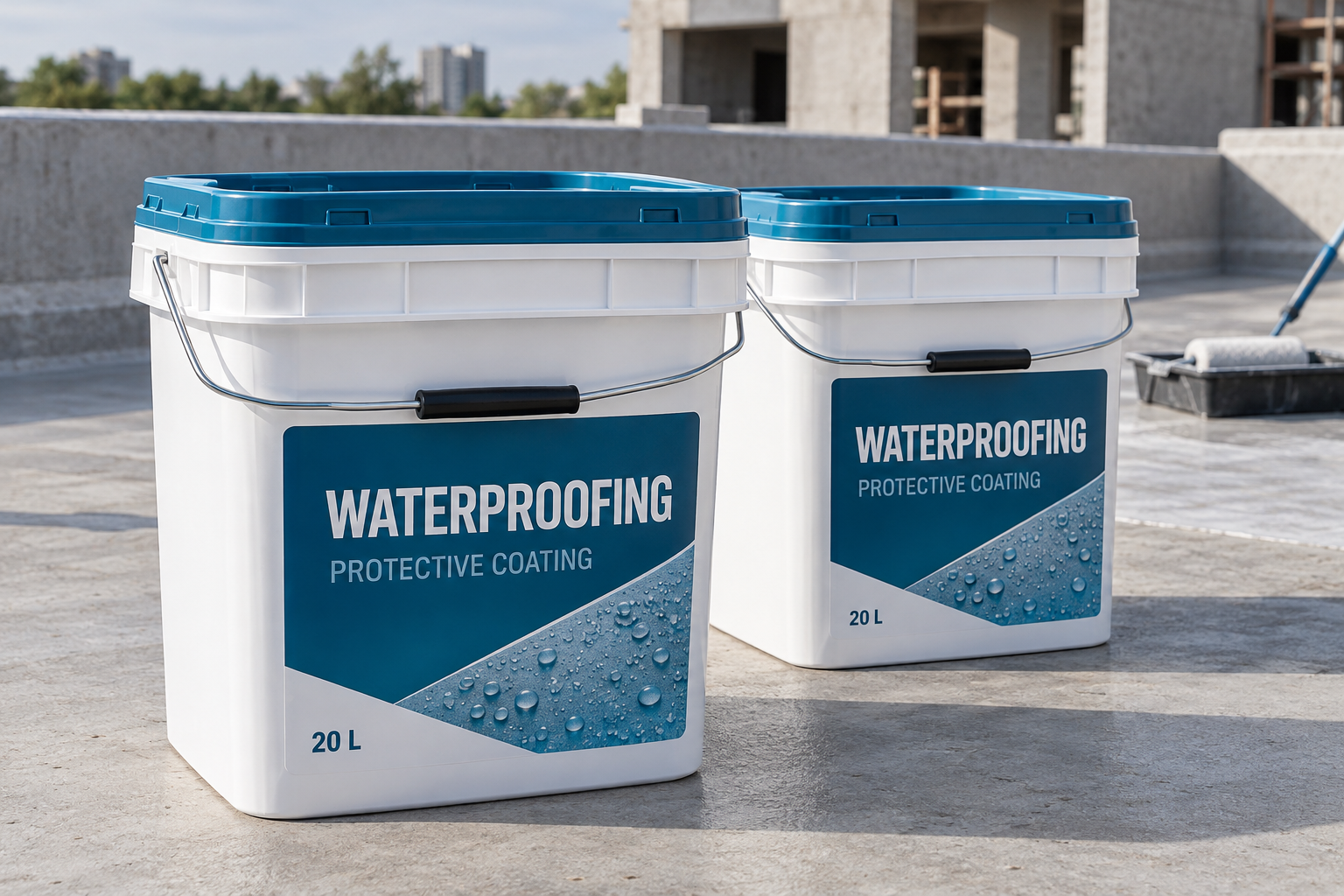
Paint Pails and Waterproofing Buckets
Paint and construction chemical packaging requires consistent colour, high opacity, mechanical rigidity and secure closure performance.
White and Colour Masterbatches help establish brand identification and uniformity, while selected stabilisation packages can support polymer performance.
Manufacturers must evaluate lid fit, impact resistance, top-load strength, deformation and compatibility with the filled paint or waterproofing compound.
Chemical, Oil and Lubricant Pails
Industrial chemical packaging requires particular attention to resin compatibility, environmental stress cracking, permeation, sealing performance and long-term storage conditions.
Colour, Black and White Masterbatches should be selected with consideration for the actual chemical composition, contact temperature and exposure duration.
UV stabilisation may also be relevant for containers stored outdoors.
Importantly, masterbatch incorporation alone does not establish chemical resistance or transport approval. These properties require verification of the complete container system.
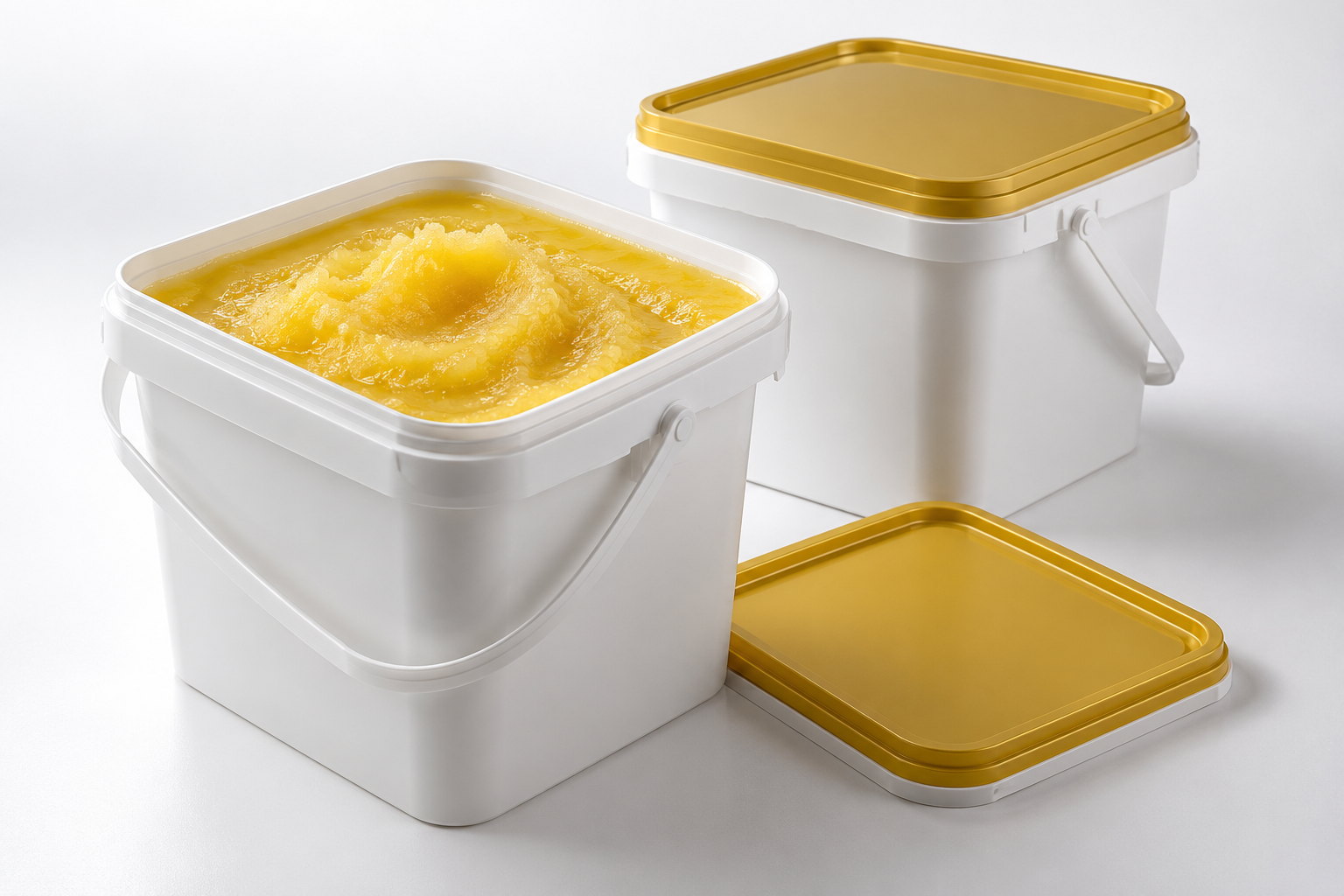
Ghee, Dairy and Food-Grade Pails
Food packaging applications require carefully selected resin and masterbatch formulations that are suitable for the intended food-contact conditions.
White and Colour Masterbatches may be used to produce visually consistent packaging for ghee, dairy ingredients, sauces and other food products.
Pigment selection, additive migration, sensory characteristics, contact duration and filling temperature must be assessed against applicable food-contact requirements.
Food-contact suitability is specific to the grade and intended use and must be supported by appropriate documentation and finished-pack evaluation.
Industrial and Household Utility Buckets
General-purpose industrial and household buckets commonly require good impact performance, handle strength, colour uniformity and dimensional consistency.
Depending on the end use, manufacturers may consider Colour Masterbatch, Black Masterbatch, UV Stabilizer Masterbatch and carefully evaluated Mineral Filler Masterbatch.
For reusable and load-bearing buckets, mechanical durability and crack resistance must remain priority design criteria.
Explore Bajaj's complete range of Masterbatch Solutions for PP & HDPE Pails and Buckets.
4. How Masterbatch Quality Influences Injection-Moulding Efficiency and Finished Pail Performance
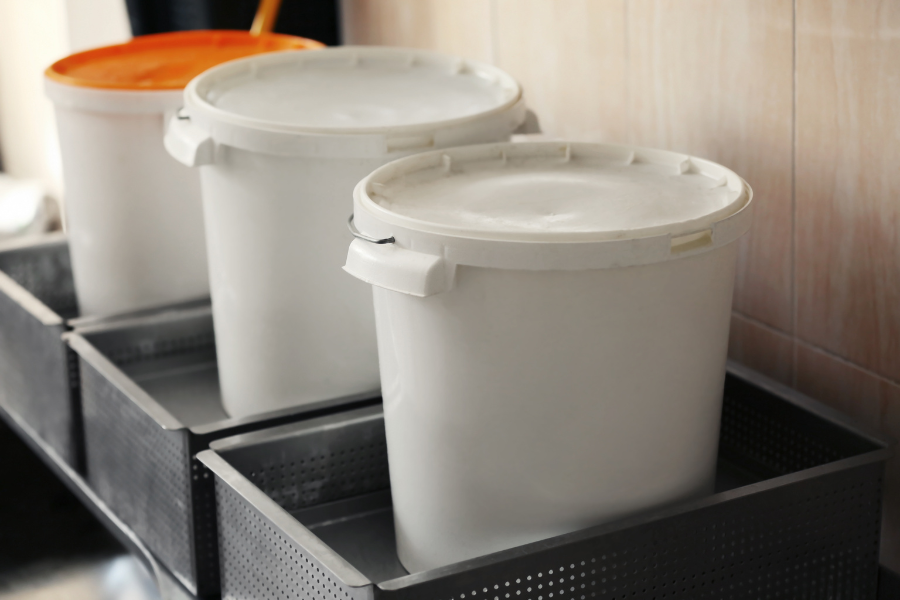
Injection moulding of PP and HDPE pails involves a carefully controlled sequence of material feeding, melt plasticisation, injection filling, holding pressure, cooling and part ejection.
Because pails frequently incorporate relatively thin walls, reinforced rims, handle attachment points and precision-fit lids, consistent material behaviour is essential.
Dispersion and melt homogeneity: Poor pigment dispersion or incompatible carrier systems may contribute to colour streaking, specks, nonuniform appearance and localised material inconsistencies. Correct masterbatch selection and controlled dosing support homogeneous melt preparation.
Thermal and oxidative stability: Excessive melt temperature, long residence time and repeated processing of regrind may accelerate oxidative degradation. Suitable antioxidant systems, where required, help protect the polymer against processing-related deterioration.
Shrinkage and dimensional control: Masterbatch formulation, filler content and the polymer's crystallisation characteristics can influence mould shrinkage. These changes affect rim roundness, stacking geometry, lid fit and sealing consistency.
Mechanical performance: Drop-impact strength, handle-lug integrity, flexural behaviour and resistance to cracking are particularly important for filled containers. Any masterbatch modification must be evaluated against these properties.
Production economics: A masterbatch should be assessed on its contribution to acceptable finished-part production, not simply its purchase price per kilogram.
For procurement and production teams, the most meaningful calculation is:
Cost per acceptable moulded pail = Total material and conversion cost ÷ Number of accepted pails
This approach accounts for masterbatch dosage, part weight, rejection rate, cycle time and finished-product quality, providing a more accurate basis for evaluating formulation alternatives.
5. Technical Parameters Purchasing Managers Should Evaluate Before Selecting a Masterbatch Supplier
For purchasing managers, masterbatch buyers and rigid packaging manufacturers, selecting a supplier requires more than comparing pigment concentration or quotation prices.
A technically appropriate masterbatch should satisfy the processing, aesthetic, mechanical and regulatory requirements of the finished packaging.
Important evaluation parameters include:
- Polymer carrier compatibility: Confirm whether the grade is suitable for PP, HDPE or a specific resin formulation.
- Pigment and active ingredient concentration: Understand the effective concentration delivered at the proposed masterbatch dosage.
- Dispersion performance: Assess specks, streaking, colour uniformity and performance in moulded samples.
- Melt flow behaviour: Verify that the formulation is compatible with the intended injection-moulding operation.
- Thermal stability: Evaluate the suitability of pigments and additives for the processing temperature and residence time.
- Mechanical property retention: Compare impact strength, stiffness, dimensional stability and closure performance against the approved control formulation.
- Batch-to-batch consistency: Review colour variation, material specification limits and quality-control practices.
- Application compliance: Request the relevant declarations for food-contact, chemical packaging or other specified applications.
- Commercial efficiency: Compare effective dosage, total formulation cost, production yield and supply consistency.
For example, a masterbatch containing 50% TiO₂ dosed at 4% introduces approximately 2% TiO₂ into the total formulation, assuming the final mixture is dosed at 4% masterbatch by mass.
This demonstrates why masterbatch concentration and actual let-down ratio must be considered together when comparing products.
Before bulk procurement, manufacturers should request the latest Technical Data Sheet (TDS), confirm the intended dosage range and conduct production trials using their own resin, tooling and operating parameters.
A technically aligned supplier can help buyers minimise formulation uncertainty, improve procurement decisions and maintain consistent packaging quality across repeated production orders.
6. Why Choose Bajaj Masterbatches for PP and HDPE Pails and Buckets?
With experience in polymer compounding and masterbatch manufacturing since 1988, Bajaj Masterbatches offers application-focused solutions for injection-moulded rigid packaging.
Our portfolio brings together White, Colour, Carbon Black, Mineral Filler and Functional Additive Masterbatches to address the requirements of PP and HDPE pail manufacturers.
Bajaj's application and testing capabilities support the evaluation of colour matching, resin compatibility, processing characteristics and formulation performance for specific end-use requirements.
For manufacturers producing paint pails, chemical buckets, industrial containers, lubricant pails, food packaging and household buckets, the objective is to achieve reliable product appearance, repeatable processing and consistent finished-pack performance.
Our approach focuses on four important manufacturing priorities: product quality, formulation efficiency, processing consistency and application-specific technical selection.
Whether the requirement involves high-opacity white pails, custom-coloured packaging, industrial black containers, outdoor UV protection or mineral-filled formulations, selecting the correct masterbatch requires a detailed understanding of the polymer and final application.
Looking for a Reliable PP and HDPE Pails & Buckets Masterbatch Manufacturer in India?
Bajaj Masterbatches supports rigid packaging manufacturers, injection moulders, OEMs and purchasing teams with masterbatch selection for their specific processing and performance requirements.
Share your polymer grade, pail capacity, wall thickness, packed product, current masterbatch dosage and desired performance specifications with our technical team to identify an appropriate formulation.
Explore Our Masterbatch Solutions: https://bajajmb.com/pails-buckets
Website: https://bajajmb.com
Technical & Product Enquiries: emarket@bajajin.com
Bajaj Masterbatches — Engineered for Consistency. Formulated for Performance.