
Improving Manufacturing Quality Through Antifibrillation Masterbatches
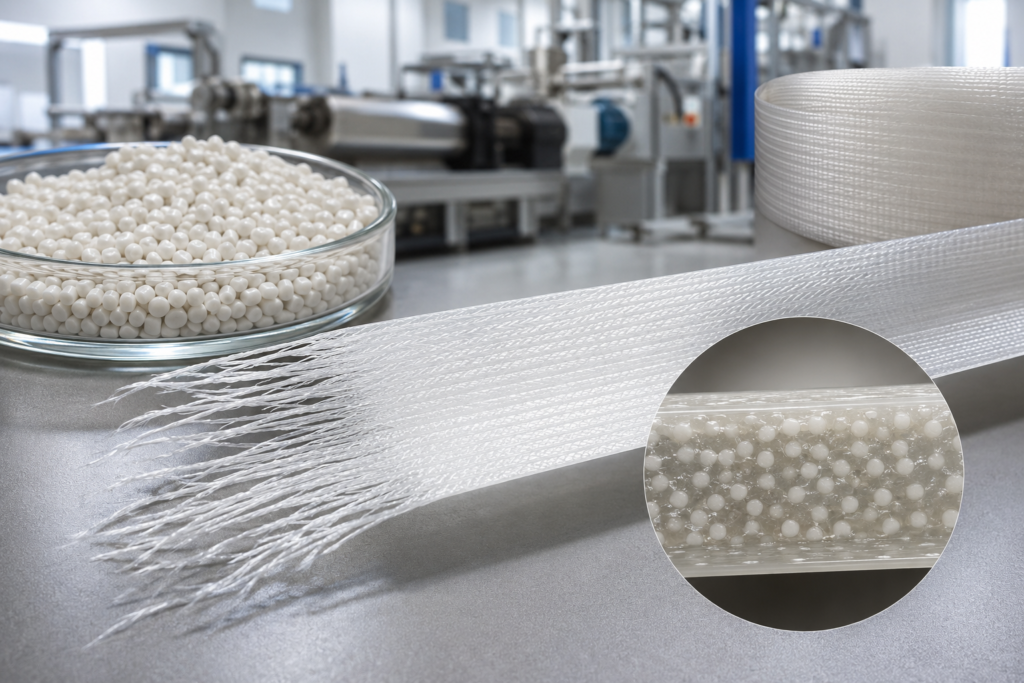
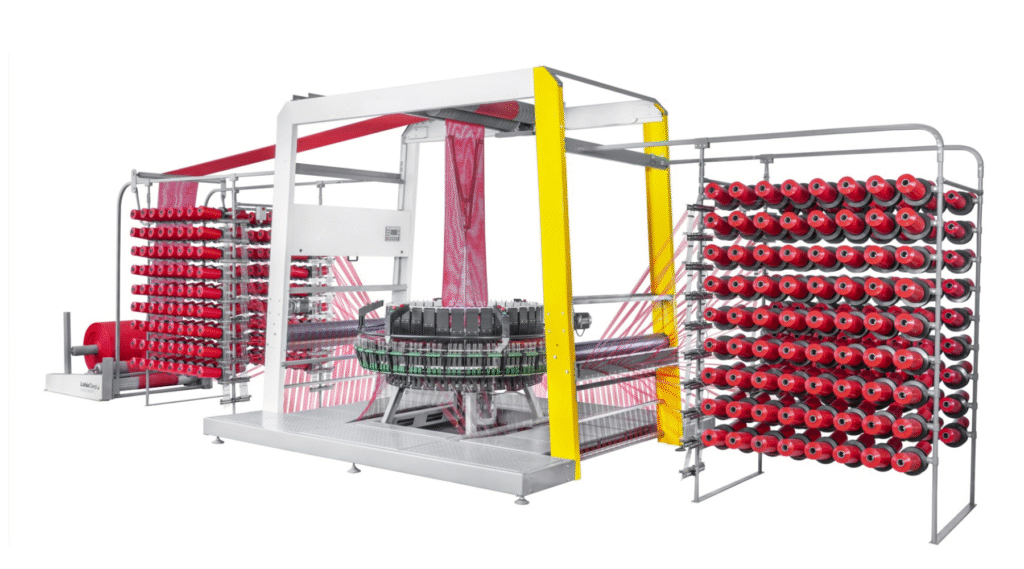
Even a minor defect in woven polypropylene (PP) fabric or industrial packaging can lead to serious performance problems. Fibrillation occurs when PP tapes split into fine strands, weakening the material and affecting its appearance, strength, and reliability.
Antifibrillation filler masterbatches are specially developed to improve the structural stability of PP raffia tapes and woven sacks. They help manufacturers achieve more consistent production, reduce material waste, and enhance the durability of finished products.
A stable tape-extrusion and weaving process is essential for efficient manufacturing. Antifibrillation masterbatches therefore offer more than improved product performance—they also support smoother processing, fewer defects, and better overall production quality.
What Causes Fibrillation in Polypropylene Tapes?
Fibrillation commonly occurs during the stretching and orientation stage of polypropylene tape production. When the polymer structure is not uniformly aligned or processing conditions fluctuate, the tape may begin to split into thin strands or filaments. This can result in:
- Low tensile strength
- Unstable performance during weaving
- Excess dust production
- Increased wastage through rejection
- Reduced load capacity
When packaging cement, storing food grains, or industrial bulk packing, such vulnerable points lead to packing damage and losses. Thus, keeping fibrillation under control is a must to deliver a high-quality product.
Why Antifibrillation Technology Is Essential in Modern Production
Polypropylene woven sacks and fabrics have become widely used in packaging because they are lightweight, durable, and cost-effective. However, when the additive formulation is not properly balanced, manufacturers may face issues such as uneven tape formation, weak orientation, and breakage during high-speed production.
Advanced plastic masterbatch solutions are developed to improve filler dispersion, polymer compatibility, and tape integrity. Antifibrillation masterbatches help distribute fillers more uniformly and modify the internal structure of the polymer matrix, resulting in smoother, more stable tapes with better resistance to splitting.
This improved tape quality supports easier weaving, reduces loom interruptions, minimizes production defects, and delivers a cleaner surface finish in the final woven sack.
How Antifibrillation Filler Masterbatches Improve Tape Stability
At the material level, antifibrillation filler masterbatches improve the compatibility between polypropylene and mineral fillers such as calcium carbonate. Their effectiveness largely depends on achieving uniform filler dispersion throughout the polymer matrix.
When correctly incorporated during extrusion, antifibrillation filler masterbatches can:
Improve bonding and interaction within the polymer matrix
Increase tape strength during stretching and orientation
Reduce micro-cracks caused by high draw ratios
Minimise dust and powder formation during processing
Maintain more consistent tape width and denier
Improve surface smoothness and tape uniformity
Reduce splitting and fibrillation during weaving
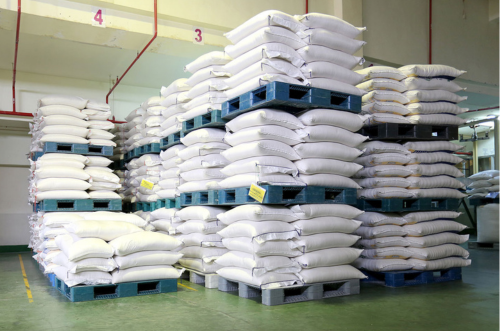
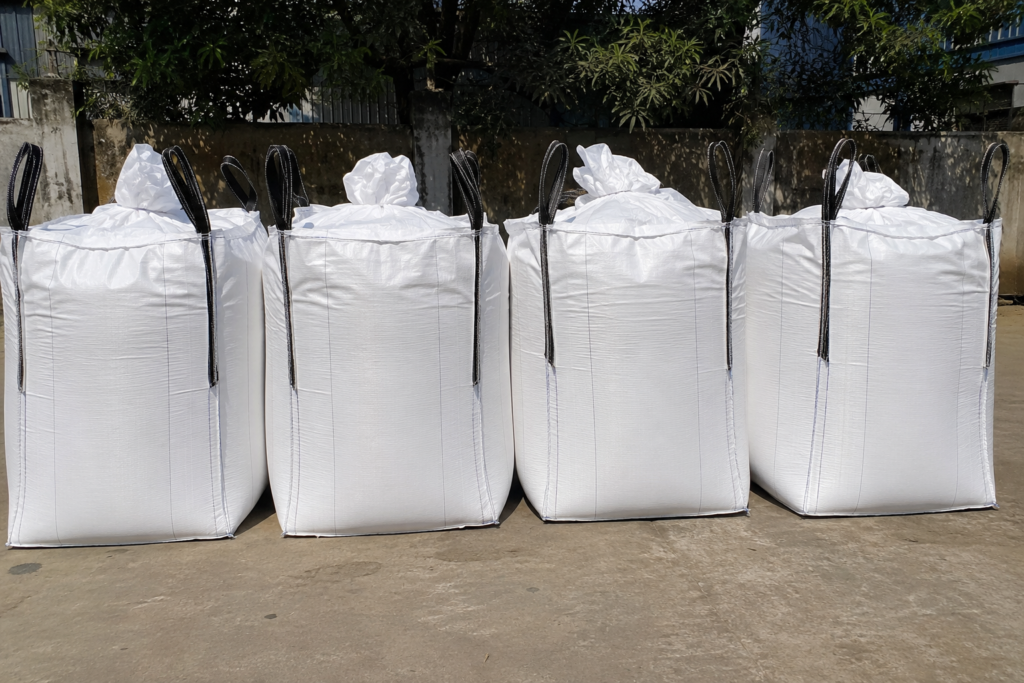
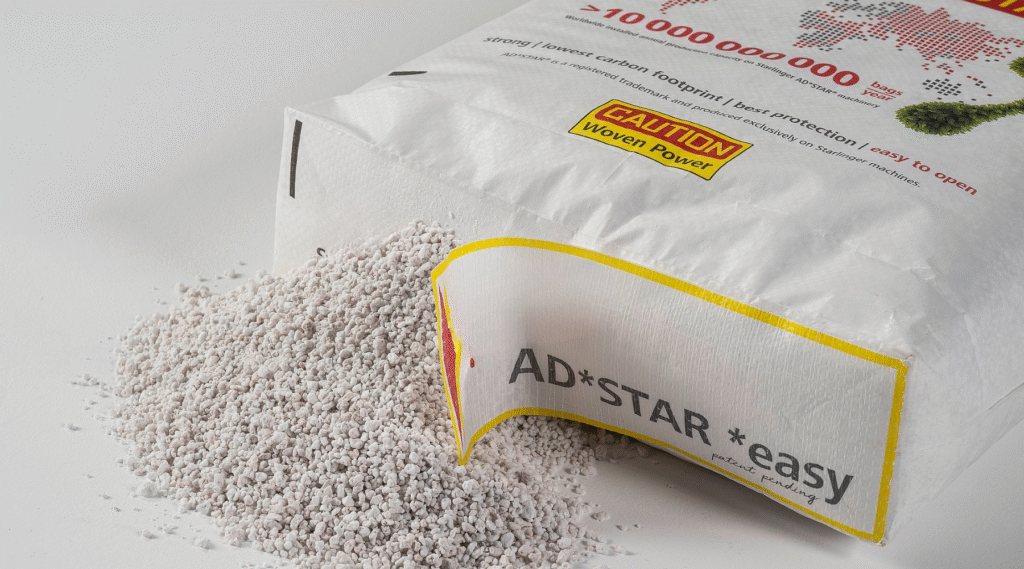
As a result, the produced tapes offer better strength, smoother processing, and improved mechanical performance. These properties are particularly important for PP woven sacks, FIBC bags, raffia fabrics, and other industrial packaging applications where structural reliability is essential.
Advantages Beyond Reducing Manufacturing Defects
In addition to controlling fibrillation, antifibrillation masterbatches provide several added advantages that improve production efficiency, processing stability, and final product quality:
1. Improved Process Stability
Extrusion and stretching become stable, which results in less downtime and wastage of materials. The constant melt flow facilitates the production of a uniform product at a high speed.
2. Cost Optimization
Through the use of filler masterbatches that are well-formulated, it is possible to have a filler loading without compromising the strength of the material. This is beneficial in terms of the balance between cost savings and product performance.
3. Enhanced Surface Finish
Due to better uniform dispersion, the fabric surface becomes smoother. It is also an advantage in terms of print quality for branded packaging applications.
4. Reduced Material Waste
The breakage rate is low, so there are fewer rejected batches, which in turn means improved resource utilization.

Key Factors in Selecting the Right Masterbatch
The effectiveness of antifibrillation solutions varies between products. The performance of a masterbatch is determined by several technical aspects:
- Calcium carbonate quality and particle size
- Surface treatment of fillers
- Polymer carrier compatibility
- Melt flow index consistency
- Dispersion technology
The manufacturers have to be certain that the masterbatch will be compatible with their existing polypropylene extrusion line. Incompatibility may be the cause of inefficient mixing that would lead to property variation in the tape.
Our strategy concentrates on controlled dispersion, high-quality raw materials, and extensive testing to ensure consistent performance of our products under various operating conditions.
Applications in Industrial Packaging
Antifibrillation solutions offer great benefits to those industries where there is a heavy use of woven polypropylene:
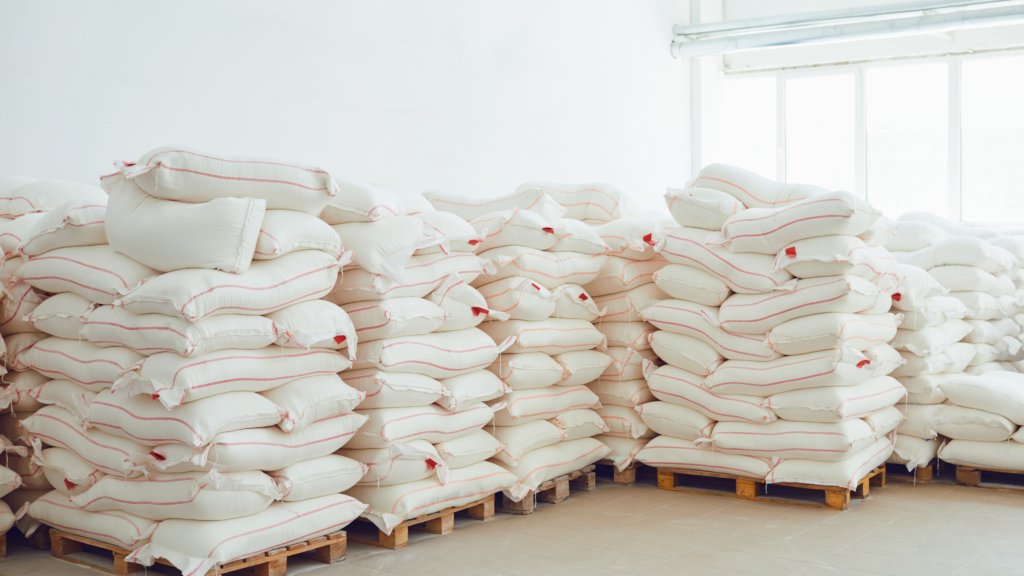
- Cement and chemical packaging
- Food grain and agricultural storage
- Fertilizer and mineral sacks
- Bulk industrial material handling
Mechanical strength and durability are the two key factors in such demanding applications. The improved integrity of the tape is the main reason that woven fabrics are able to take the stress during filling, stacking, and transporting.

Supporting Consistent Quality in High-Speed Production
Modern production lines operate at increasingly high speeds. This situation calls for high-performing, consistently reliable additives even under pressure. If dispersion is not uniform or fillers are of low quality, breakage of the loom and loss of efficiency are the quick consequences.
Advanced calcium carbonate masterbatch formulations and strict quality control practices help to reduce the variance of an output product. An effective additive performance also helps in stretching and weaving tapes, which increases the efficiency of plants.
In our experience of developing specialized additive solutions, we have learned of the crucial importance of the details in formulation and testing to the real results achieved by the finished product. Every step of the process is of vital importance.
The Long-Term Impact on Product Reliability
Preventing fibrillation is not only effective in providing immediate production efficiency but also in ensuring the reliability of the products. Woven sacks, after decreased fibrillation, show:
- Higher tensile strength retention
- Higher tear-resistance
- Better stability concerning stacking ability
- Increased ability to support loads
This also helps to further enhance the reputation of producers selling products to such industries where safety and long life are major factors.
Engineering Stronger and More Reliable Tapes
Manufacturing excellence depends on consistency at every stage of production. By using antifibrillation filler masterbatches in polypropylene tape manufacturing, producers can create woven fabrics that offer better resistance to splitting, lower dust formation, and improved structural stability under demanding operating conditions.
For manufacturers looking for reliable additive performance, choosing an experienced masterbatch partner is essential. Bajaj Masterbatches develops advanced formulations designed to solve practical processing and quality challenges. Our solutions support applications involving plastic masterbatches, polypropylene filler masterbatches, PP woven sacks, and calcium carbonate masterbatches, helping industries manufacture packaging materials that are stronger, cleaner, and more dependable.
With a strong focus on dispersion quality, processing efficiency, and final-product performance, antifibrillation masterbatches provide far more than basic additive benefits. They become an important foundation for consistent production, reduced defects, and long-term manufacturing success.
About Bajaj Plast Pvt. Ltd.
Bajaj Plast Pvt. Ltd. is a leading manufacturer of high-quality masterbatch solutions, dedicated to innovation, sustainability, and excellence. With a strong focus on customer satisfaction and cutting-edge technology, we are committed to delivering superior products that meet the evolving needs of the polymer industry.

 BAJAJ PLAST PVT LTD