
The Role of Excellent Dispersion in Achieving Uniform Plastic Colour
Introduction
Colour plays a major role in determining the appearance and perceived quality of plastic products. From packaging films and consumer goods to automotive interiors, toys, household appliances, and industrial components, consistent colour is essential for achieving a professional and reliable finish. This consistency depends largely on one important factor: excellent dispersion.
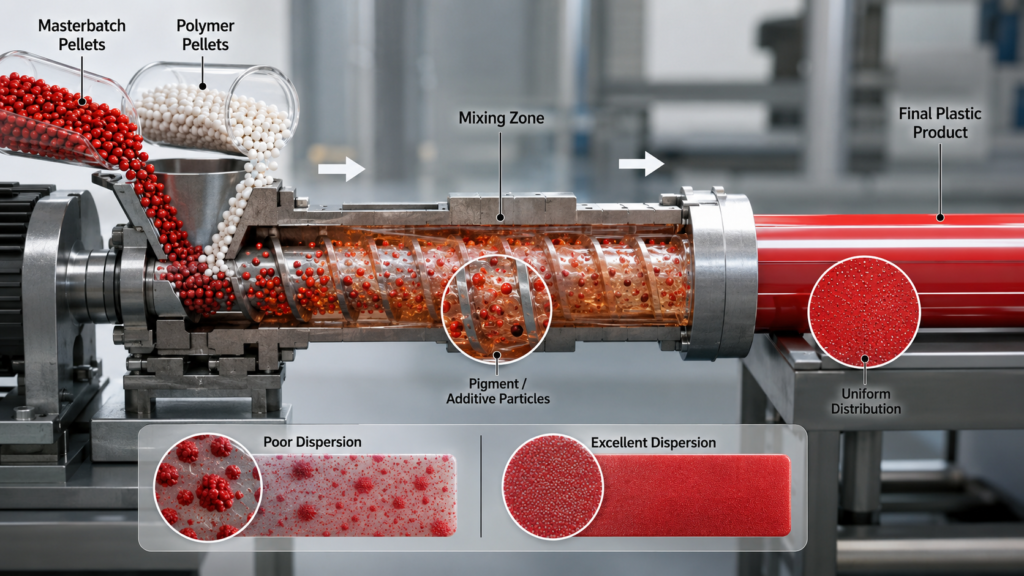
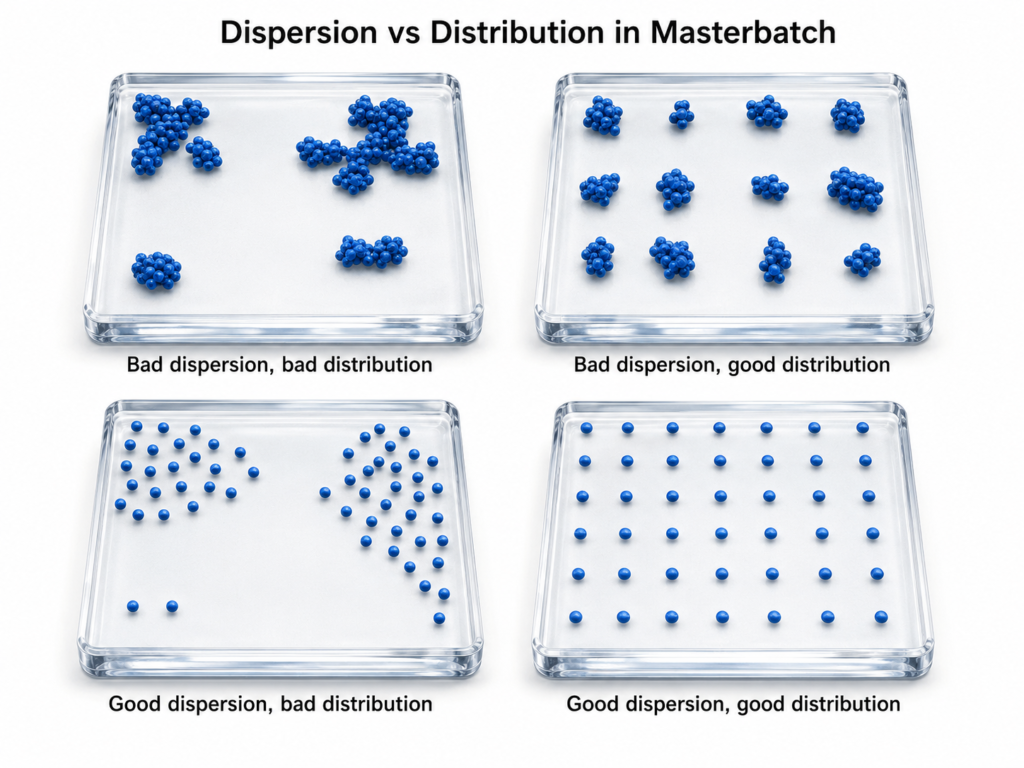
Dispersion describes how uniformly pigments and functional additives are distributed throughout the polymer matrix. When these materials are properly dispersed, the finished plastic displays smooth surfaces, even colouring, strong brightness, and consistent shade across every product and production batch.
Poor dispersion, however, can lead to visible defects such as streaks, specks, uneven patches, colour variation, and surface irregularities. In some cases, it may also affect processing stability and the mechanical performance of the final product.
This article explains the importance of pigment dispersion, its influence on product appearance and quality, the technical principles behind uniform distribution, and how Bajaj Masterbatch helps manufacturers achieve reliable results through high-quality, precisely formulated masterbatch solutions.
The Importance of Uniform Dispersion in Coloured Plastics
Dispersion can be understood by comparing it to mixing food colour into dough. When the colour is distributed thoroughly, the entire mixture develops an even shade. Incomplete mixing leaves visible streaks and uneven patches. Pigments and additives behave similarly when blended into plastic polymers.
What Poor Dispersion Causes
- Color streaks or tiger stripes
- Visible pigment clumps or spots
- Uneven opacity or brightness
- Shade variation between batches
- Reduced mechanical strength due to pigment agglomerates
- High rejection rates during QC inspections
Even small dispersion issues can lead to big manufacturing challenges, especially in industries that rely on precise color standards.
Achieving Uniform Colour Through Better Dispersion
Consistent Shade Across Products
Manufacturers often struggle with shade variation when dispersion is inconsistent. Excellent dispersion ensures every unit, whether one piece or one million pieces, matches the brand’s color standard perfectly.
Smooth and Streak-Free Surface
Pigment agglomerates cause streaking or flow lines. High dispersion eliminates this, resulting in:
- A smooth finish
- Premium visual quality
- No visible defects
Better Opacity and Whiteness
Pigments like titanium dioxide (TiO₂) perform best when dispersed properly. This improves:
- Light-scattering ability
- Opacity
- Whiteness index
- Overall optical quality
Stronger Mechanical Performance
Pigment clusters act as weak points. When particles are well dispersed, the polymer maintains:
- Better strength
- Improved flexibility
- Higher durability
What Influences Dispersion Quality?
Achieving perfect dispersion depends on various factors, including:
1. Pigment Quality and Particle Size
High-quality pigments with narrow particle distribution disperse more easily and give better results.
2. Carrier Resin Compatibility
The carrier must melt evenly with the base polymer for smooth pigment release.
Bajaj Masterbatch uses:
- PE carriers for PE films
- PP carriers for PP applications
- Speciality carriers for engineering plastics
3. Additive Chemistry
Wetting agents, dispersants, and processing aids help pigments break down uniformly.
4. Processing Equipment
Extruder shear, mixing zones, and screw design influence how well pigments disperse during compounding or molding.
How BAJAJ Masterbatch Ensures High-Quality Dispersion
At Bajaj Masterbatch, dispersion is engineered into the product from the start. Our formulations follow strict quality and performance standards.
Advanced High-Shear Compounding
Our high-shear compounding systems break down pigment clusters into fine particles, ensuring flawless distribution.
Precision Pigment Wetting
Special wetting agents prevent clumping, allowing pigments to blend seamlessly into the polymer.
Ideal Pigment-to-Carrier Ratios
The right pigment load and carrier ensure uniform melting and smooth color release during processing.
Tight QC Control
Every batch undergoes:
- Dispersion checks
- Shade accuracy tests
- MFI (Melt Flow Index) evaluations
- Film blowing or molding simulations
Each is designed with dispersion as a core performance requirement, ensuring reliable and consistent results.
Industries That Depend on Excellent Dispersion
Flexible Packaging
Films for milk, detergent, processed food, and pouches require flawless opacity and color consistency.

Consumer Goods
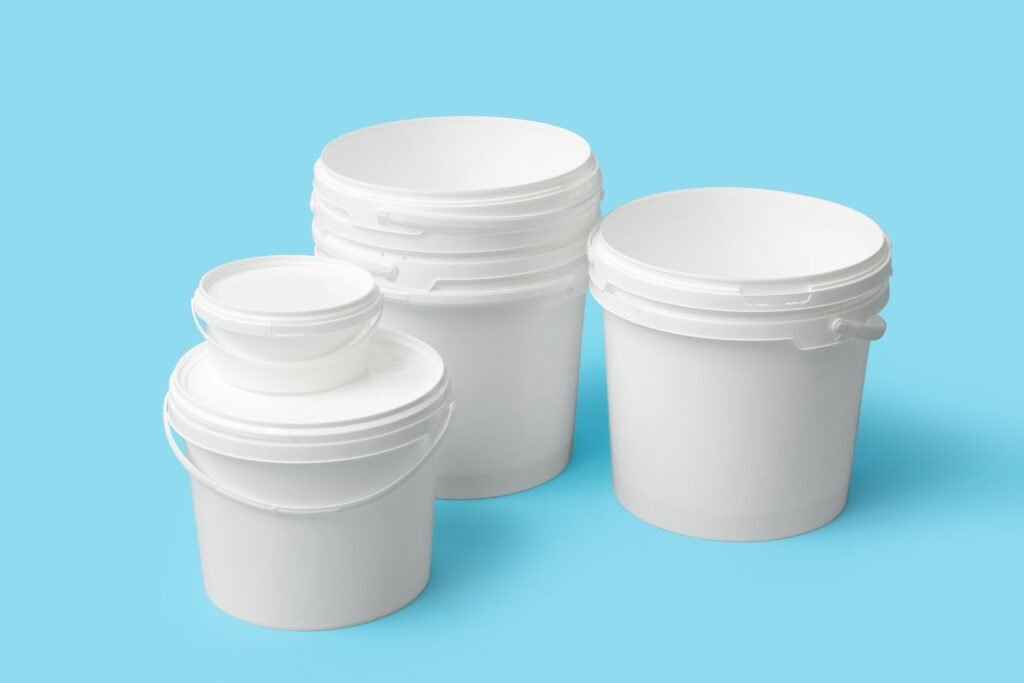
Products like toys, buckets, containers, and daily-use items rely on consistent shades to maintain brand quality.
Automotive Components
Interior parts like trims, panels, and dashboards need perfect shade matching across multiple suppliers.

Electrical & Electronics
Covers, housings, and appliance components need smooth color, high brightness, and no streaks.

Conclusion
Uniform color in plastics is not just about pigment quality; it is powered by excellent dispersion. When pigments and additives are distributed evenly throughout the polymer, manufacturers achieve superior appearance, strong performance, and consistent results across every batch.
Bajaj Masterbatch ensures exceptional dispersion across its entire range of White, Black, Colour, Additive & Filler masterbatches. With advanced compounding technology and strict QC processes, we help manufacturers maintain stable shade, eliminate defects, and deliver premium-quality products in every industry.
About Bajaj Plast Pvt. Ltd.
Bajaj Plast Pvt. Ltd. is a leading manufacturer of high-quality masterbatch solutions, dedicated to innovation, sustainability, and excellence. With a strong focus on customer satisfaction and cutting-edge technology, we are committed to delivering superior products that meet the evolving needs of the polymer industry.
