
Flame Retardant Technology for Batteries: Why It Matters Across Every Application
The Real Reason Batteries Need Flame Retardant Protection
Lithium-ion and other high-energy-density batteries store an enormous amount of chemical energy in a very small space. When something goes wrong — a manufacturing defect, physical damage, overcharging, or an internal short — that energy can release all at once as heat. This is called thermal runaway, and once it starts in one cell, it can cascade to neighboring cells in seconds.
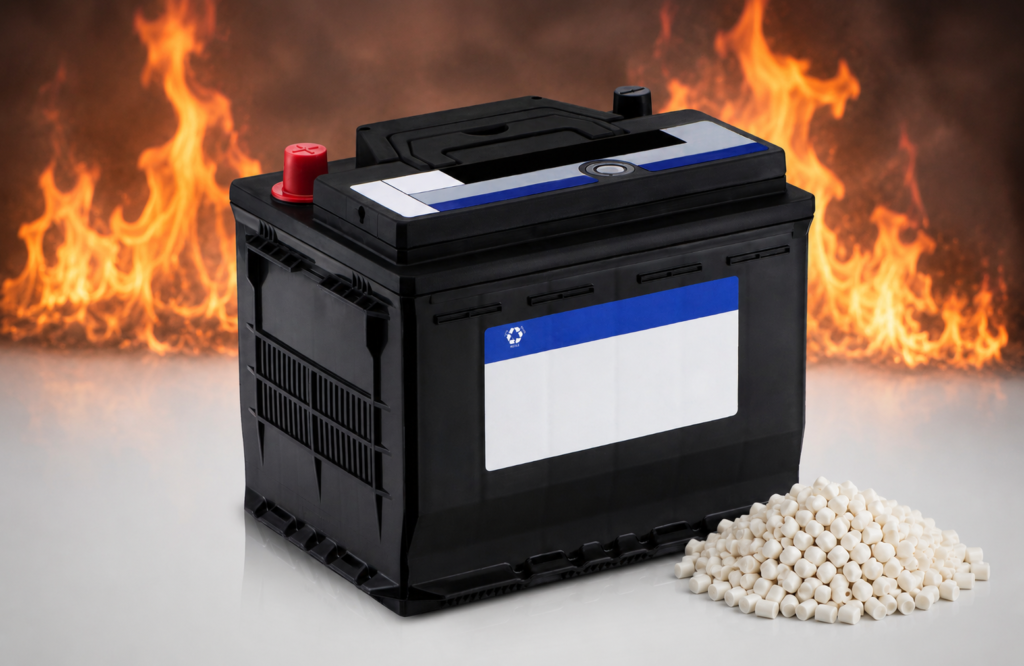
The plastic components surrounding a battery — housings, cell separators, connector bodies, cable insulation — sit directly in the path of that heat. If those plastics ignite easily, soften and drip, or feed the fire with additional fuel, a small internal fault can turn into a much larger event. This is exactly why flame retardant (FR) masterbatch has become a core material choice, not just for EV battery packs, but for any product built around a lithium-based power source.
Where Battery-Grade Flame Retardants Are Actually Used
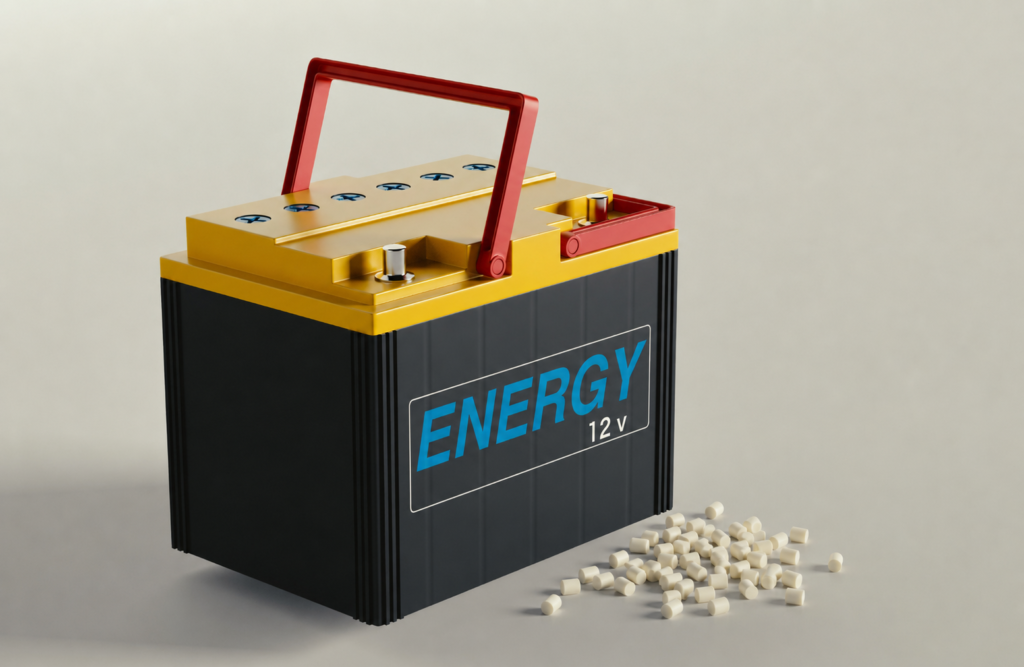
Flame retardant masterbatch isn't only an EV story. The same underlying fire-safety logic applies across a much wider range of battery-powered products.
| Application | Typical Components | Why FR Matters |
|---|---|---|
| Electric vehicles | Battery pack housings, module covers, busbar carriers, HV connectors | Protects occupants; prevents cell-to-cell fire propagation |
| Consumer electronics | Power bank shells, laptop battery compartments, phone charger casings | Compact spaces, close to skin and flammable furnishings |
| Power tools & e-bikes | Battery packs, chargers, tool housings | Repeated impact and vibration increase failure risk |
| Energy storage systems (ESS) | Rack enclosures, module partitions, cable trays | Large stored energy in confined installations (homes, warehouses) |
| Medical & wearable devices | Battery compartments, charging docks | Direct or near-skin contact demands strict safety margins |
Across all of these, the underlying requirement is the same: the plastic must resist ignition, self-extinguish quickly, and not drip flaming material onto the battery or surrounding materials — commonly benchmarked against the UL94 V-0 vertical burn standard.
How Flame Retardant Masterbatch Actually Protects a Battery Component
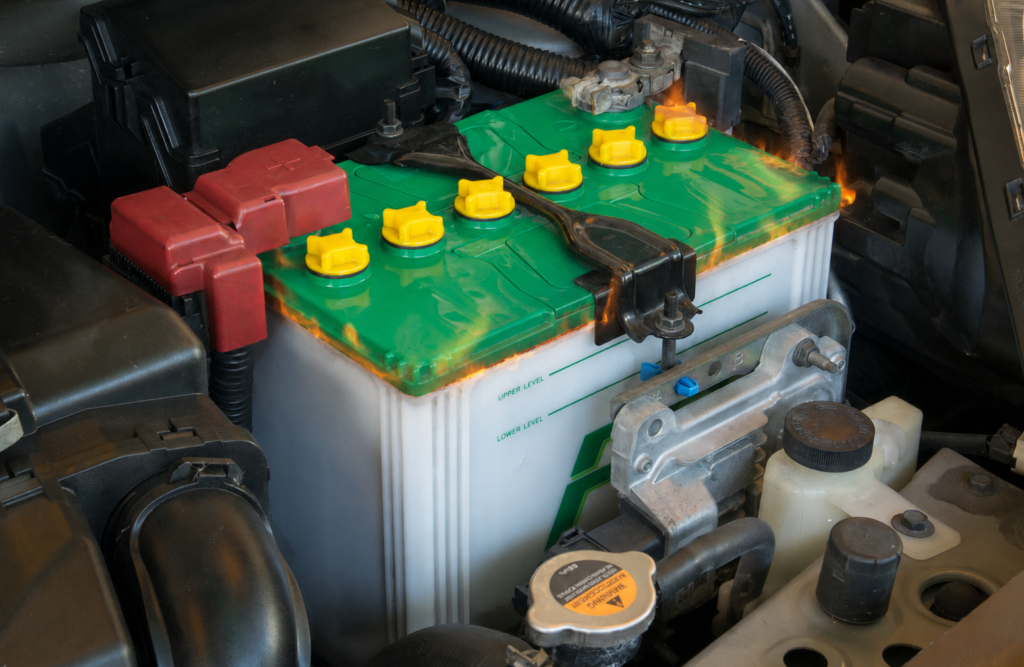
Rather than simply "resisting fire," a well-formulated FR masterbatch works through a few distinct mechanisms:
Char barrier formation
As the plastic heats up, the FR additive helps form a protective carbon char layer on the surface, slowing heat and oxygen from reaching the material underneath.
Drip suppression
Anti-drip agents keep the softened plastic from falling away in flaming droplets that could ignite a battery cell or nearby components.
Heat release reduction
Properly dispersed FR additives lower the peak rate at which heat is released during burning, which slows how fast a fire can spread across a part.
Smoke and toxicity control
Halogen-free (phosphorus- and nitrogen-based) FR systems avoid releasing corrosive, toxic halogen gases during combustion — an important safety factor in enclosed spaces like a vehicle cabin or a storage room.
What to Look for in a Battery-Grade FR Masterbatch
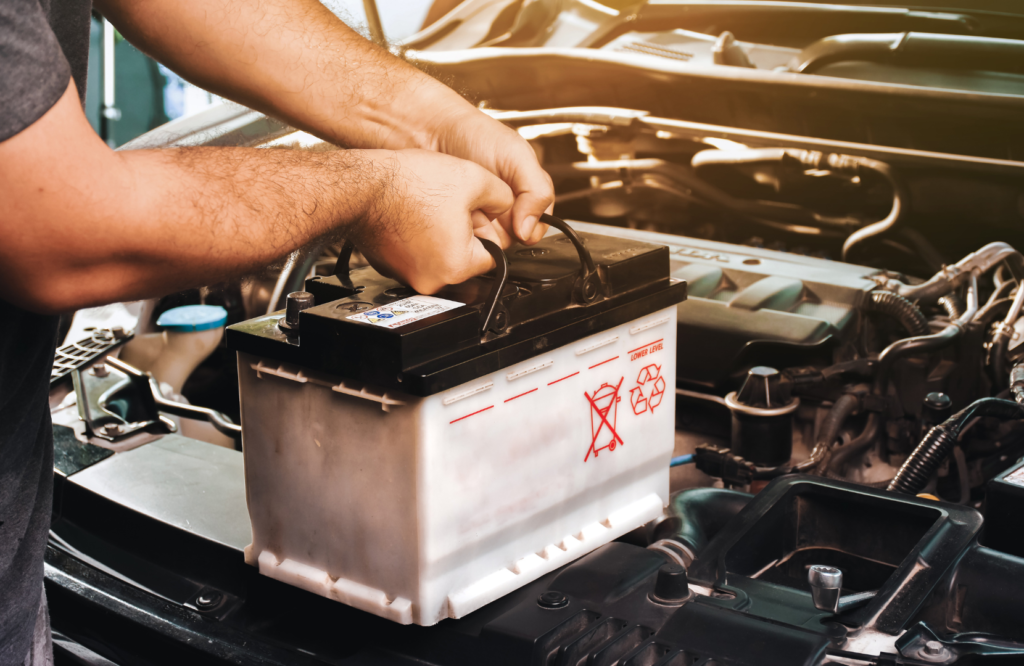
Not every flame retardant additive performs the same way once it's inside a real, molded part. A few things separate a masterbatch that works reliably in production from one that only passes in a lab:
Even dispersion
Poorly dispersed FR particles create weak spots where fire can spread faster than expected.
Halogen-free chemistry
Meets REACH, RoHS requirements while avoiding toxic combustion by-products.
Thin-wall performance
Many battery housings now sit below 1.5 mm wall thickness to save weight; the FR package has to work at that thickness, not just at a standard 3 mm test plaque.
Compatibility with the base resin
Evry Polymer break down differently under heat, so the FR chemistry needs to be tuned to the resin, not applied generically.
Mechanical retention
Adding enough FR additive to reach V-0 shouldn’t come at the cost of impact strength, especially for parts that also need to survive drops or vibration.
Frequently Asked Questions
Does every battery-powered product legally need UL94 V-0 rated plastic?
Not always by law, but V-0 has become the practical industry benchmark for battery-adjacent components, and many OEMs and Tier-1 suppliers require it as a qualification standard regardless of local regulation.
Are halogen-based flame retardants still used in battery products?
Some are, but the trend — especially in EV and consumer electronics — is strongly toward halogen-free phosphorus and nitrogen-based systems, driven by both combustion safety and end-of-life recycling requirements.
Can flame retardant masterbatch be added to any plastic resin?
It needs to be matched to the resin. A flame retardant package that works well in polyamide won’t necessarily perform the same way , since every resin decomposes differently under heat.
Does adding flame retardant weaken the plastic part?
It can, if the loading level and dispersion aren’t carefully engineered. This is why formulation — not just the raw additive — determines whether a part keeps its mechanical and cosmetic properties while still meeting fire-safety targets.
Getting It Right Starts With the Right Formulation
Flame retardant performance in a battery product isn’t something you bolt on at the last step — it has to be engineered into the material from the start, matched to the resin, wall thickness, and real-world conditions the part will face. Whether the application is an EV battery pack, a power bank, an e-bike battery, or a home energy storage unit, the same principle holds: reliable fire safety comes from careful formulation, not a generic additive.
If you’re developing a battery-adjacent component and need a flame retardant masterbatch matched to your resin and application, it’s worth working with a formulator who can validate performance at your actual production wall thickness — not just on a standard test plaque.
About Bajaj Plast Pvt. Ltd.
Bajaj Plast Pvt. Ltd. is a leading manufacturer of high-quality masterbatch solutions, dedicated to innovation, sustainability, and excellence. With a strong focus on customer satisfaction and cutting-edge technology, we are committed to delivering superior products that meet the evolving needs of the polymer industry.

 BAJAJ PLAST PVT LTD