
Quality Testing of Polymer Carrier Resins: Polyethylene (PE) and Polypropylene (PP)
A Technical Overview for Compounders, Masterbatch Manufacturers, and Resin Processors
Introduction
In the polymer processing industry, the carrier resin forms the backbone of any masterbatch or compound formulation. Whether it is a color masterbatch, additive masterbatch, or filled compound, the quality of the base polymer — typically Polyethylene (PE) or Polypropylene (PP) — directly governs the performance, processability, and end-use suitability of the final product. The selection of an appropriate carrier resin and its rigorous quality evaluation are therefore non-negotiable steps in the manufacturing workflow.
This blog outlines the principal quality testing parameters for PE and PP carrier resins, the significance of each test, applicable standards, and practical considerations for laboratory and production environments.
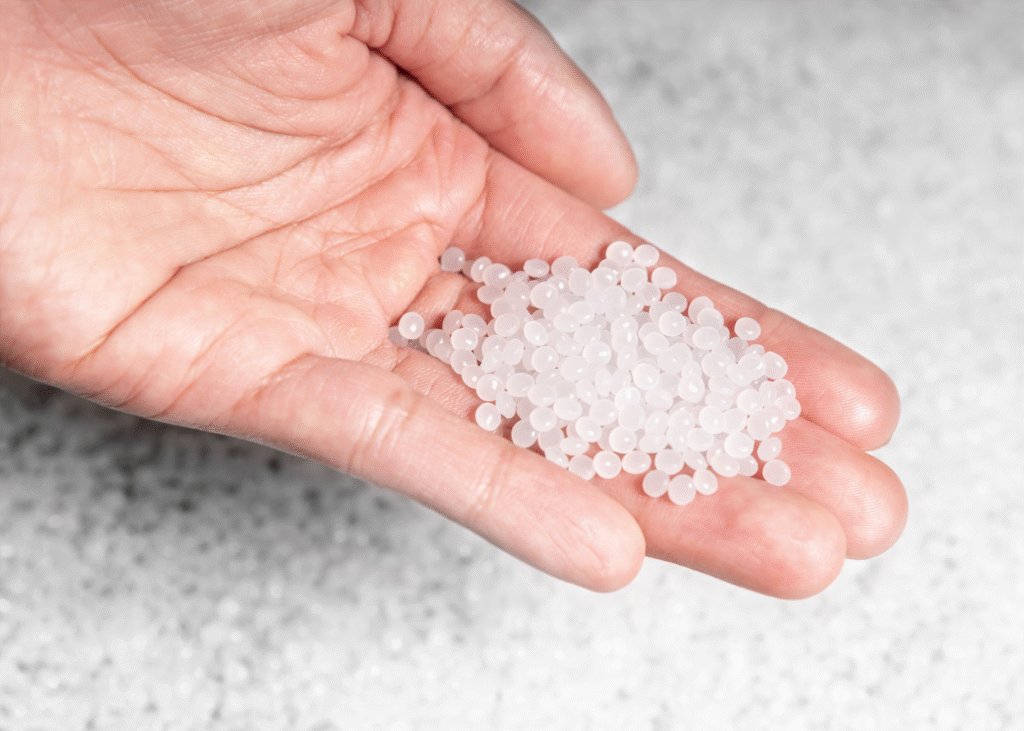
1. Why Carrier Resin Quality Testing Matters
Carrier resins serve a dual function: they act as the processing matrix to uniformly disperse pigments, additives, or fillers, and they become an integral component of the final article into which the masterbatch is let-down. Any variability in the resin’s rheological, thermal, or mechanical properties introduces downstream inconsistencies — ranging from processing instabilities such as surging, die drool, and melt fracture, to end-product failures including delamination, brittleness, and colour streaking.
Compounders and masterbatch manufacturers must therefore validate incoming carrier resin lots against well-defined acceptance criteria before committing material to production.
2. Key Quality Parameters and Test Methods
2.1 Melt Flow Index (MFI) / Melt Flow Rate (MFR)
The Melt Flow Index is the most widely used single-point characterisation of a polymer’s viscosity under defined conditions of temperature and load. For PE, the standard test condition is typically 190°C / 2.16 kg (Condition D), while for PP it is 230°C / 2.16 kg (Condition L).
MFI is inversely related to molecular weight. A high MFI resin indicates lower molecular weight and, consequently, lower melt viscosity. For carrier resin selection:
- High MFI grades (typically > 20 g/10 min) are preferred for masterbatch carriers to ensure good pigment wettability and dispersion.
- Low MFI grades are associated with higher mechanical performance but may present challenges in pigment dispersion.
Lot-to-lot MFI variation exceeding ± 10% of the nominal value should be flagged and investigated, as it reflects changes in molecular weight distribution, catalyst residuals, or thermal history from the resin supplier.
2.2 Density
Density is a critical differentiator within the polyethylene family. PE carrier resins span a broad density range:
| Grade | Density Range (g/cm³) |
|---|---|
| LDPE (Low Density PE) | 0.910 – 0.925 |
| LLDPE (Linear Low Density PE) | 0.915 – 0.935 |
| HDPE (High Density PE) | 0.941 – 0.965 |
For PP homopolymer, density typically falls in the range of 0.900 – 0.910 g/cm³, while PP copolymers (random and impact) exhibit slightly lower values depending on the ethylene co-monomer content.
Density directly influences crystallinity, mechanical stiffness, chemical resistance, and barrier properties. Any deviation from the specified density window signals potential contamination, co-monomer level inconsistency, or blending with off-grade material.
2.3 Thermal Analysis: DSC (Differential Scanning Calorimetry)
DSC is the definitive technique for characterising a polymer’s thermal behaviour. The primary parameters extracted from a DSC scan of PE and PP include:
- Melting Peak Temperature (Tm): The temperature at which crystallites melt. HDPE typically shows a Tm of 125–135°C; PP homopolymer shows a Tm of 160–168°C. Significant depression of Tm indicates copolymer contamination or low-tacticity PP.
- Crystallisation Temperature (Tc): Measured on the cooling cycle. Useful for assessing nucleation behaviour and its effect on cycle times in injection moulding applications.
- Heat of Fusion (ΔHf): Proportional to the degree of crystallinity. For PE, comparison against the theoretical ΔHf of 293 J/g for 100% crystalline PE enables calculation of % crystallinity.
- Oxidation Induction Time (OIT): Measured in isothermal mode under oxygen atmosphere (typically at 200°C for PE). OIT assesses the thermal stabiliser package efficacy. A minimum OIT of 20–30 minutes is generally required for carrier resins intended for extrusion applications.
2.4 Thermogravimetric Analysis (TGA)
TGA measures mass loss as a function of temperature under controlled atmospheric conditions (nitrogen for decomposition studies; air or oxygen for oxidative degradation studies). For PE and PP:
- Onset Decomposition Temperature: HDPE and PP typically begin significant degradation above 400°C. A lower-than-expected onset temperature may indicate the presence of plasticisers, oligomers, or incompatible polymer blends.
- Ash / Inorganic Residue: Any residue remaining above 600°C under air atmosphere represents inorganic content — catalyst residuals, mineral fillers, or pigment carry-over. For carrier-grade resins, ash content should typically be below 0.1%.
- Moisture Content: Hygroscopic impurities can be detected as an early weight loss event below 150°C.
2.5 Vicat Softening Temperature
The Vicat Softening Point (VSP) is the temperature at which a flat-ended needle of 1 mm² cross-section penetrates a test specimen to a depth of 1 mm under a specified load. It indicates the practical upper service temperature of the polymer. For PP homopolymer, VSP is typically 150–155°C; for HDPE, it falls in the range of 115–130°C depending on density.
This parameter is particularly relevant when the masterbatch or compound is intended for hot-fill packaging, automotive underhood components, or high-temperature sterilisable applications.
2.6 Tensile Properties
Tensile testing of compression-moulded or injection-moulded plaques of the carrier resin provides baseline mechanical data including:
- Yield Stress and Yield Strain: Indicative of short-term load-bearing capacity.
- Tensile Strength at Break: Measures ultimate failure load.
- Elongation at Break: Reflects ductility. LDPE and LLDPE typically show very high elongation (>400%), whereas HDPE and PP show more moderate values (20–400% depending on grade).
These values are critical when the carrier resin is selected for film or fibre applications, where mechanical performance of the masterbatch in the let-down matrix must be predictable.
2.7 Ash Content
Ash content quantifies the total inorganic residue after complete combustion of the polymer. For carrier resins used in transparent film or optical applications, very low ash content (< 0.05%) is essential to avoid specks, gels, or optical defects. Elevated ash values may indicate catalyst carry-over from the Ziegler-Natta or metallocene polymerisation process, or contamination during storage and transport.
2.8 Volatile Matter and Odour
For applications in food packaging, medical grade masterbatches, or automotive interiors, volatile organic compound (VOC) content of the carrier resin is a critical quality parameter. Volatiles may originate from:
- Residual monomers (ethylene, propylene)
- Process additives (lubricants, antistatic agents)
- Degradation products from prior thermal processing
Headspace gas chromatography (HS-GC/MS) is the preferred analytical technique. For automotive applications, VDA 270 odour classification (scale 1–6) and VDA 278 thermal desorption analysis are standard requirements.
2.9 Colour Assessment: CIELab and Yellowness Index
Natural (undyed) PE and PP carrier resins should exhibit a high degree of optical clarity or whiteness and minimal yellowness. The Yellowness Index (YI) is measured on injection-moulded plaques using a spectrophotometer in reflectance mode. YI is particularly sensitive to:
- Oxidative degradation during pelletising or storage
- Inadequate antioxidant stabilisation
- Titanium dioxide catalyst residuals in HDPE grades
An increasing YI in successive production lots from the same supplier may indicate a drift in the stabiliser system or a change in polymerisation conditions.
2.10 Gel Count and Contamination Evaluation
Method: Film blowing / Cast film extrusion followed by optical gel counting; gel permeation by film evaluation systems (e.g., OCS, Optical Control Systems)
Gels are cross-linked or high-molecular-weight polymer particles that fail to melt and disperse during extrusion. In thin film applications (BOPP, BOPE, packaging films), gel count is a critical defect metric expressed as gels per square metre above a defined size threshold (typically 200 µm or 400 µm).
Gels arise from:
- Oxidative cross-linking during prior thermal processing
- High-molecular-weight tails in the molecular weight distribution
- Incompatible polymer contamination
For film-grade PE and PP carriers, incoming gel count assessment via blown film evaluation is strongly recommended.
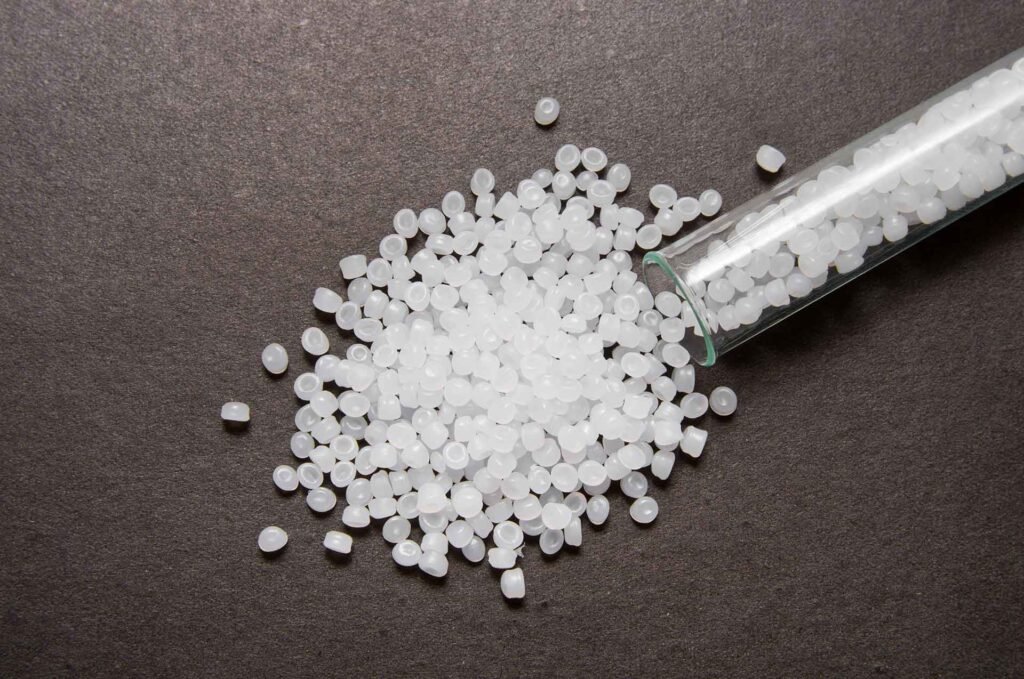
3. Molecular Weight and Molecular Weight Distribution
Technique: Size Exclusion Chromatography / Gel Permeation Chromatography (SEC/GPC)
Standard: ISO 16014
Although MFI provides a single-point viscosity measurement, full molecular weight characterisation via GPC provides Mn (number-average molecular weight), Mw (weight-average molecular weight), and the dispersity index Ð = Mw/Mn. A narrow molecular weight distribution (low Ð) indicates tighter polymerisation control and more predictable rheological behaviour, particularly for high-precision extrusion applications.
Broad MWD resins (high Ð) offer certain processing advantages (easier flow, less die pressure) but may exhibit higher extractables levels and inferior optical properties.
4. Stabiliser System Assessment
Polyethylene and polypropylene are susceptible to thermal and oxidative degradation during melt processing. Carrier resins are routinely supplied with a combination of:
- Primary Antioxidants (Hindered Phenolics): e.g., Irganox 1010, Irganox 1076 — act as radical scavengers during melt processing.
- Secondary Antioxidants (Phosphites/Phosphonites): e.g., Irgafos 168 — decompose hydroperoxides before they generate radical chain reactions.
- Acid Scavengers: e.g., calcium stearate — neutralise residual catalyst-derived HCl or acidic species.
Stabiliser content and identity can be assessed by:
- HPLC: Quantitative determination of additive levels after solvent extraction.
- OIT (as described in DSC section): Functional assessment of stabiliser efficacy.
Inadequate stabilisation in the carrier resin will result in colour development, MFI drift, and embrittlement during compounding or end-use processing.
5. Practical Considerations for Incoming Quality Control (IQC)
A pragmatic IQC programme for PE/PP carrier resins typically operates on a tiered basis:
Tier 1 — Every Lot (Rapid Tests):
- MFI / MFR
- Visual inspection and colour (YI)
- Density (if applicable for PE grades)
Tier 2 — Periodic / Skip-Lot Testing:
- Ash content
- DSC (Tm, Tc, OIT)
- Tensile / mechanical properties
Tier 3 — Qualification / Supplier Change / Specification Dispute:
- Full GPC/MWD analysis
- HPLC stabiliser profiling
- VOC/headspace analysis
- Gel count via film evaluation
The frequency of Tier 2 and Tier 3 testing should be calibrated against supplier qualification status, historical lot-to-lot variability data, and the criticality of the end application.
6. Common Non-Conformances and Root Cause Analysis
| Non-Conformance | Possible Root Cause | Recommended Investigation |
|---|---|---|
| MFI out of specification (high) | Degradation during transport / storage; supplier process drift | DSC for Tm depression; GPC for Mw reduction |
| High ash content | Catalyst residuals; contamination | TGA; XRF elemental analysis |
| Elevated Yellowness Index | Oxidative degradation; poor stabilisation | OIT; HPLC for antioxidant depletion |
| High gel count | Cross-linking; contamination | GPC high-MW tail analysis; visual gel microscopy |
| Odour complaint | Residual VOCs; degradation products | HS-GC/MS; VDA 270 sensory test |
| Density out of specification | Co-monomer content drift; blending | DSC crystallinity; GPC co-monomer distribution |
7. Regulatory and Application-Specific Considerations
For carrier resins destined for food-contact masterbatch production, compliance with the following frameworks must be verified at the resin level:
- EU Regulation (EC) No. 10/2011 (Plastics in contact with food): Overall Migration Limit (OML) ≤ 10 mg/dm²; Specific Migration Limits (SML) for individual substances.
- US FDA 21 CFR (applicable sections for polyolefins): Sections 177.1520 (polyolefin resins) specify permitted additive substances and their maximum levels.
- BfR Recommendations (Germany): Relevant for specific migration of antioxidants and processing aids.
Resin suppliers should furnish certificates of compliance, food contact declarations, and extractables data for regulated applications.

Conclusion
The quality assurance of PE and PP carrier resins is a multidimensional discipline encompassing rheological, thermal, mechanical, chemical, and optical characterisation. A systematic and standards-compliant testing programme — spanning MFI, density, DSC, TGA, ash content, colour assessment, and gel evaluation — is essential to ensure consistent compounding performance and end-product integrity.
As carrier resin grades continue to diversify with the commercialisation of metallocene-catalysed polyolefins, bimodal HDPE grades, and high-performance PP random copolymers, the analytical toolkit of the quality laboratory must evolve in parallel. Investment in robust incoming quality control procedures is not merely a compliance exercise — it is a foundational competitive advantage in the increasingly demanding landscape of polymer processing.
About Bajaj Plast Pvt. Ltd.
Bajaj Plast Pvt. Ltd. is a leading manufacturer of high-quality masterbatch solutions, dedicated to innovation, sustainability, and excellence. With a strong focus on customer satisfaction and cutting-edge technology, we are committed to delivering superior products that meet the evolving needs of the polymer industry.

 BAJAJ PLAST PVT LTD