
BAJAJ PLAST PPA · BLOWN FILM EXTRUSION
A smoother film.
A stronger impression.
Polymer Processing Aid Masterbatch.
For the surface quality your blown film deserves.
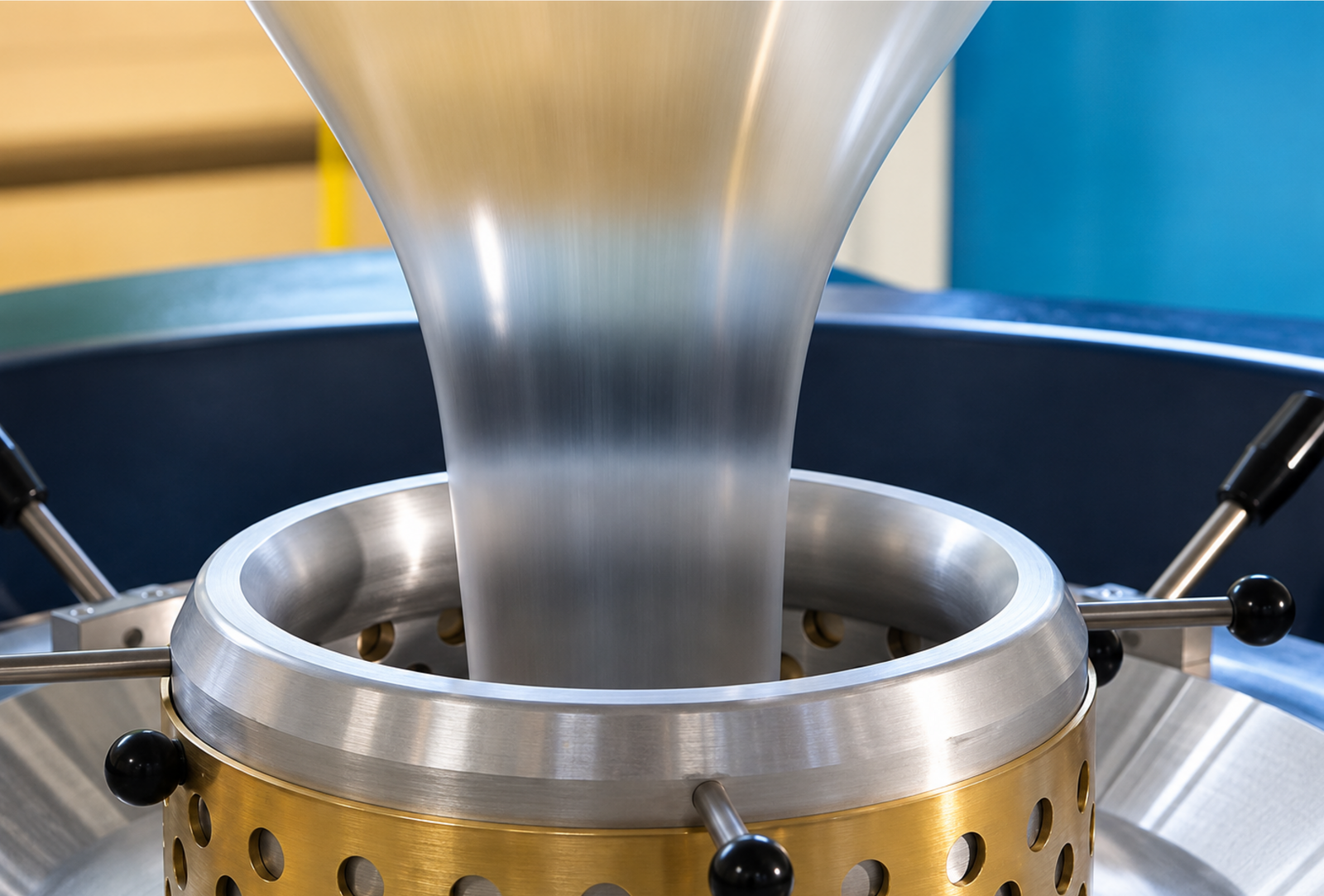
One application. Every detail considered.
Better film begins at the die. Bajaj Plast PPA helps address melt-fracture-related surface roughness in compatible blown-film formulations—bringing the focus back to a smooth, consistent finish.
The blown-film application
Follow the bubble.
See the possibilities.
A closer look at extrusion, film formation and winding. One connected production process.
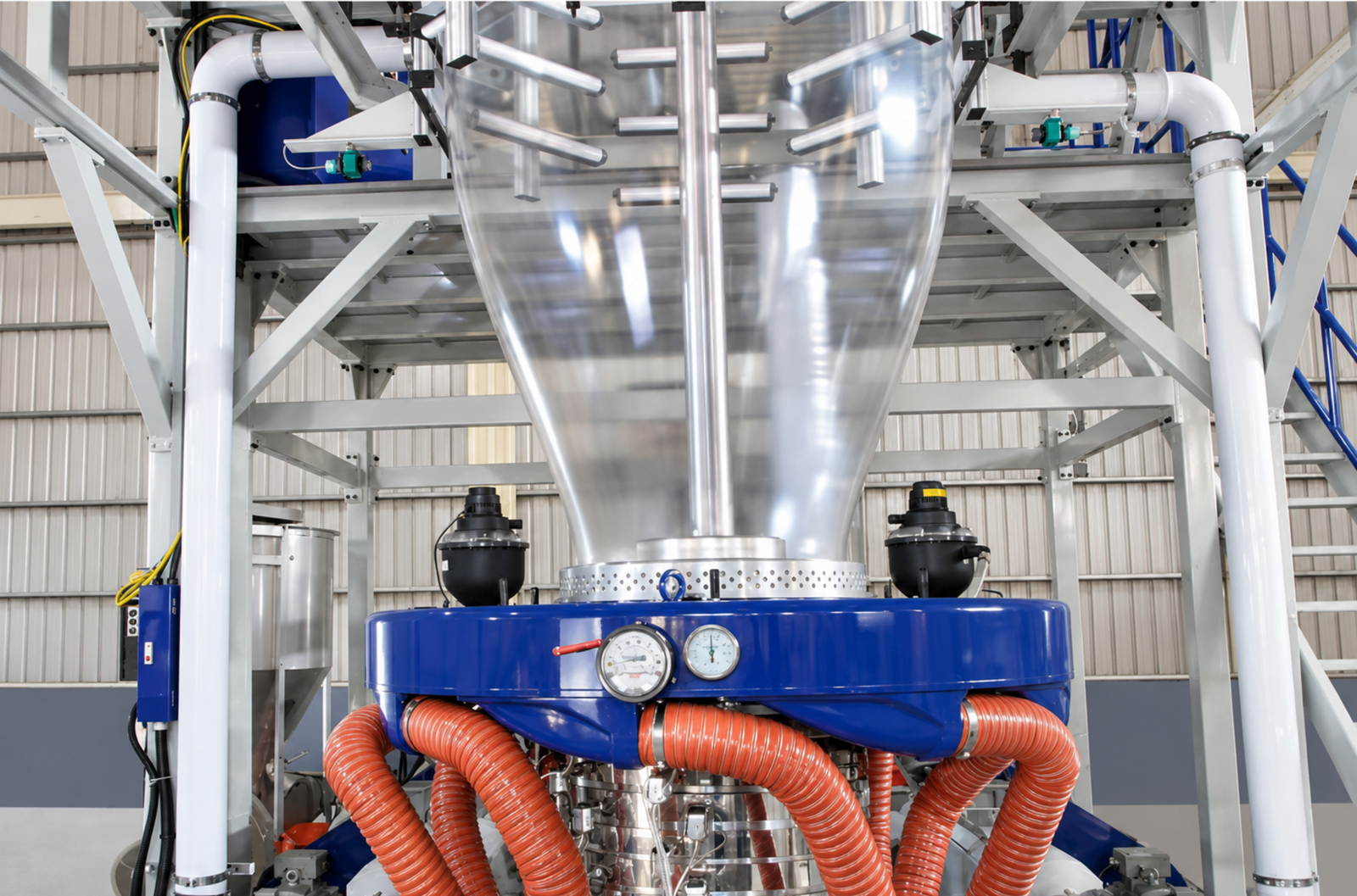
Film starts with the formulation.
Match the PPA grade to the film resin, additives and processing conditions.
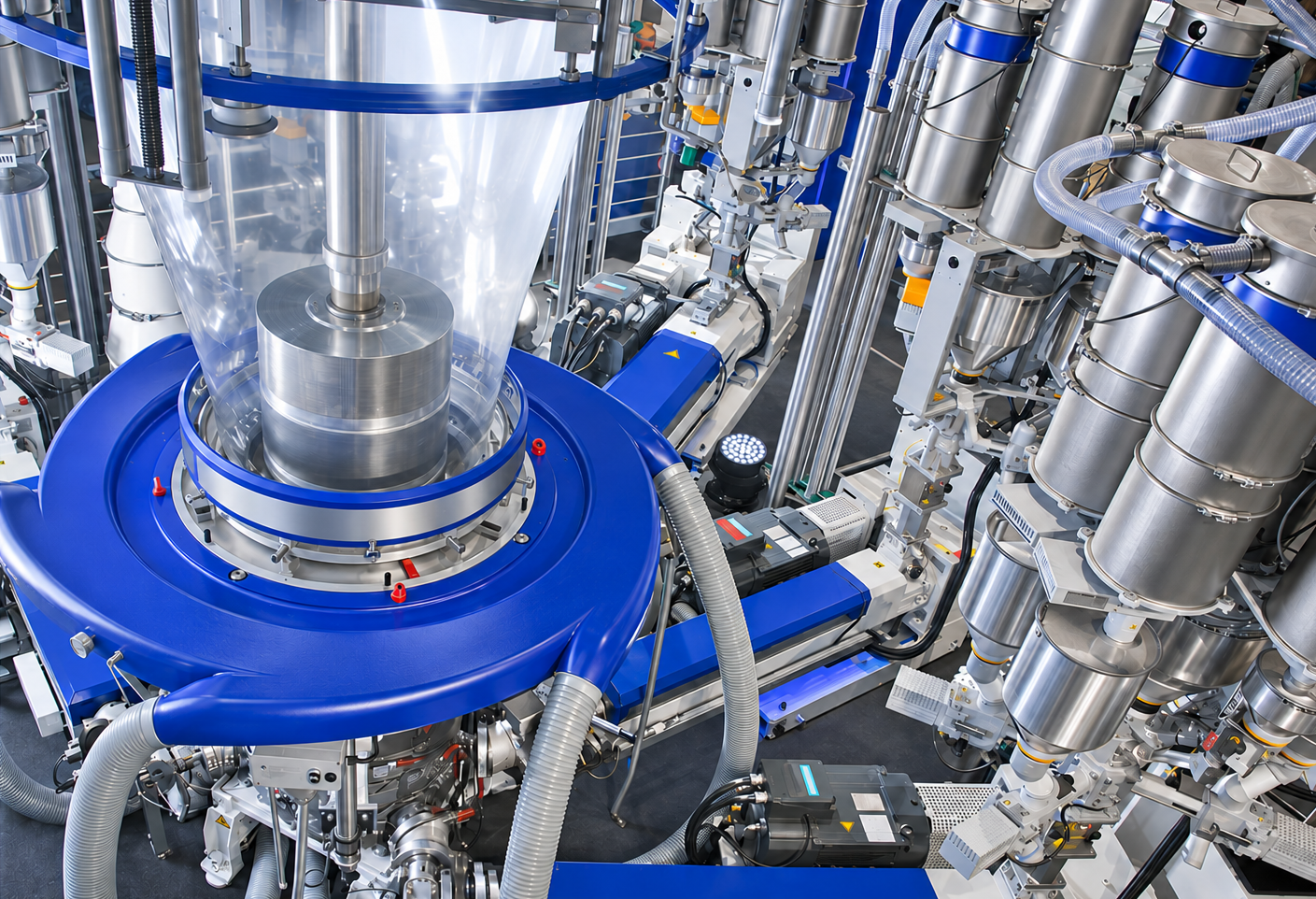
A closer look at extrusion.
Evaluate process-aid performance on your own blown-film line.
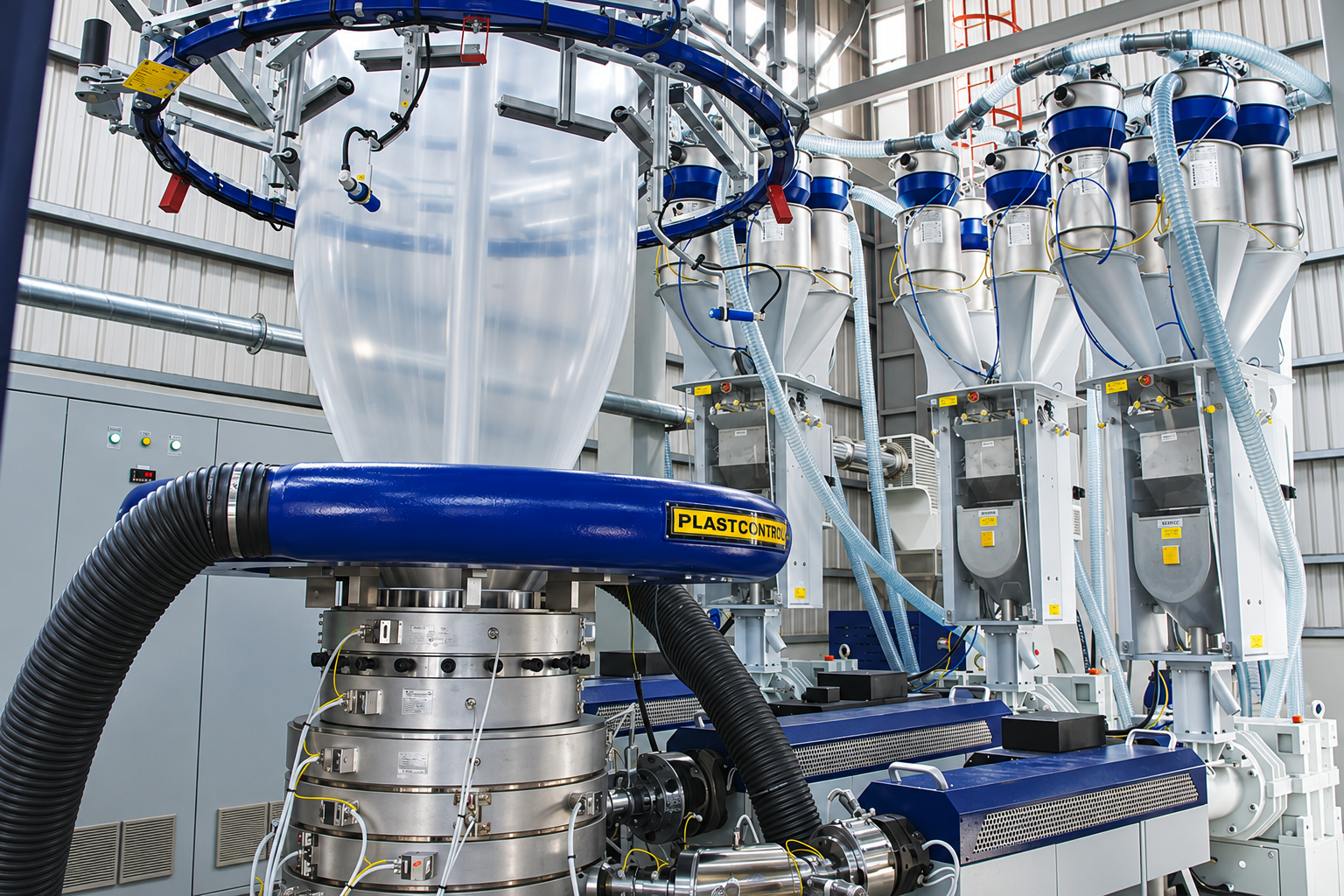
Consistency through the run.
Track surface appearance and film quality after the process has stabilised.
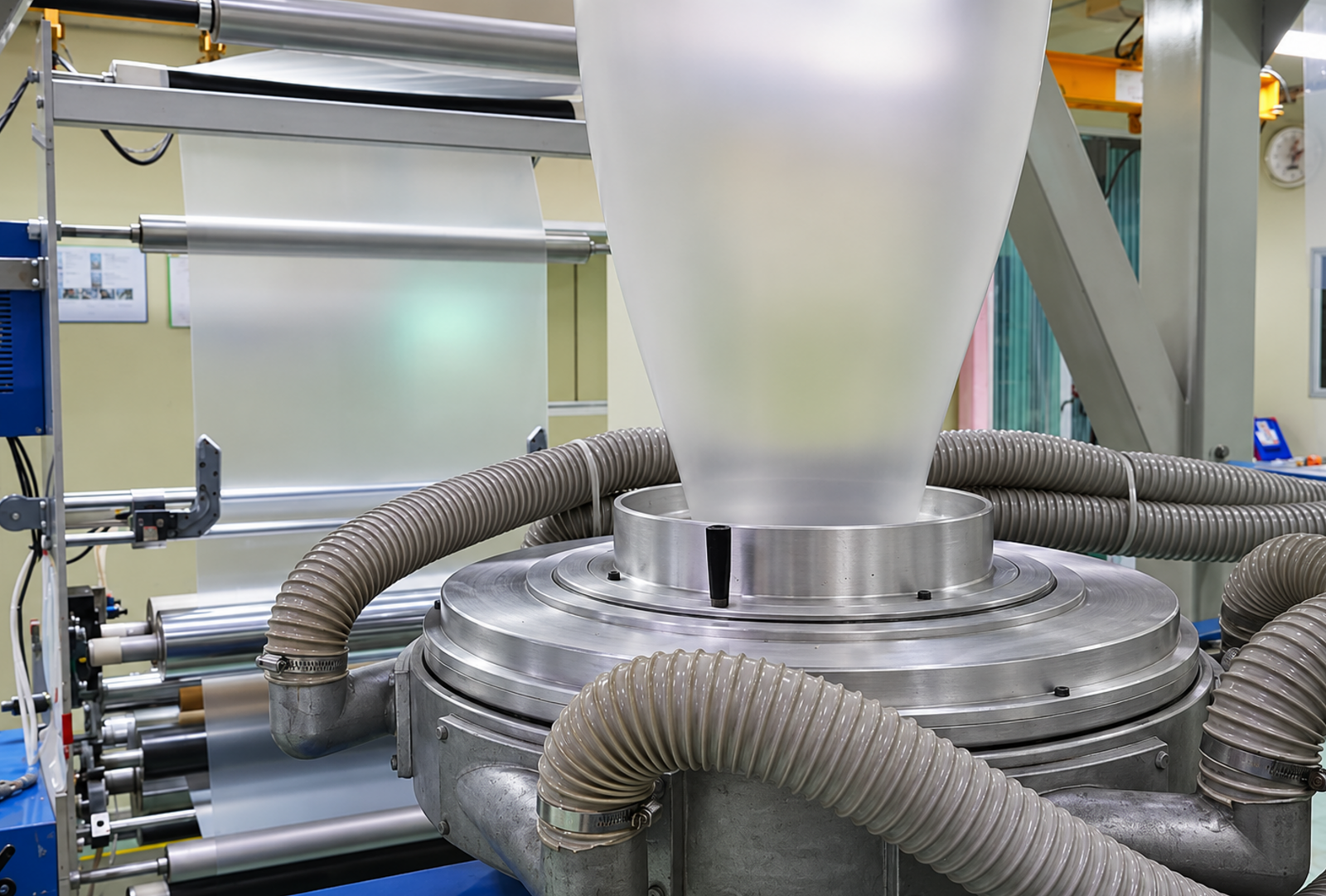
From bubble to roll.
Retain the sealing, winding and converting properties your film needs.
What changes with the right PPA?
Less disruption.
More refinement.
Focus on the die interface. Measure the effect in the finished film.
A smoother film surface.
A suitable processing aid can reduce sharkskin and melt fracture. Compare samples at the same resin blend, gauge and output after conditioning.
Cleaner die-lip operation.
Evaluate the reduction of deposits and the time between cleaning stops over comparable production runs.
A more efficient operating window.
Check whether die pressure or motor load improves at equal output. Increase throughput only within line limits and film-quality requirements.
Quality that carries through.
Confirm haze, gloss, gauge uniformity, strength and sealing. PPA does not automatically improve every optical or mechanical property.
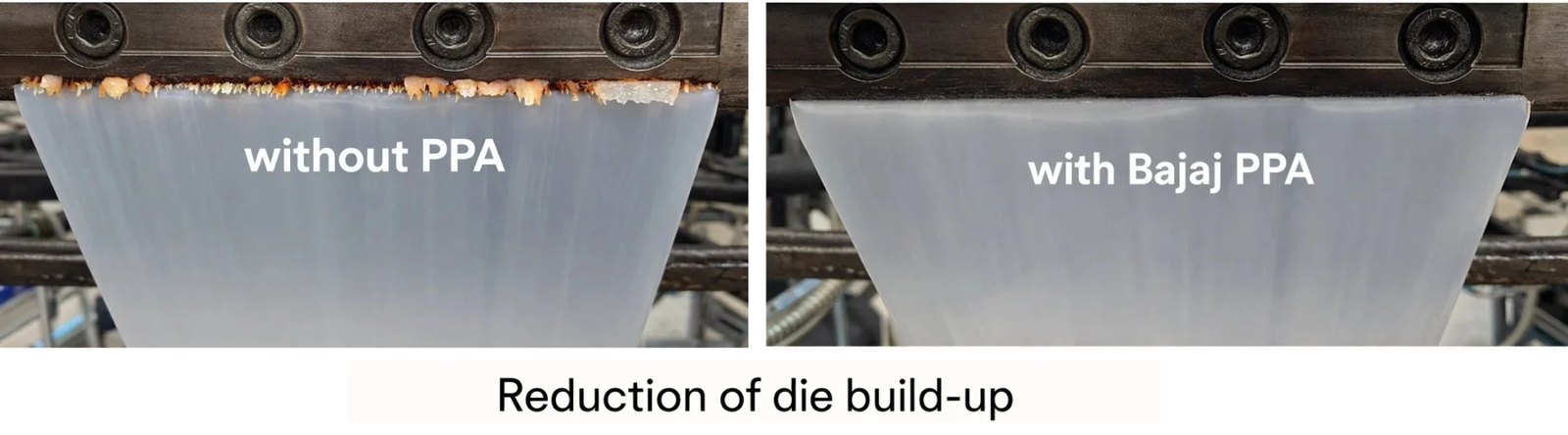
Melt fracture & conditioning
Give the surface
time to change.
Processing-aid response develops under the selected grade’s operating conditions. Track the transition instead of judging the first metres of film.

Understand the interface.
In suitable extrusion grades, the active system modifies the interaction between the molten polymer and metal. This can reduce surface instability as the melt exits the annular die.
Conditioning depends on chemistry, dosage, resin, additives and the die’s previous operating history. Use the selected grade’s technical guidance.

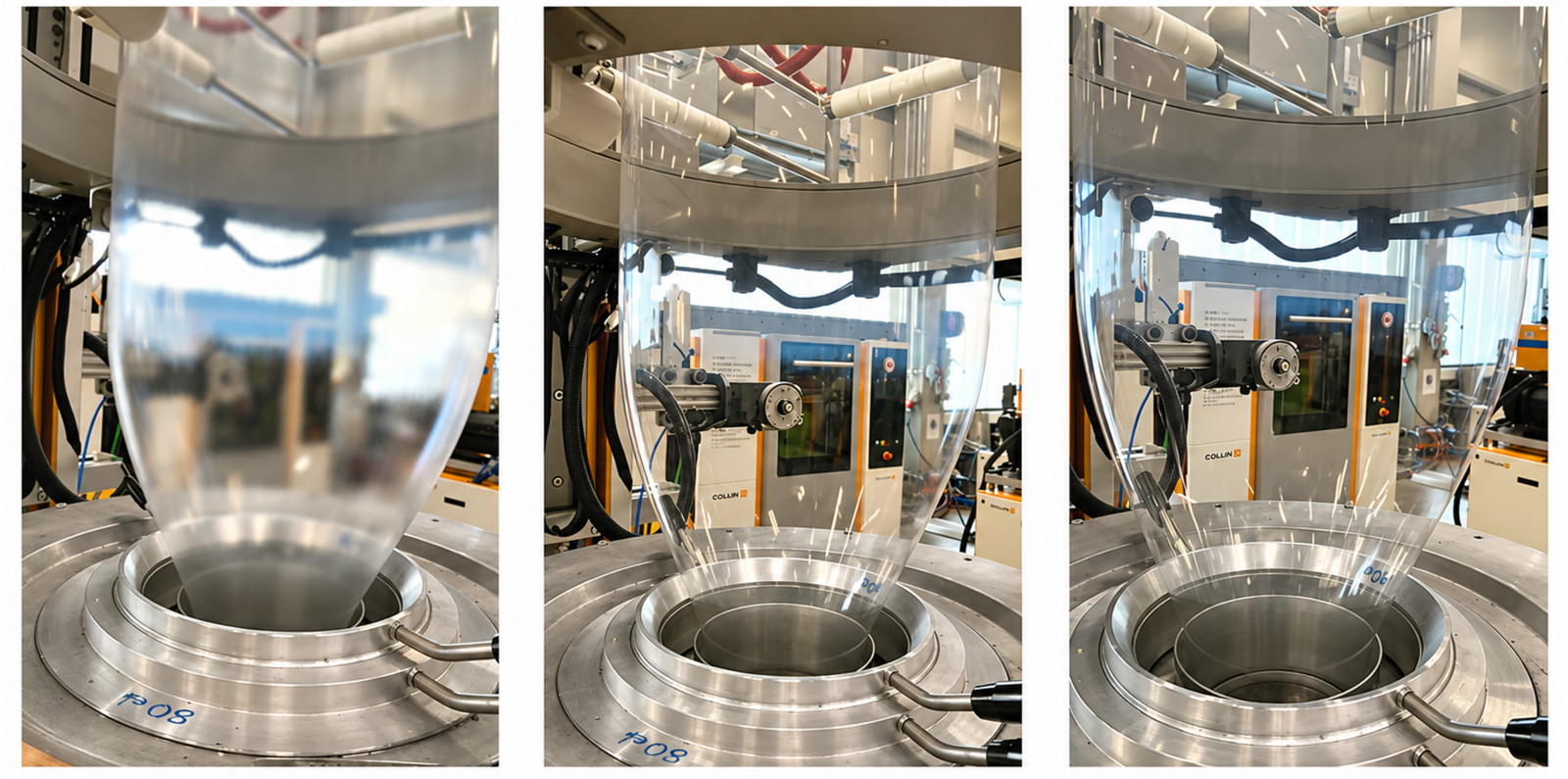
Processing aid does not replace corrective action for moisture, contamination, degradation, blocked filtration, damaged tooling or unstable cooling.
How blown film is formed
From the melt.
To the finished roll.

One continuous extrusion process.
The resin blend and masterbatch feed into the extruder. The melt passes through an annular die, forms an inflated tube, cools and is collapsed into layflat film before winding.
PPA targets relevant melt-processing behaviour. Cooling, blow-up ratio, haul-off speed and winding tension still need independent control.
Choose the carrier for your film
Right resin.
Right starting point.
For polyethylene blown film.
Consider a compatible PE-carrier grade for LDPE, LLDPE, HDPE and their blends. Confirm performance with the full formulation, including pigments, fillers, slip, antiblock and recycled content.
For a confirmed PP film formulation.
Bajaj also makes PP-carrier masterbatches. Select a PP-based grade only where the blown-film resin system and active chemistry are technically compatible; it is not a default substitute for PE film.
Carrier type does not specify active chemistry, PFAS status, active concentration or regulatory suitability. Request the grade-specific documentation.
How to use
Start the line.
Find your optimum.
-
Confirm the grade
Obtain the current TDS, SDS, carrier identification, active concentration and application-specific dosage guidance. Request relevant compliance documents.
-
Establish a baseline
Record resin blend, output, screw speed, melt temperature, die pressure, motor load, film gauge, blow-up ratio and frost-line height. Photograph surface defects before dosing.
-
Blend and feed uniformly
Use a calibrated dosing system. Express addition as a percentage of the final blend; check feeder accuracy at the actual production rate.
-
Allow conditioning
Follow the selected grade’s startup procedure. Some systems need time to develop their effect; monitor response instead of assuming an instant result.
-
Optimise one variable at a time
After stabilisation, adjust dose or output in controlled steps. Keep within equipment ratings and recheck product quality after every change.
-
Approve and document
Compare haze, gloss, gauge variation, tensile, tear, dart impact and sealing performance against the agreed film specification. Confirm printing and lamination performance where relevant.
Calculate addition on the correct basis.
Masterbatch mass = final blend mass × dosage (%) ÷ 100.
Illustration only: at 1% in a 100 kg final blend, use 1 kg masterbatch plus 99 kg of the remaining formulation. This is a calculation example, not a recommended dosage.
Active concentration in the final blend (ppm) = masterbatch dosage (%) × active content (%) × 100. Use the actual active content from the supplier. For coextrusion, define dosing per treated layer and calculate total-line consumption from that layer’s mass fraction.
How PPA masterbatch is made
Behind the film.
Inside the masterbatch.
A general manufacturing sequence for PP/PE carrier masterbatches.
This is an explanatory process overview. Bajaj’s grade-specific recipe, equipment settings and release limits must be confirmed with the technical team.
-
Define the formulation
Choose the carrier and active system for the intended polymer, processing temperature and application. Set the target concentrate composition.
-
Meter the ingredients
Weigh the carrier, processing-aid ingredients and any supporting components to the formulation. Consistent feeding helps maintain composition.
-
Melt compound
Distribute the additive system through the carrier under a controlled temperature, residence time and shear profile suited to its chemistry.
-
Cool and pelletise
Convert the compounded melt into manageable pellets using an appropriate cooling and cutting method.
-
Check the batch
Use the agreed specification to assess pellet quality and relevant material characteristics. Application trials establish functional performance.
-
Pack and identify
Use suitable packaging and batch identification. Follow the selected grade’s storage instructions to protect material quality before use.
Why Bajaj Masterbatches?
Your film.
Our starting point.
Carrier choice.
PE and PP options, selected around the actual film formulation and its compatibility requirements.
Blown-film focus.
Discuss die conditions, film gauge, surface defects and the process window that matters to your line.
Measurable selection.
Request a current TDS and a trial recommendation. Agree acceptance criteria for both processing and finished-film quality.
Questions. Answered.
What is the recommended dosage?
Use the current TDS and Bajaj’s recommendation for the selected grade. Startup and maintenance dosing may differ. Do not transfer a concentration or conditioning time from a different PPA chemistry.
Does PPA remove every gel or fish-eye defect?
No. Identify the defect first. Contamination, unmelted particles, degradation and incompatible materials require their own corrective actions. A processing aid does not replace filtration or process troubleshooting.
Can PE and PP carrier grades be interchanged?
Do not assume they are interchangeable. Confirm carrier compatibility, active chemistry, thermal suitability and the effect on finished-product properties.
Is this PPA fluorinated or PFAS-free?
The active chemistry is not specified here. Request the selected grade’s written composition or applicable declaration; carrier resin alone cannot establish fluorine or PFAS status.
Is it approved for food-contact or regulated applications?
Approval is grade-, end-use- and jurisdiction-specific. Obtain current supporting declarations and assess the final article under its intended conditions of use.
What information should I send for grade selection?
Send your blown-film resin blend and MFI, layer structure, output, film gauge, die gap, blow-up ratio, temperature profile, additive package, recycled content and defect photographs.
BAJAJ PLAST PPA
Your next roll.
A smoother possibility.
Tell us your resin blend, film gauge, layer structure and extrusion challenge.