
Bajaj Plast · Polymer Processing Additives
Plast Purge Compound.
Engineered to clean. Formulated to perform.
A high-viscosity, reactive cleaning system formulated to strip residual polymer, pigment and carbonised deposits from extrusion and moulding equipment — restoring barrel, screw and die surfaces to a near-original condition without dismantling the machine.

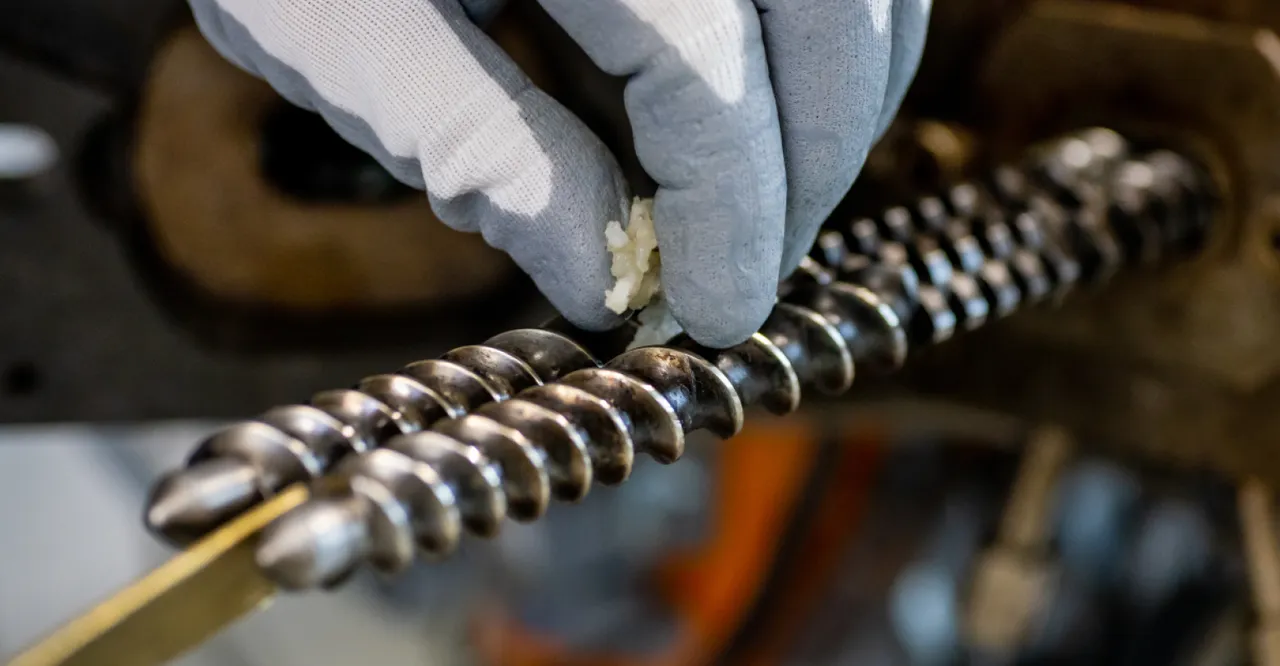
Screw and barrel condition before and after a single purge cycle.
Bajaj Plast Purge compound is built on controlled rheology and reactive polymer chemistry. It is formulated for extruders, injection moulding machines, blow moulding units and compounding lines — enabling faster colour changeovers, shorter downtime, and contamination-free transitions between production runs.
The Problem
Why Plast Purge compound are essential
Even minor contamination inside a barrel or hot runner can surface as a visible product defect. Oxidised polymer, carbonised deposits and trapped pigment accumulate at low-shear zones — screw roots, check rings, die lands — and resist removal by virgin resin alone.
Conventional changeover methods either rely on excess virgin-resin purge, which wastes material and machine time, or mechanical intervention, which risks scoring the screw and barrel surface. Neither approach fully clears oxidised polymer from dead zones in the flow path.

Mechanism
Four stages, one continuous cleaning cycle
The compound is processed exactly like the resin it replaces — fed through the hopper, melted, and run through the standard cycle. Inside the barrel, four distinct actions take place in sequence.
A high-viscosity melt does the scraping.
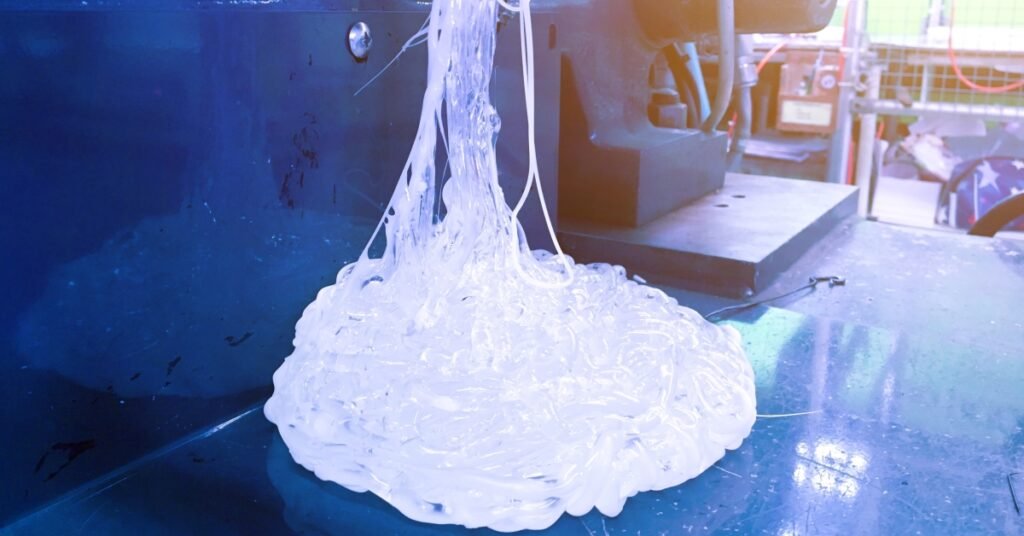
The compound develops a high-viscosity melt that shears against the barrel wall, screw flights and die surfaces — physically scraping and displacing built-up deposits as it travels downstream.
Reactive agents reach what shear can't.
Reactive cleaning agents generate controlled micro-turbulence and gas release within the melt stream, loosening carbonised polymer and pigment that mechanical shear alone cannot detach.
Loosened residue is purged and the surface is sealed.
As residue is lifted into the melt and purged from the system, the freshly cleaned metal surfaces are coated with a thin stabilising layer that resists future deposit formation.
The next run starts clean from shot one.
The barrel exits the cycle in a neutral, residue-free state — allowing the next polymer or colour to run cleanly from the first shot, with no degradation or black specks.
Specifications
Key technical features
High-Viscosity Cleaning Matrix
Delivers superior scrubbing and shear-driven action through the barrel and die zones.
Reactive Cleaning Chemistry
Chemically loosens oxidised residue and pigment that mechanical purging alone cannot reach.
Temperature-Stable Formulation
Performs across a 150°C–320°C processing window, covering most commodity polymers.
Residue-Free Output
Leaves no ash, gel or corrosive deposit behind in the barrel or die after purging.
Universal Compatibility
Formulated for PE and PP polymer processing systems across extrusion and moulding.
Fast Transition Time
Cuts colour and material changeover duration by up to 70% per cycle.
Safe & Eco-Compliant
RoHS and REACH compliant, halogen-free, low-odour composition.
Formulation
How a Plast Purge compound is made
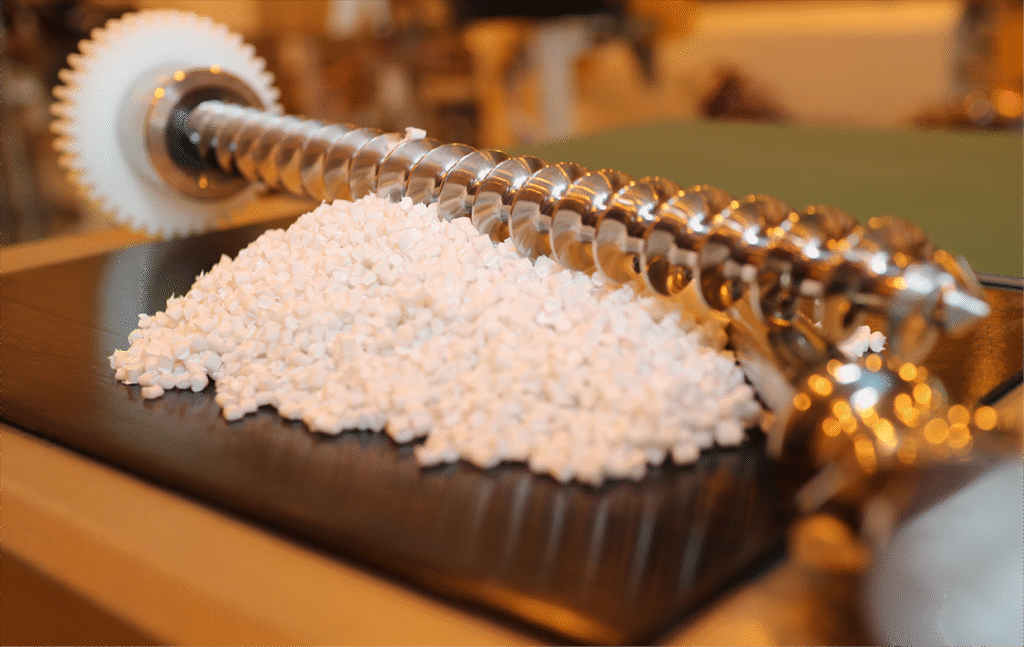
Formulation begins with a carrier resin selected to match the target processing window — its melt behaviour has to track closely with the polymer it will be cleaning out, so the compound flows, shears and purges the way the production resin does.
Reactive lifting agents and controlled gas-release additives are dispersed through the carrier on a compounding extruder, where shear and temperature are tightly managed so the additive package activates only at processing temperature — not in the bag, and not too early in the barrel.
The melt is cooled, pelletised and screened to a consistent particle size so it feeds through the hopper exactly like resin. Each batch is checked for melt viscosity, ash content and halogen content before release, and individual grades are tuned to a customer's specific resin system and processing temperature.
Why Bajaj
Why Bajaj Plast Purge compound
Three decades of polymer and additive formulation sit behind every grade. Bajaj Plast Purge compound is not a single universal recipe — each grade is tailored to a specific resin system and processing temperature, developed alongside the customer's actual production line rather than a generic data sheet.
That formulation work is backed by direct technical support from Bajaj's extrusion and moulding specialists, who help select and validate the right grade for a given screw design, die configuration and changeover frequency.
- Custom-formulated per resin & processing temperature
- Controlled rheological balance + micro-reactive lifting technology
- Direct technical support from process specialists
- Consistent batch-to-batch quality control
The Company
Why Bajaj Masterbatches
Bajaj Plast has been formulating colour, additive and filler masterbatches since operations began in Nagpur, Maharashtra, three decades ago. The same polymer science that goes into its colour and additive lines underpins its Plast Purge compound formulations.
Manufacturing is certified to ISO 9001:2015 by TÜV Nord, supported by a dedicated R&D and quality department that runs batch-level testing across viscosity, dispersion and compliance parameters before any product ships.
That portfolio spans extrusion, injection moulding, blow moulding, film, woven sack, non-woven and recycling lines — giving the Plast Purge compound team a working knowledge of how contamination behaves across nearly every plastic processing format.
Impact On The Line
Benefits to processors
Reduced Downtime
Faster cleaning cycles return more production hours to the line.
Lower Material Waste
Minimises scrap generated during colour and material transition.
Extended Equipment Life
Non-abrasive action protects screw and barrel surfaces from wear.
Improved Product Quality
Eliminates contamination and carbon specks from finished output.
Energy Efficient
Requires no additional heating step or mechanical scrubbing.
Cost-Effective
Saves resin, labour and changeover time on every production cycle.
Where It's Used
Why it matters across every processing line
A changeover that runs five minutes long, multiplied across every shift and every colour change in a year, adds up to a measurable loss in capacity. Plast Purge compound turns that fixed cost into a controlled, five-minute step.
Extrusion Processing
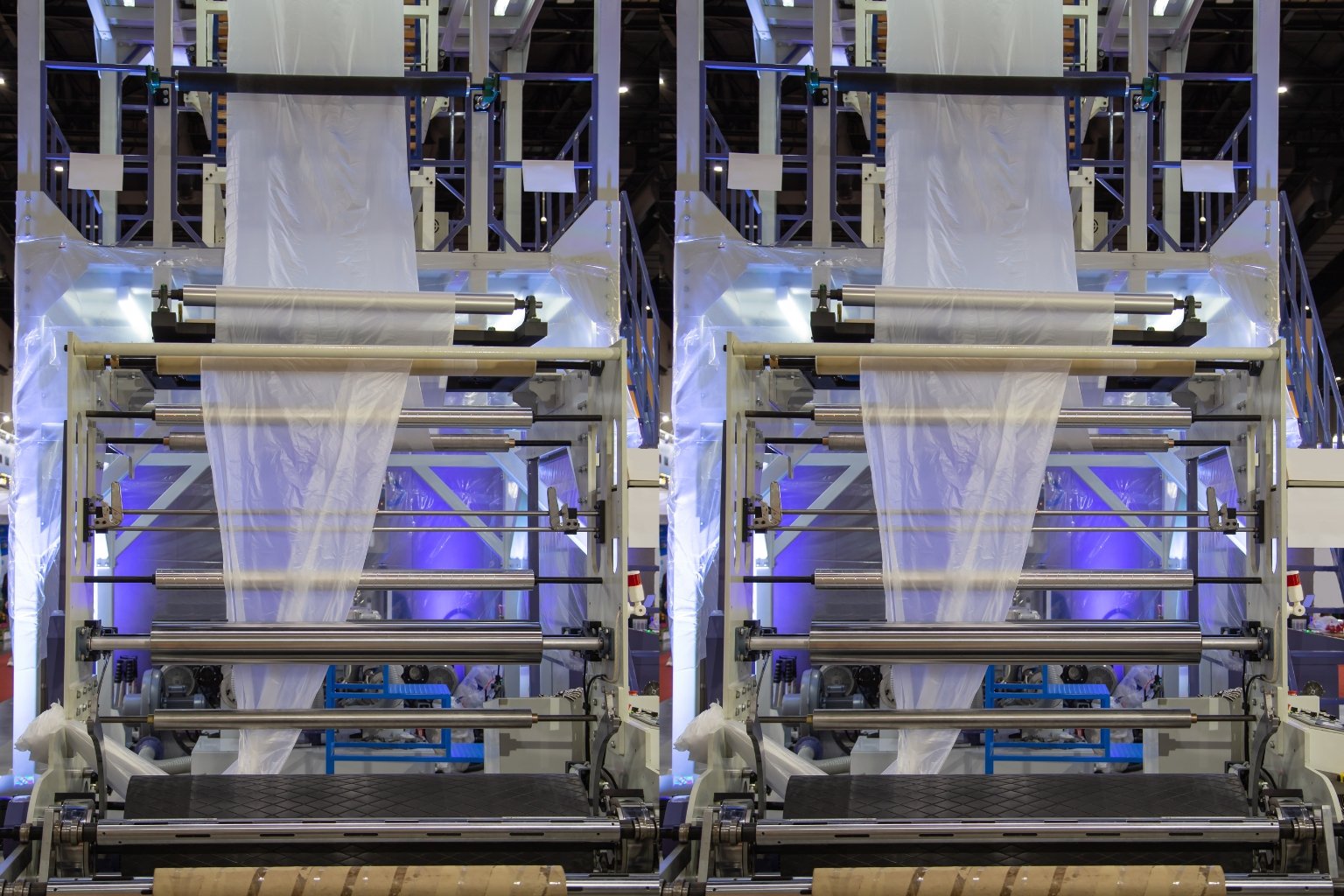
Film, sheet, pipe, profile and filament lines, plus compounding extruders running masterbatch or additive changeovers.

Injection Moulding
Quick colour change between runs, hot-runner system cleaning, and material transitions such as PP → LDPPE → HDPE.
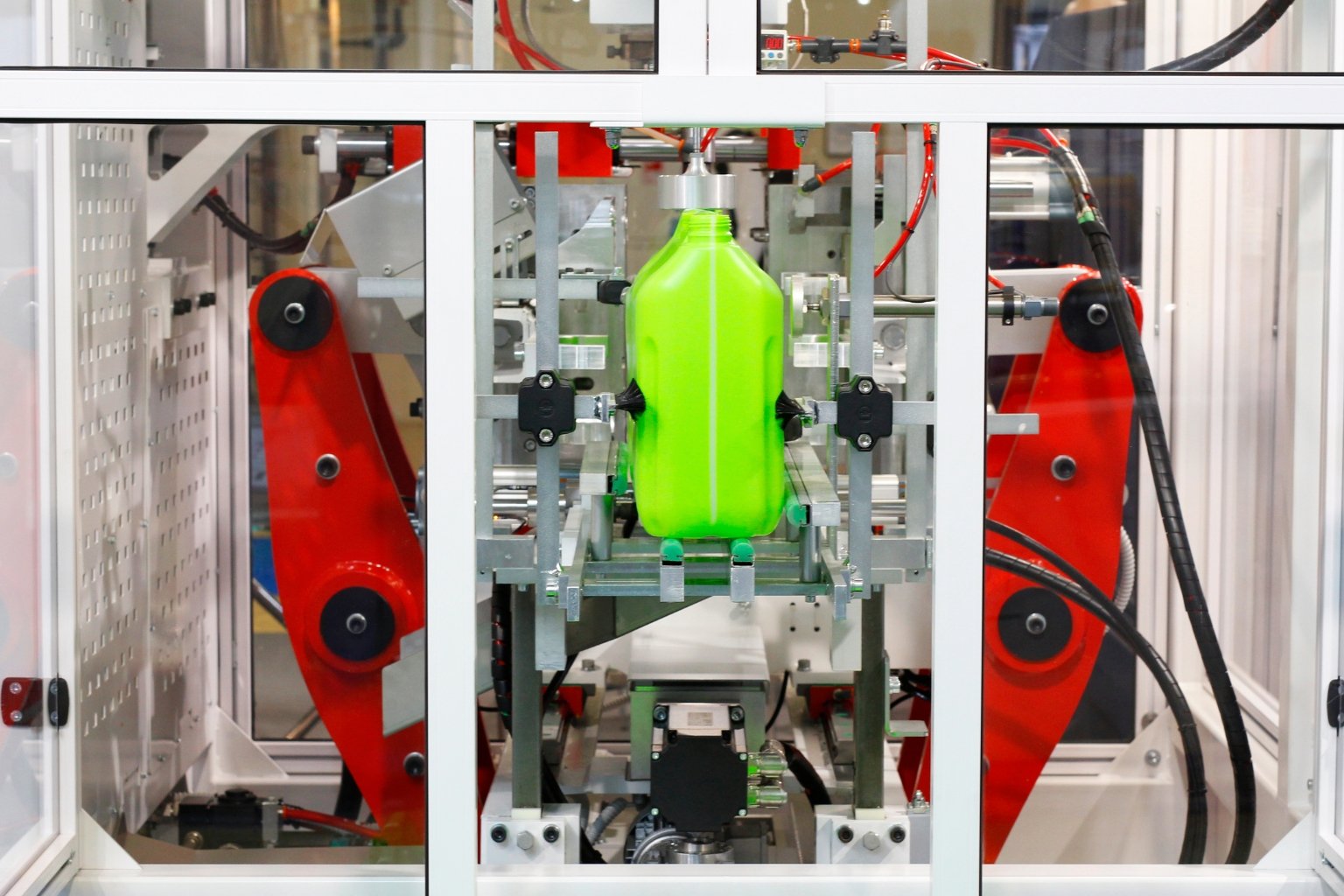
Blow Moulding
HDPE containers, bottles, drums, IBCs and multilayer blow-moulded products.

Recycling & Compounding
Cleans extruders before a resin-type change and prevents cross-contamination between recycled and virgin polymer.
Scroll to see all processing lines →
Application Procedure
Recommended usage guidelines
Stop the current resin feed and purge remaining material from the hopper.
Feed 1–1.5× the screw/barrel capacity of compound at normal processing temperature.
Run the screw at medium speed with moderate back pressure for optimal cleaning action.
Continue until the discharged material runs clean and neutral in colour.
Feed the next resin or masterbatch immediately, while the machine is still hot.
For heavily contaminated systems, repeat the full cycle once.
Handling
Storage, safety & environmental compliance
Cool, dry storage
Keep away from direct sunlight and moisture in original packaging.
12-month shelf life
Stable for 12 months when kept sealed in original packaging.
Below 40°C storage
Recommended ambient storage temperature stays under 40°C.
Halogen-free
Free from halogens, heavy metals and corrosive agents.
RoHS & REACH
Compliant on request, supporting export and regulated markets.
Low smoke & odour
Generates minimal smoke and odour during the cleaning cycle.
Three decades of polymer chemistry.
One continuous clean.
Bajaj Plast Pvt. Ltd. — Masterbatch & Compound Manufacturers.