
Bajaj Masterbatches · Plast FR
Flame Retardant
Masterbatch.
Fire chemistry, engineered into a single pellet — formulated to interrupt combustion before it ever takes hold of your polymer.

Fuel. Oxygen. An ignition source. Remove the certainty of any one, and a fire never gets the chance to start.
Flame retardant masterbatch is how that certainty gets engineered out of a polymer — pellet by pellet, batch after batch.
Why Flame Retardant Masterbatch
Unmodified plastic burns. Engineered plastic resists.
Most commodity polymers are, chemically speaking, dense hydrocarbon fuel. Left unmodified, they pyrolyze under heat into volatile, combustible fragments that sustain a flame long after the ignition source is gone.

The Limiting Oxygen Index problem
Ambient air carries roughly 21% oxygen. Untreated polyolefins such as PP and PE typically register a Limiting Oxygen Index (LOI) of only 17–18% — meaning they will sustain a flame in ordinary room air without any external heat input once ignited. A polymer needs to be pushed well past that 21% threshold before it can be considered self-extinguishing under standard test conditions.

Why this can't be an afterthought
Flammability isn't a cosmetic spec — in cable insulation, switchgear enclosures and structural panels, an unprotected polymer becomes the pathway through which a small ignition event turns into structural fire propagation. Flame retardant masterbatch is the engineering control that closes that pathway at the material level, before the part is even moulded.
How It Works
Three ways to interrupt a flame.
A fire needs fuel, oxygen and heat feedback, sustained simultaneously. Flame retardant chemistry attacks that triangle through one or more of three distinct physical pathways.


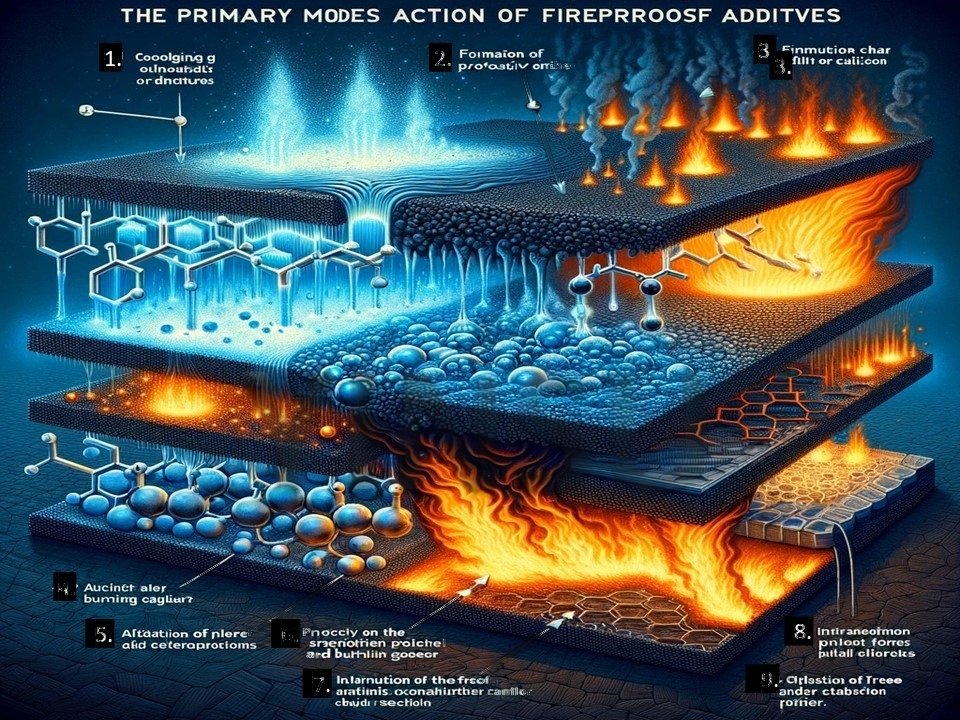
Capturing the radicals that feed the flame
Halogenated systems, typically paired with an antimony trioxide synergist, decompose under heat and release scavenger species into the vapour phase. These intercept the high-energy H• and OH• radicals driving the combustion chain reaction, breaking the cycle that lets the flame self-propagate above the burning surface.
Building an insulating barrier in real time
Phosphorus-based intumescent systems promote rapid dehydration and crosslinking at the burning surface, swelling into a carbonaceous char layer. That char physically shields the unreacted polymer beneath it from oxygen ingress and radiant heat feedback — starving the fire of fresh fuel.
Pulling heat out of the reaction
Metal hydrate actives such as aluminium and magnesium hydroxide decompose endothermically, absorbing latent heat from the combustion zone while releasing water vapour. That vapour dilutes flammable gases and drops the surface temperature below the threshold pyrolysis needs to keep going.
Tested, Not Assumed
Verified against UL 94 flammability ratings.
UL 94 is the benchmark flammability standard for plastics used in electronics, appliances and enclosures, classifying materials by how they burn — and whether they keep burning — once an open flame is removed.
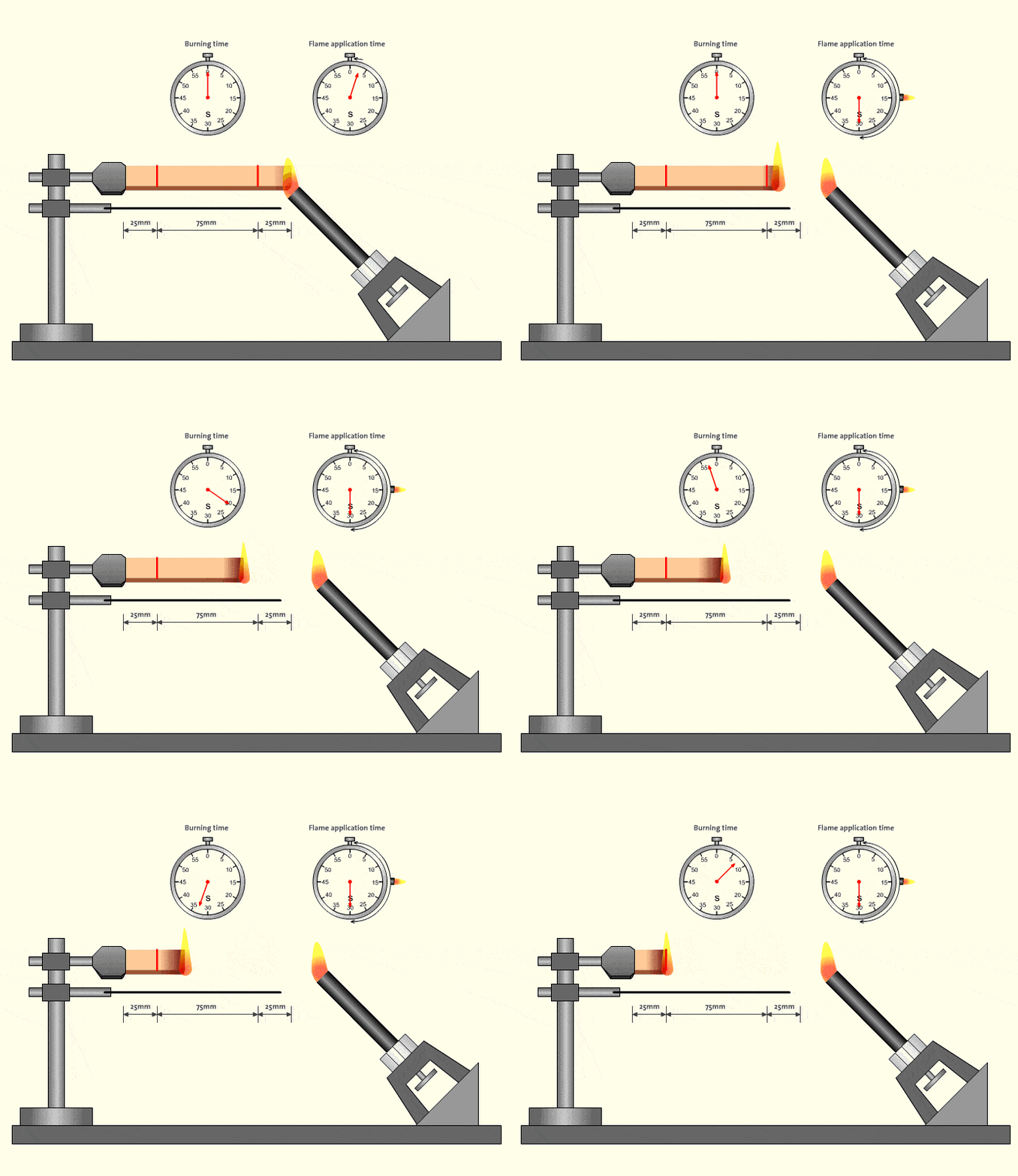
94 HB classification
A specimen is clamped horizontally and exposed to a controlled flame; burn rate along the marked length determines pass/fail against the HB threshold.
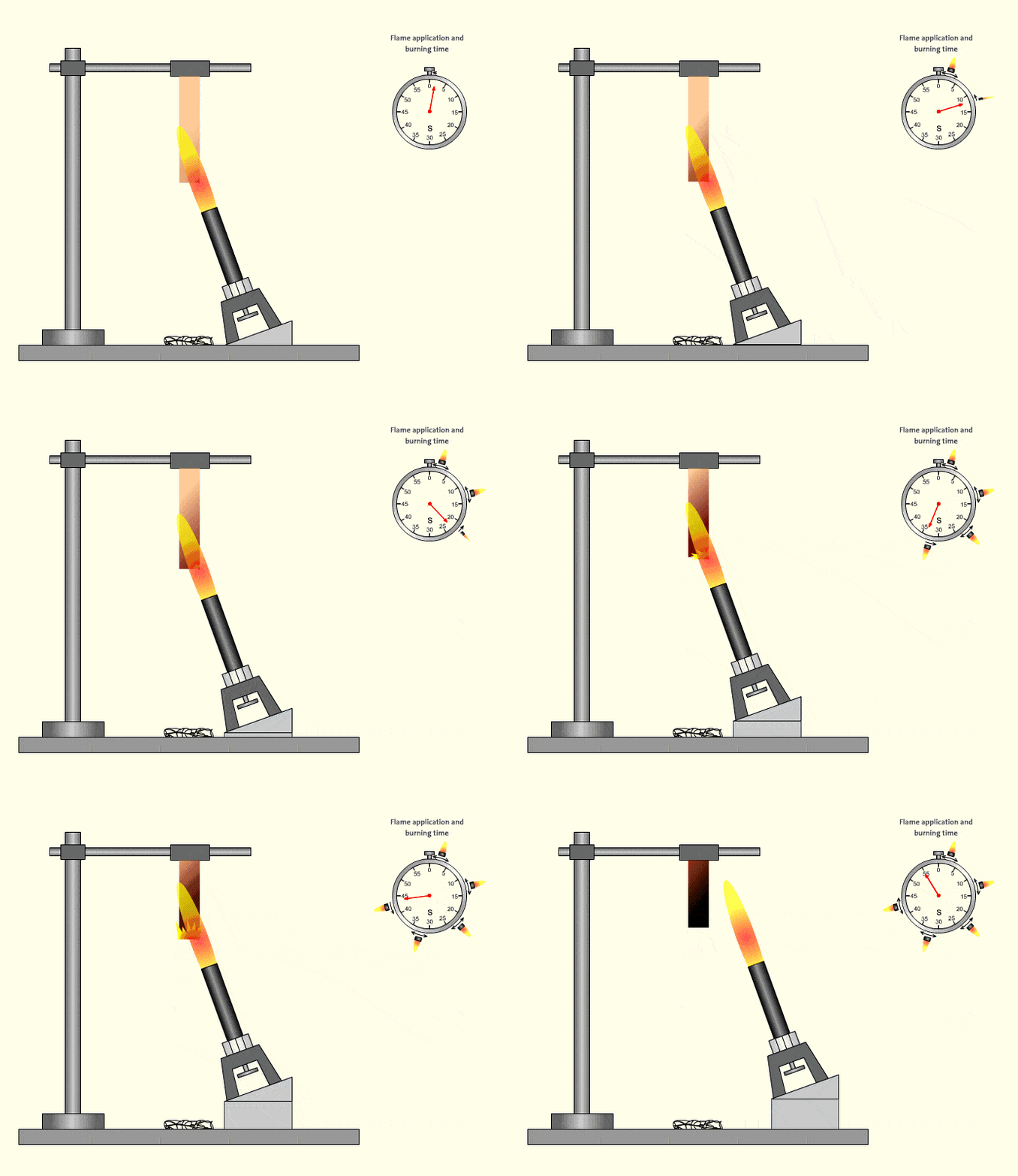
94 V-0 / V-1 / V-2 classification
A vertically suspended specimen is flame-tested twice; after-flame time, glow time and whether flaming drip ignites cotton below set the rating tier.
Why Bajaj Plast FR
Formulated for the resin, not just the flame.
A flame retardant system only performs if it disperses cleanly into the host polymer. Plast FR is built around that constraint, not around it as an afterthought.
Halogenated & halogen-free routes
Formulations available across both chemistries, selected against the target UL 94 rating, smoke/toxicity requirement and regional compliance need of the end application.
Carrier resin matched to host polymer
Carrier selected for full miscibility with PP, PE, PVC or EVA, avoiding the plate-out and surface bloom that hand-dosed neat powder additives are prone to.
Controlled active particle size
Mineral hydrate and intumescent actives are sized for fine, repeatable dispersion at low let-down ratios — typically in the 5–20% range depending on target rating.
Mechanical property retention
Loading is engineered to preserve impact strength, elongation and optical clarity far closer to the base resin than an under-dispersed manual addition would.
Batch-verified LOI & MFI
Every production lot is checked against Limiting Oxygen Index and melt flow index targets before it leaves the plant — not sampled occasionally.
Drop-in processability
Designed to run on standard injection moulding, extrusion and blow moulding lines without requiring a change in screw design or process window.
Why Bajaj Masterbatches
Three decades of dispersion science, Nagpur to the world.

Compounding infrastructure built for consistency
Bajaj Polyblends has run twin-screw compounding lines for over thirty years, supplying colour, white, filler, UV and additive masterbatches — including Plast FR — across domestic and export markets. The same micron-level dispersion discipline used for pigment masterbatch is applied to flame retardant actives, where uneven dispersion directly compromises fire performance.
Key Features
What's engineered into every pellet.
High LOI uplift
Pushes Limiting Oxygen Index from a baseline ~18% toward 28–32%+, well past the 21% ambient oxygen threshold.
UL 94 rating capability
Formulated to support classifications from HB through V-0, depending on loading level and host resin.
Anti-drip char lock
Char-forming chemistry curbs flaming drip, limiting how far ignited material can spread to surrounding surfaces.
Low-smoke, low-halogen option
Non-halogen intumescent route reduces smoke density and corrosive gas evolution for enclosed-space applications.
Broad polymer compatibility
Carrier options available for PP, PE, HDPE/LDPE, PVC and EVA across moulding, film and extrusion processes.
Thermal process stability
Active ingredients selected to survive standard extrusion and injection melt temperatures without premature breakdown.
Efficient let-down ratio
Concentrated active loading keeps dosage efficient — typically single-digit to low double-digit weight percent.
Uniform micron dispersion
Pre-compounded pellet form removes the hot-spot risk that comes with dry-blending neat FR powder in-line.
Key Benefits
Why processors switch to a masterbatch format.
Compliance built in
Formulated to help finished parts meet flammability clauses referenced in wiring, construction and appliance-housing standards.
Mechanical retention
Engineered loading keeps tensile strength, impact resistance and elongation closer to the unmodified resin baseline.
Processing simplicity
A single pellet stream replaces separate powder metering, cutting dust handling and operator exposure on the floor.
Cost efficiency at scale
Pre-dispersed carrier uses active ingredient more efficiently than under-dispersed manual dosing, often lowering FR cost per finished kilo.
Batch-to-batch consistency
LOI, MFI and ash content checked on every lot, so flammability performance doesn't drift between deliveries.
Extended service life
Improved thermal stability under continuous-use conditions, supporting longer functional life of the finished part.
Importance of Flame Retardant Masterbatch
Where flammability performance stops being optional.
Cable runs, switchgear and structural panels are recognised fire-propagation pathways inside buildings and vehicles. Once a polymer component in those positions ignites, an unprotected material lets fire and smoke travel along the very routes designed to carry power and protection.
Cable & wire insulation
Limits flame travel along sheathing and jacketing in power and data cable runs.
Switchgear enclosures
Contains internal arc-related ignition events inside electrical housings and boards.
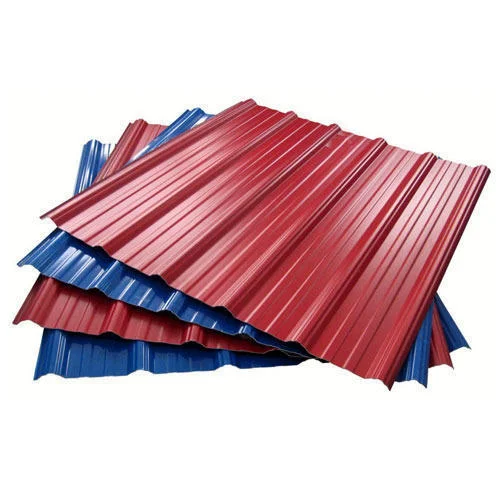
Structural panels & roofing
Reduces flame spread across large-surface PVC sheeting used in construction.
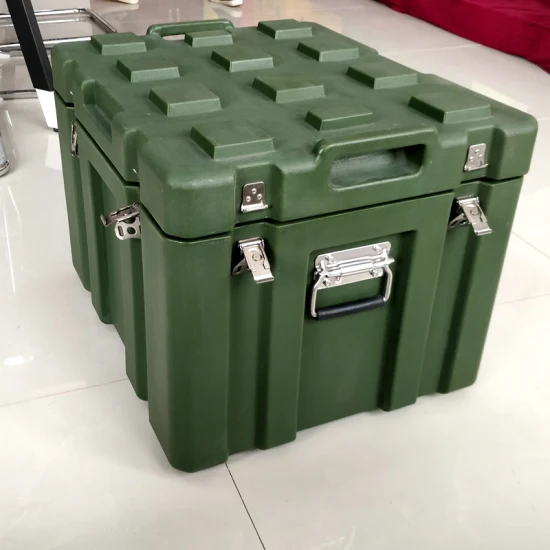
Transport & defence cases
Protects sensitive cargo housed in rugged, heat-exposed storage containers.
Making of Flame Retardant Masterbatch
From raw chemistry to a single, metered pellet.
Resin & FR system selection
Host polymer, target UL 94 rating and halogen status are matched to the end application before any compounding begins.
Formulation & weighing
Active flame retardant, synergist (for halogenated routes), carrier resin and process aids are batched to a fixed recipe by weight.
Twin-screw melt compounding
Controlled temperature and shear profile disperses the active to target particle size without triggering premature decomposition.
Strand pelletizing & cooling
Extrudate is water-cooled and cut into uniform pellets sized for accurate downstream metering on the customer's line.
Quality verification
Every batch is checked against LOI, UL 94 burn behaviour, melt flow index and ash content before release.
Packing & dispatch
Moisture-protected packing sized for direct let-down dosing on standard injection, extrusion or blow-moulding equipment.
Applications
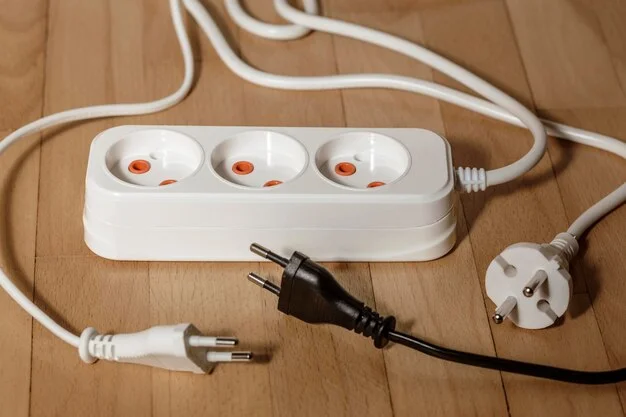
Wherever heat exposure meets plastic, FR performance follows.



Technical Profile
Indicative engineering ranges.
Representative parameters for a flame retardant masterbatch of this class. Confirm exact figures for a specific resin and rating against the grade's technical data sheet.
Bajaj Plast FR
Engineered in Nagpur. Verified against UL 94. Built into every pellet.
Bajaj Masterbatches — Flame Retardant Additive Masterbatch
 BAJAJ PLAST PVT LTD