
Bajaj Masterbatches · RESY range
Odor Remover
Masterbatch.
Less odour. More
possibilities.
Odour control for virgin and recycled PP & PE.
Built
around your material. Your process. Your product.


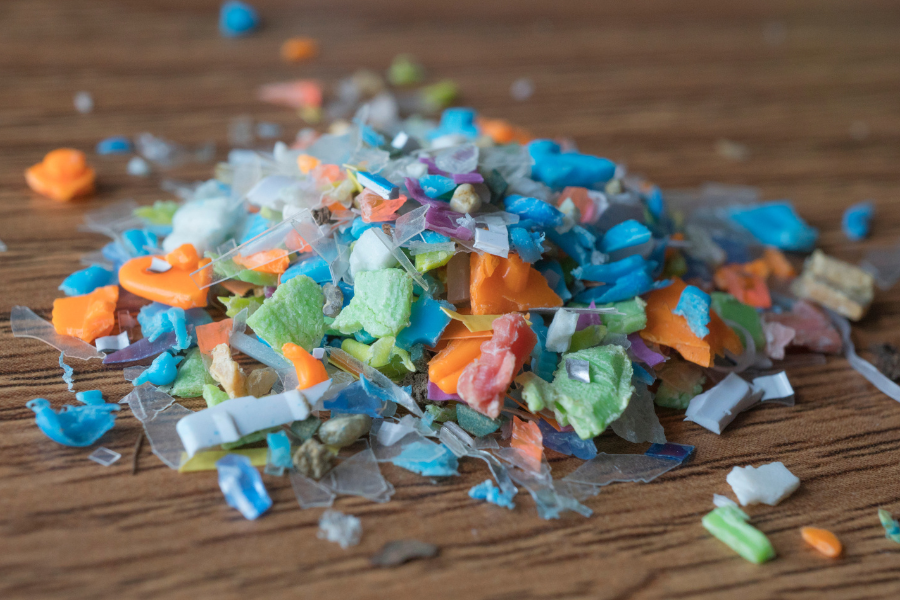
Meet Bajaj Odor Remover
A small addition.
A better odour profile.
An additive concentrate designed to help reduce unwanted polymer odour in suitable virgin, post-consumer recycled and post-industrial recycled polyolefin formulations.
Introduce the selected masterbatch through a compatible carrier during melt processing. Effective distribution brings the odour-control system into contact with odour-causing compounds within the resin.
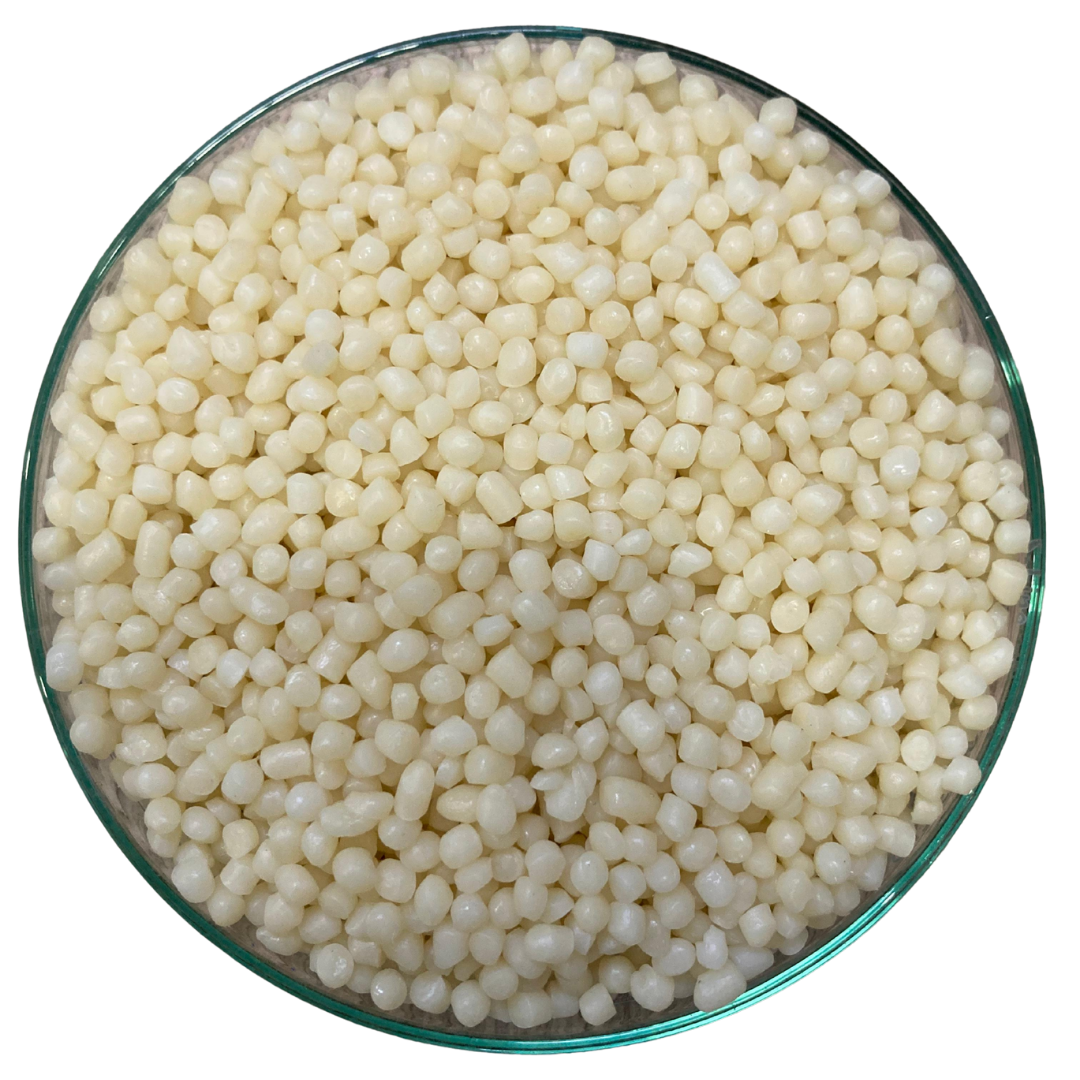
How it works
Target the source.
Reduce the smell.
Residual contaminants and polymer degradation can contribute volatile compounds that are released during processing, storage and use. Odour control starts with identifying the feedstock and the odour source.

Concept illustration supplied by Bajaj; not a quantitative performance comparison.
Disperse through the melt.
Controlled feeding and melt mixing distribute the active system through the polymer. Match the carrier and processing window to the base resin.
Capture or neutralise.
Depending on grade chemistry, adsorption, absorption or reaction can reduce the availability of susceptible odour compounds. Capacity and selectivity are finite.
Check the finished article.
Venting and good thermal control complement additive action. Measure odour after conditioning and ageing, alongside the required product properties.
Key features & finished-product benefits
Better material choices.
Better product potential.
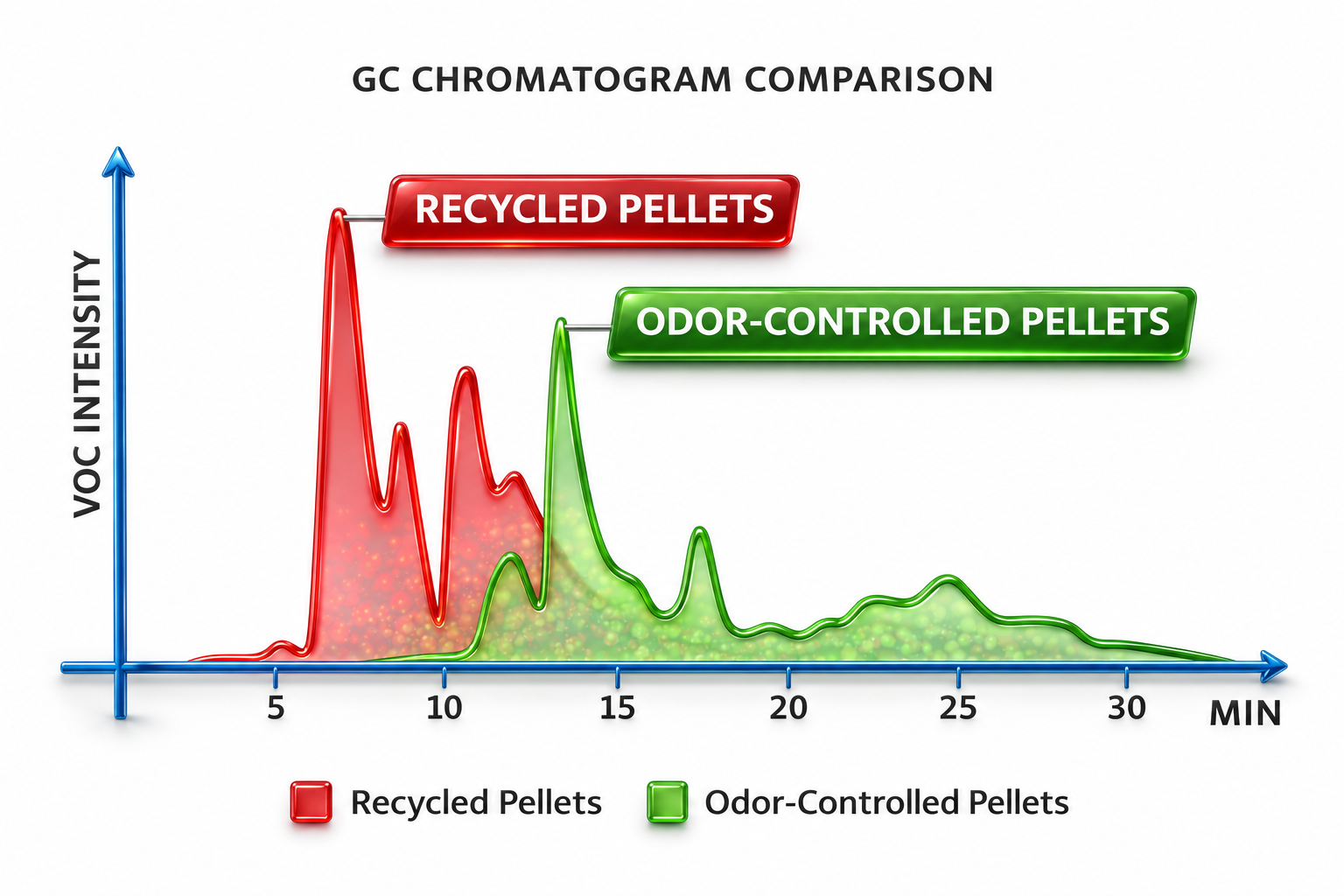
Conceptual GC chromatogram illustration supplied by Bajaj, not measured trial data. Peak positions and areas do not establish a removal percentage or identify specific compounds. Actual results require analytical testing.
A more acceptable product.
Helps lower resin-related smell in qualified formulations, supporting customer acceptance of finished articles.
More scope for recovered polymer.
Supports the evaluation of PCR and PIR blends where odour is a limiting factor, alongside mechanical and contamination requirements.
Repeatable addition.
Pelletised masterbatch supports metered feeding and formulation control when blending equipment is correctly calibrated.
A closer fit to your process.
Match polymer compatibility, active system and thermal exposure to the application instead of using one formulation indiscriminately.
Function within the material.
Add during compounding or conversion rather than relying on a separately applied finished-product surface treatment.
A clearer purchasing decision.
Compare additive cost against accepted output, sensory performance and retained properties at the selected dose.
Applications
Everyday products.
A more considered formulation.
Odor remover masterbatch for suitable plastic bins, bags, crates, pallets, buckets, containers, furniture and bathroom articles. Select the grade around the resin and finished-product specification.
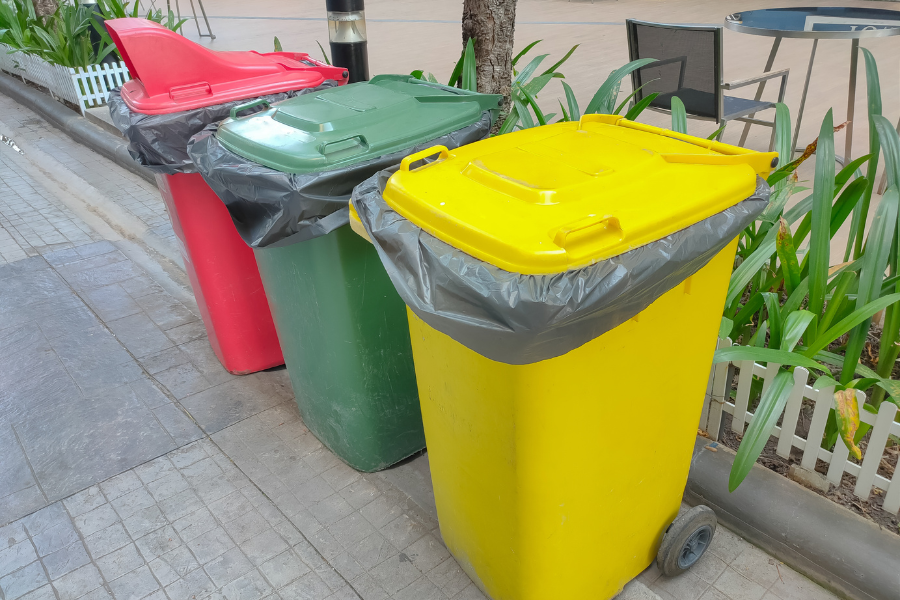
Waste bins
Reduce residual resin odour in recycled-polyolefin bin bodies and lids. Assess the empty moulded article after conditioning; odour from collected waste requires separate control.
Validate: Impact • lid fit • aged odour

Garbage bags
Address feedstock-related smell in recycled PE refuse sacks and bin liners. Match dispersion and filtration to film gauge, and retain the required seal and mechanical performance.
Validate: Dart impact • tear • seal strength
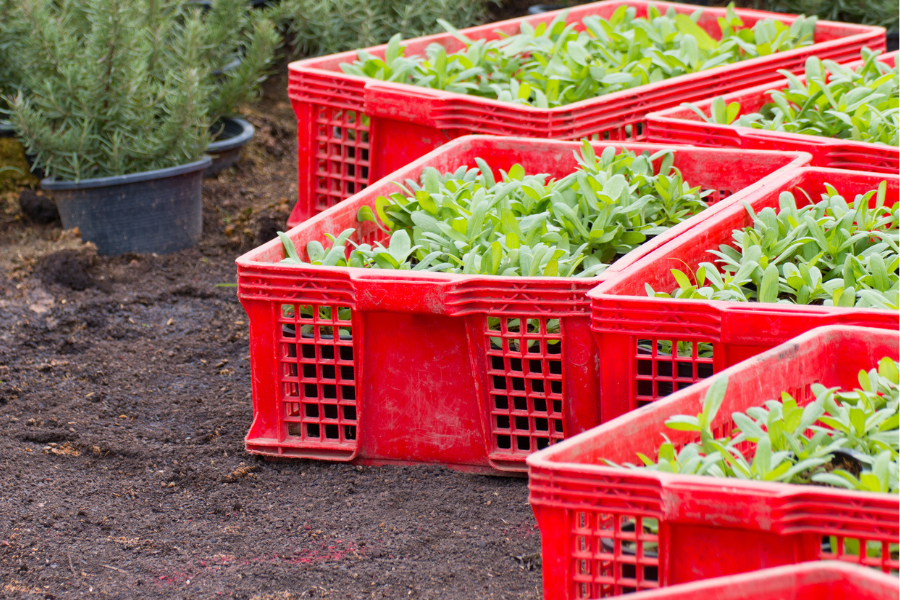
Crates
Help manage polymer odour in returnable transport and storage crates. Qualify recycled content against stacking, handling and any intended food-contact requirements.
Validate: Drop impact • stacking • warpage
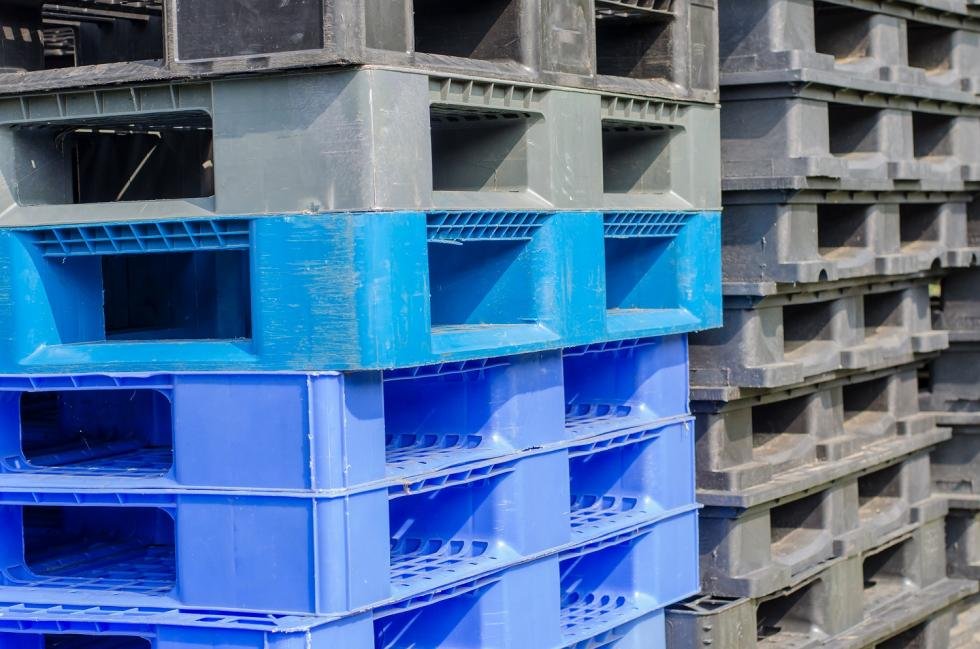
Pallets
Manage resin-related odour in recycled-polyolefin logistics pallets. Validate the finished formulation under the specified load, temperature and service conditions.
Validate: Creep • stiffness • load testing
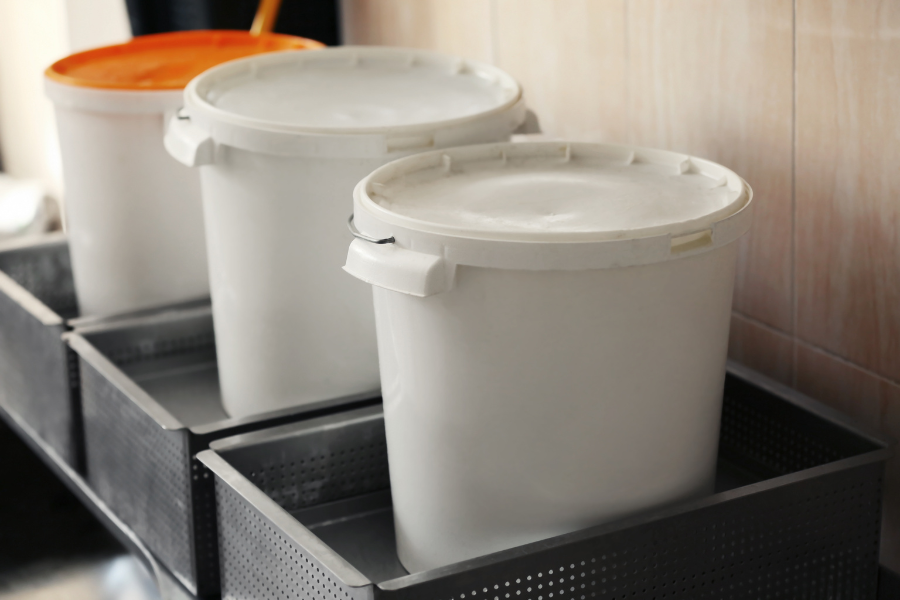
Buckets & pails
Improve the odour profile of suitable industrial and household pails. Check lid sealing, handle strength and compatibility with the intended contents.
Validate: Drop test • closure • compatibility

Household containers
Target residual plastic smell in storage tubs, organisers and household boxes. Test odour after closed-container storage, where volatile compounds can accumulate.
Validate: Headspace odour • colour • fit

Plastic furniture
Reduce resin-related odour in suitable recycled chairs, stools and tables. Maintain structural performance and specify a separate UV package for outdoor use.
Validate: Load capacity • impact • weathering

Bathroom plastics
Consider selected grades for compatible toilet seats, bathroom accessories and utility articles. Check repeated cleaning and humid-service conditions.
Validate: Cleaning resistance • finish • aged odour
Photographs illustrate product categories, not evidence that the pictured products contain Bajaj additives. Pallet reference image: hdpeplasticpallet.com.
How it is made
Engineered as
a concentrate.
-
Select the formulation
Choose the odour-control active system, carrier and supporting ingredients for polymer compatibility and the intended thermal window.
-
Meter and compound
Feed ingredients in controlled proportions. Melt compounding distributes the active phase while managing shear and thermal history.
-
Cool and pelletise
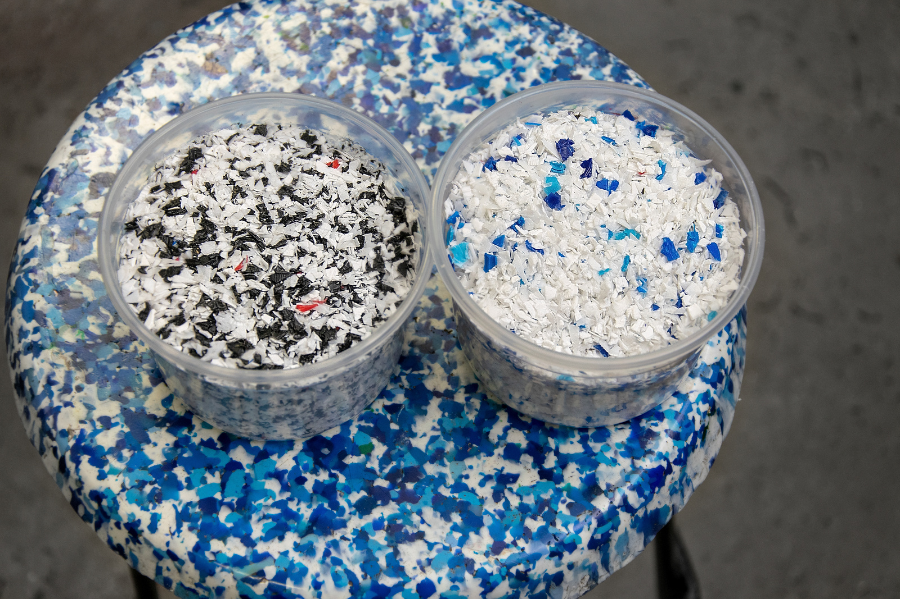
Convert the compound into a granular format suitable for handling, blending and controlled addition at the processor’s line.
-
Release against specification
Define lot-release checks for the selected grade. Request the current TDS, SDS and agreed quality documentation from Bajaj.
Bajaj RESY masterbatches
Give recovered plastic
more possibilities.
Supporting plastic processing and recycling with a practical focus on material recovery.
Odour can limit the use of otherwise suitable recycled polymer. As part of the Bajaj RESY range, Odor Remover Masterbatch helps processors evaluate odour control within a wider formulation and recycling strategy.
Combine qualified recovered feedstock with appropriate processing controls and application testing. The aim is to make more useful products from suitable recycled material—not to replace sound waste management.

How to use it
Match. Meter.
Mix. Measure.
Build a repeatable production trial before approving a commercial formulation.
-
Characterise the feedstock
Record polymer type, PCR/PIR content, melt-flow behaviour, moisture, contamination and the baseline odour profile.
-
Select the grade and dose ladder
Confirm the current TDS with Bajaj. Test an untreated control and agreed addition levels using the same resin batch.
-
Meter into the total formulation
Use calibrated feeders or a validated preblend. Account for all resin, filler, pigment and additive components in the total mass.
-
Control processing conditions
Keep melt temperature, throughput and residence time stable. Ensure adequate mixing and effective venting where available; avoid overheating.
-
Qualify the finished product
Assess immediate and aged odour, appearance and application-specific mechanical properties. Repeat across representative feedstock lots.

Plan your trial blend.
Masterbatch mass = total blend mass × dosage ÷ 100. The default 2% is a calculation example, not a universal dosage recommendation.
| Process | Key controls | Finished-product checks |
|---|---|---|
| Injection moulding | Carrier compatibility, mixing, melt temperature and residence time | Conditioned odour, impact, stiffness, dimensions and surface finish |
| PE blown film | Dispersion, filtration, gauge and seal-layer formulation | Odour, gels, tensile/tear, dart impact and seal strength |
| Recycling / compounding | Sorting, washing, moisture, filtration and devolatilisation | Pellet and article odour, MFI, colour and lot-to-lot consistency |
Why choose Bajaj
Technical thinking.
Application focus.
Choose a masterbatch around the outcome your customer needs.
-
A wider formulation perspective
Discuss odour alongside colour, moisture and processing needs within Bajaj’s masterbatch portfolio.
-
Application-led technical discussion
Share your resin, conversion route and article specification so grade selection starts with the real production requirement.
-
Support for recycling projects
Connect odour management with the RESY range and your plans for qualifying recycled-polymer blends.
-
Clear procurement requirements
Request the grade TDS, SDS, sample availability, commercial quote and agreed supply specification before approval.

Questions & answers
The details
that matter.
What is odor remover masterbatch?
It is an additive concentrate added during plastic processing to help reduce unwanted odour from compatible polymer formulations. Bajaj Odor Remover Masterbatch is part of the RESY range for processing and recycling applications.
Which polymers and processes can it support?
Select grades for PP, HDPE, LDPE and LLDPE formulations. Injection moulding and PE film extrusion are relevant routes; confirm the carrier, processing temperature and end use for each grade before production.
Does it mask odour with a fragrance?
Bajaj describes odour-control mechanisms including adsorption, absorption and reaction, rather than fragrance masking. The exact active system and targeted odour compounds depend on the selected grade.
What dosage should I use?
Obtain the current grade-specific TDS and Bajaj’s trial recommendation. Feedstock odour, recycled content, melt history and the final specification determine the required addition. Use a controlled dose ladder and choose the lowest level that consistently meets the agreed acceptance criteria.
Will it remove the smell of rubbish inside a garbage bag or bin?
The primary purpose here is reducing odour associated with the plastic formulation. Do not assume it will control smells continually generated by rubbish, disinfect a surface or provide antimicrobial protection.
Can I increase recycled content after using it?
Odour reduction may make a qualified recycled blend more acceptable, but the achievable recycled content also depends on strength, contamination, colour, process stability and end-use requirements. Validate each proposed blend.
Is it suitable for food-contact containers?
Request documentation for the exact grade, recycled resin, intended food type and contact conditions. Reduced odour does not establish food-contact compliance, migration safety or decontamination.
Can it be used with desiccant, colour or other additives?
Potentially, after compatibility trials. Each additive has a separate role. Check the combined formulation for dispersion, colour, mechanical properties and odour; do not assume odour remover also controls moisture or prevents polymer degradation.
How should I evaluate performance?
Compare treated and untreated articles made from the same feedstock under matched processing conditions. Use a documented sensory protocol with fixed conditioning and headspace conditions, then repeat after ageing. Add analytical volatile testing when the specification requires it.
Let’s discuss your next formulation
Less odour.
More product potential.
Tell us your polymer, recycled content, processing method, application and target odour specification. Ask Bajaj for a suitable grade, trial guidance and a commercial quotation.
For masterbatch buyers, plastic processors and recycling teams.