
Bajaj Antiblock Masterbatch
Less blocking.More possibility.
Engineered film separation. Easier opening.
A smoother journey from roll to finished
pack.
Performance highlights
Small addition.
A noticeable difference.

Opens with less effort.
Reduce adhesion between adjacent film surfaces to support easier bag opening and film separation.

Unwinds more freely.
Help reduce blocking-related resistance during unwinding and downstream handling.

Optics in balance.
Select the antiblock grade and addition level around your film’s haze, gloss and transparency requirements.
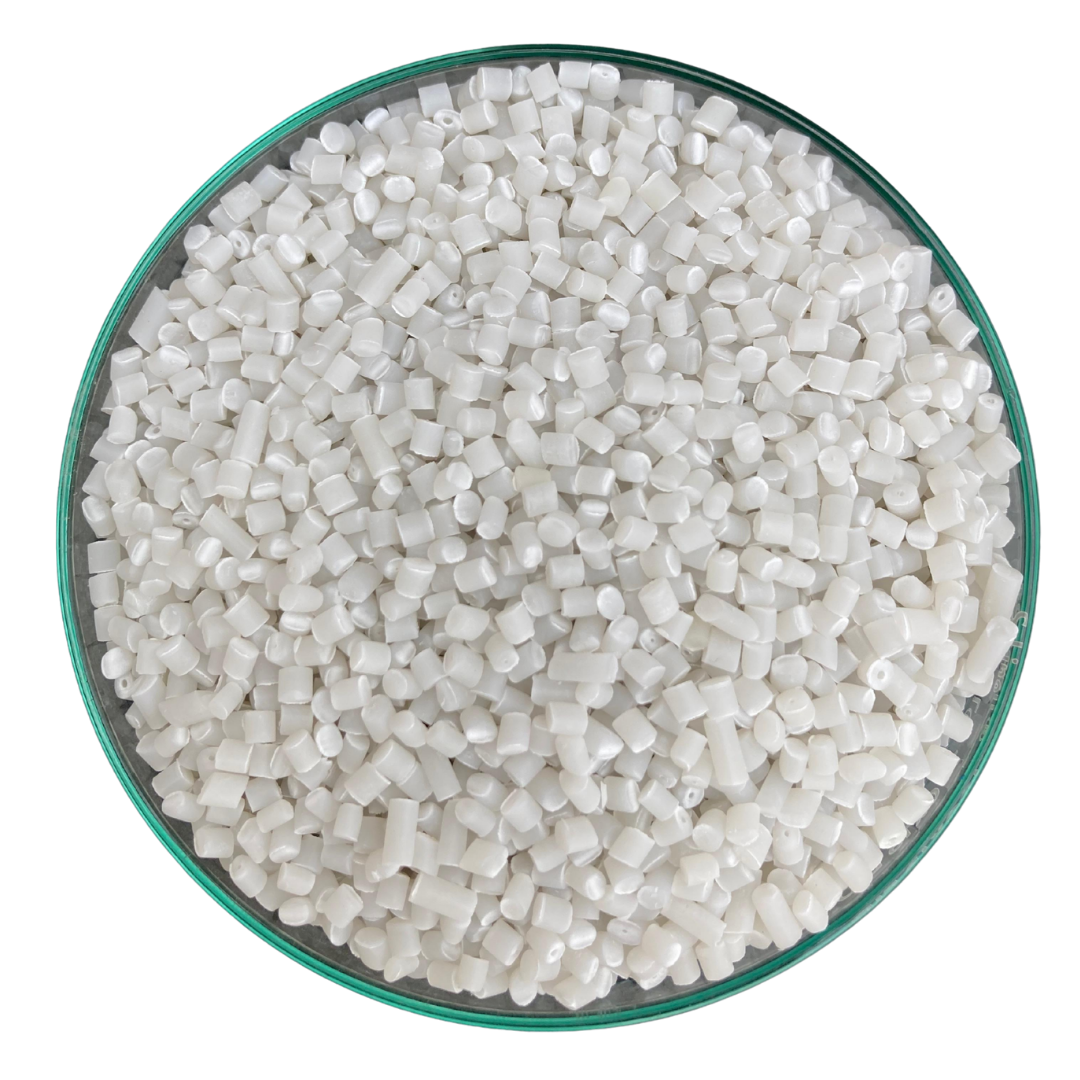
PLAST ANTIBLOCK · Additive masterbatch
Meet Plast Antiblock
The science of
keeping films apart.
Blocking happens when adjacent film layers adhere during winding, stacking or storage.
Bajaj Antiblock Masterbatch is a concentrated additive solution for film producers seeking controlled separation and practical handling performance. Match the grade to your polymer, film gauge, layer structure and converting conditions.
Applications
Made for the films
your world depends on.
From everyday bags to industrial films. One focus: surfaces that separate more reliably.

BOPP films
Antiblocking for oriented polypropylene film. Specify particle size and layer placement against skin thickness and optical requirements.

Grocery bags
Support easier opening of polyethylene grocery bags after stacking or storage. Match the grade to bag thickness, resin blend and handling requirements.

Food packaging films
Film separation for food packaging structures. Request the selected grade’s food-contact documentation for your intended use.

Industrial liner bags
Support opening and insertion of polyethylene liners used in cartons, sacks and industrial containers. Match the formulation to liner gauge and filling conditions.
Garment packaging bags
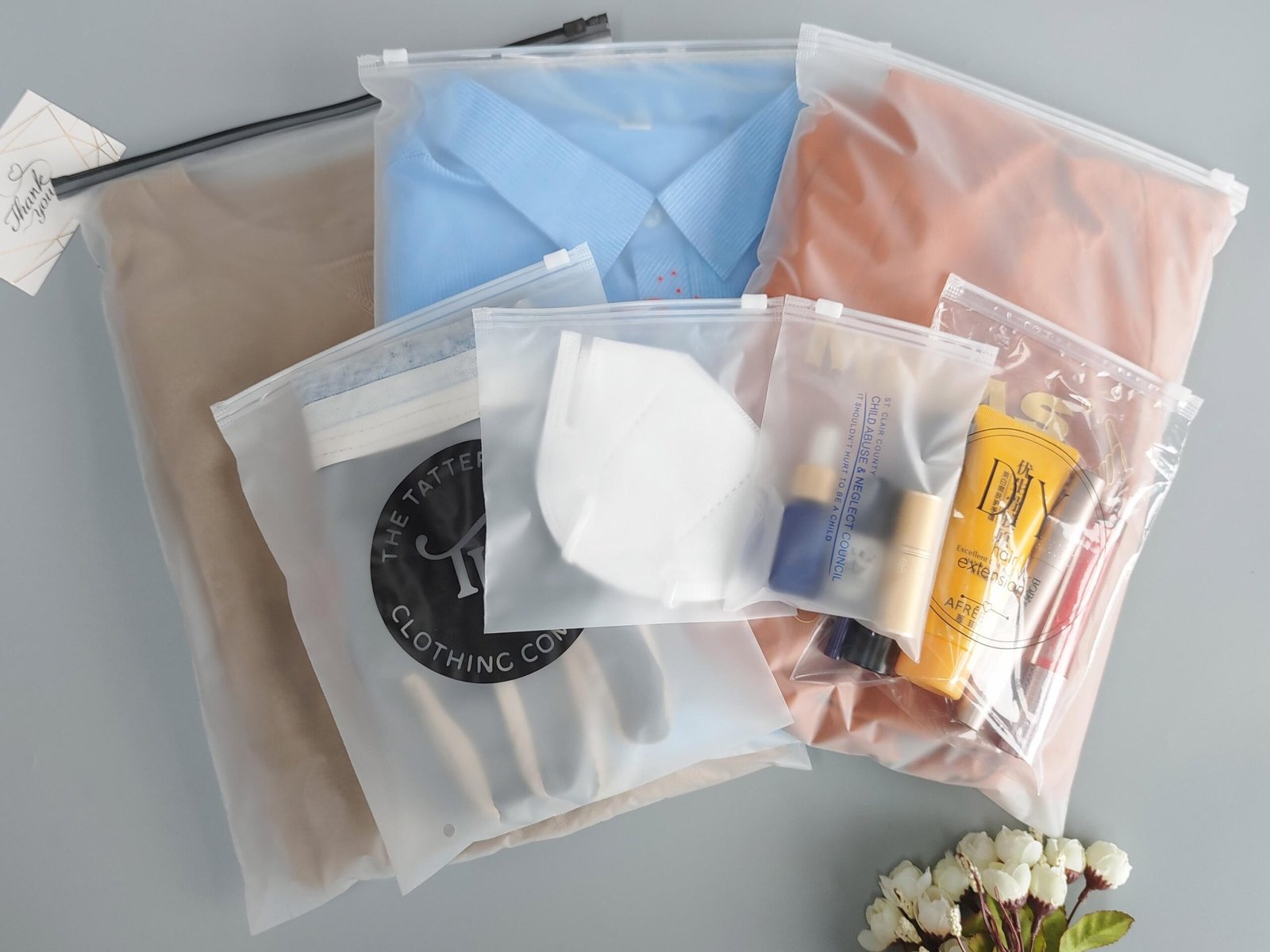
Support easier opening and garment insertion in clear or translucent packaging bags. Balance antiblocking with appearance, printing and closure requirements.
Garbage bags
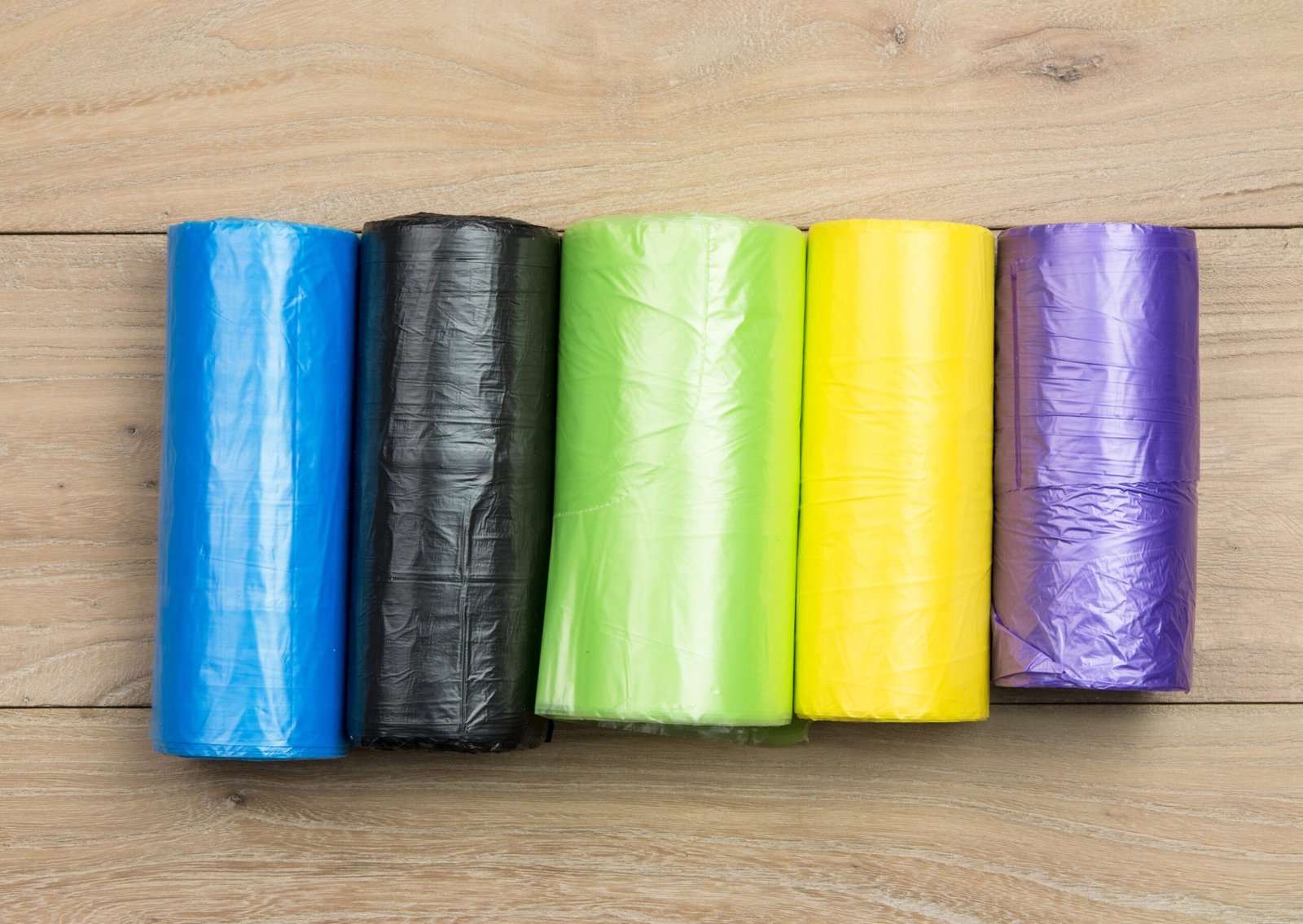
Help reduce sticking between bag walls for easier opening of rolled or folded refuse bags. Evaluate performance with the actual recycled or virgin resin blend.
Courier bags
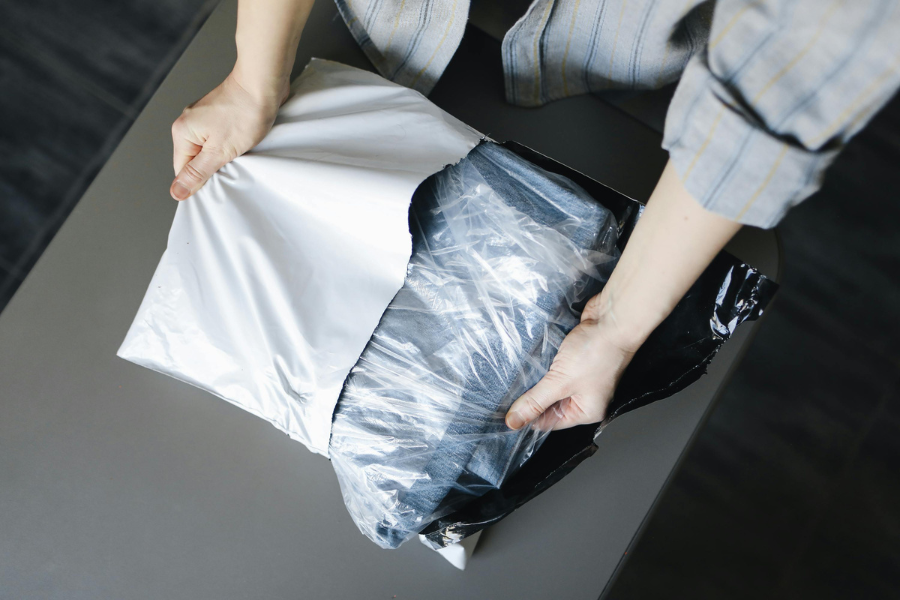
Support separation of coextruded mailer walls for easier opening during packing. Confirm compatibility with printing, heat sealing and the adhesive closure system.

Fruit and vegetable bags
Help thin produce bags open more easily during filling and retail handling. Select the grade around film clarity, gauge and intended food-contact conditions.
Photo: produce film wrapping.
Frozen-food bags
Reduce film-to-film adhesion to support bag opening and filling. Validate blocking, sealing and low-temperature package performance on the finished structure.

Cast films
Address surface adhesion in cast film rolls while balancing handling, appearance and downstream converting needs.

Blown films
Help separate collapsed film webs and finished bags. Confirm the operating window with your resin blend and cooling conditions.
How it works in films
A microscopic gap.
A meaningful advantage.
Dispersed antiblock particles create tiny surface protrusions that reduce intimate film-to-film contact.
Without effective antiblock
Broad contact between smooth surfaces encourages adhesion under pressure.
With effective antiblock
Surface asperities reduce contact area, helping adjacent film layers separate.
Illustrative cross-section; particle size and layer separation are exaggerated. This is a physical surface effect, not a continuous barrier coating.
Disperse
The masterbatch is let down into a compatible polymer melt.
Form the film
Extrusion distributes the additive through the selected film layer.
Reduce contact
Particles near the surface create local spacing between adjacent layers.
Release more easily
Reduced adhesion supports opening and unwinding after cooling.
Key features & film benefits
Performance you can
build a process around.
Lower blocking tendency
Less adhesion between contacting surfaces helps improve separation during converting and use.
Easier bag opening
Improved opening behaviour supports manual handling and automated packaging operations.
More consistent handling
Reduced blocking-related interruptions can help maintain a steadier converting workflow.
Optical balance
Choose particle characteristics and dosage to balance antiblocking with haze, gloss and transparency.
Slip-system integration
Antiblock controls contact area; slip additives control sliding friction. Evaluate both together when COF is critical.
Formulation flexibility
Assess compatibility with colour, white, black, antistatic and PPA masterbatches in the complete formulation.
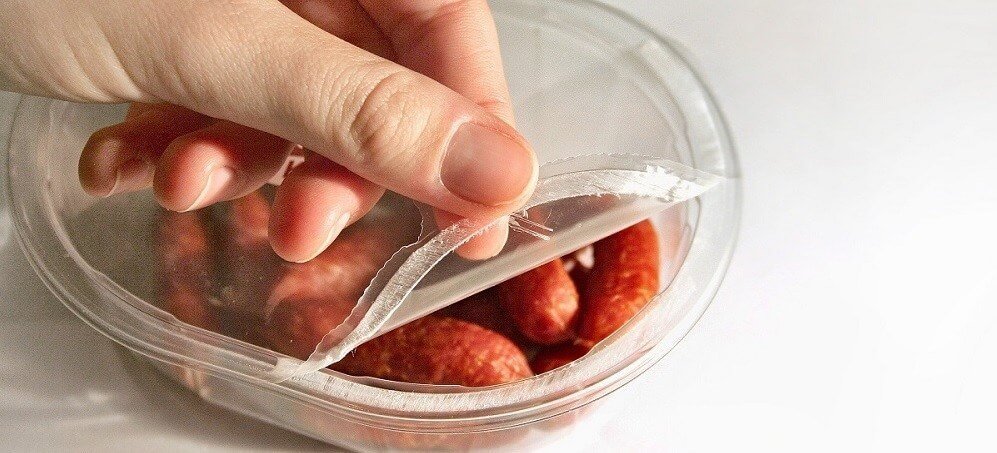
Performance depends on resin, film gauge, additive loading, cooling, winding pressure and storage. Validate blocking, COF, optical properties and seal performance on production film.
From ingredients to granules
How antiblock
masterbatch is made.
A controlled compounding concept brings the active additive and polymer carrier together.
The steps below explain a typical industry manufacturing route. Bajaj’s grade-specific formulation and production parameters are available through technical consultation.

Select
Match active particles and carrier resin to the target polymer, film thickness and appearance.
Meter & blend
Weigh and blend the ingredients to the specified concentrate formulation.
Melt compound
Distribute the additive through the carrier melt under controlled processing conditions.
Pelletise & assess
Cool and pelletise the compound; assess the finished grade against its agreed specification.
Choose your starting point
The right grade.
For your film.
Bajaj lists three product options. Confirm the grade specification and let-down recommendation with the technical team.
AB
Discuss your standard film separation requirements, resin type and extrusion process.
AB Special
Share the application’s particular surface and optical targets to establish suitability.
AB + SLIP
Discuss a combined approach when both blocking and coefficient of friction need attention.

For coextruded films, specify dosing by the relevant layer. Masterbatch addition and active additive content are different quantities; the selected grade’s TDS should define both.
Why choose Bajaj Antiblock?
Film expertise.
Focused on your application.
Bring your process, your packaging specification and your performance target into one technical conversation.
A choice of solutions.
Explore AB, AB Special and AB + SLIP against your application requirements.
A complete formulation view.
Discuss antiblock alongside the other masterbatches used in your film.
Clear technical priorities.
Make film separation, optical appearance and converting behaviour part of the grade-selection brief.
Technical questions
A little more clarity.
Is antiblock the same as slip?
No. Antiblock reduces intimate contact between film layers. Slip additives primarily reduce sliding friction. A combined system may be appropriate when both blocking and COF need control.
Will the film remain transparent?
Optical results depend on additive chemistry, particle size, concentration and film thickness. Confirm haze and gloss on your actual film rather than assuming every grade has no optical effect.
What dosage should I use?
Request a grade-specific recommendation. Provide polymer type, film gauge, layer structure, existing additives and the blocking target; optimise the dosage through a production trial.
Can it be used in food packaging?
Food packaging is a listed application. Obtain current food-contact documentation for the exact grade, addition level, contact conditions and destination market before approval.
What should I send for grade selection?
Share the resin grades, process, layer structure, thickness, current formulation, winding and storage conditions, and targets for blocking, COF, haze and sealing.
Let’s talk film performance
Give your films
room to perform.
Share your application and processing conditions.
Ask Bajaj for a suitable
Antiblock grade and technical data sheet.