
Bajaj Masterbatches · Plast VCI
VCI Masterbatch.
Protection. Built in.
Corrosion-inhibiting concentrates in PP and PE carriers.
Engineered for compatible film formulations.
The highlights
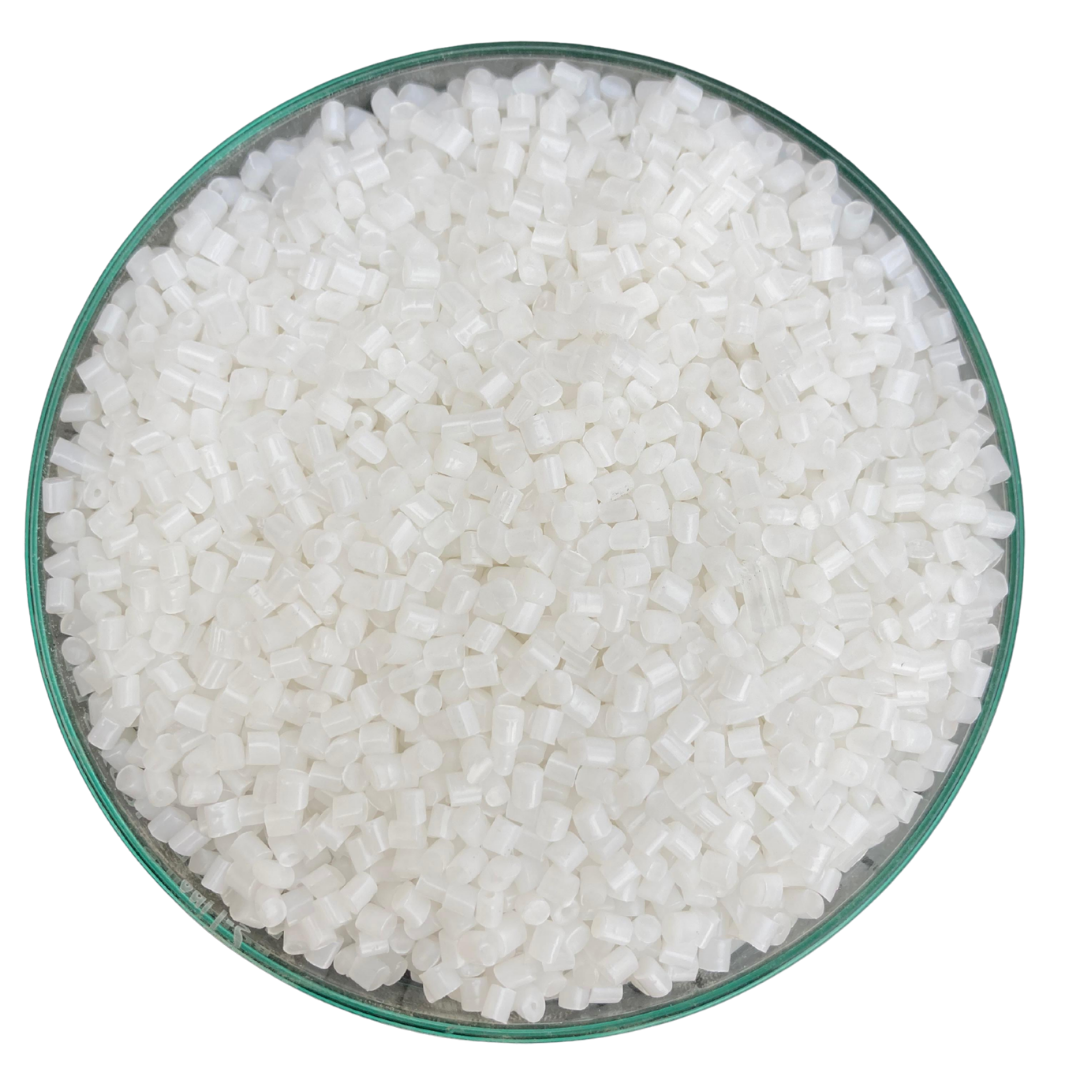
Small granules.
A protective purpose.
Help keep
corrosion away.
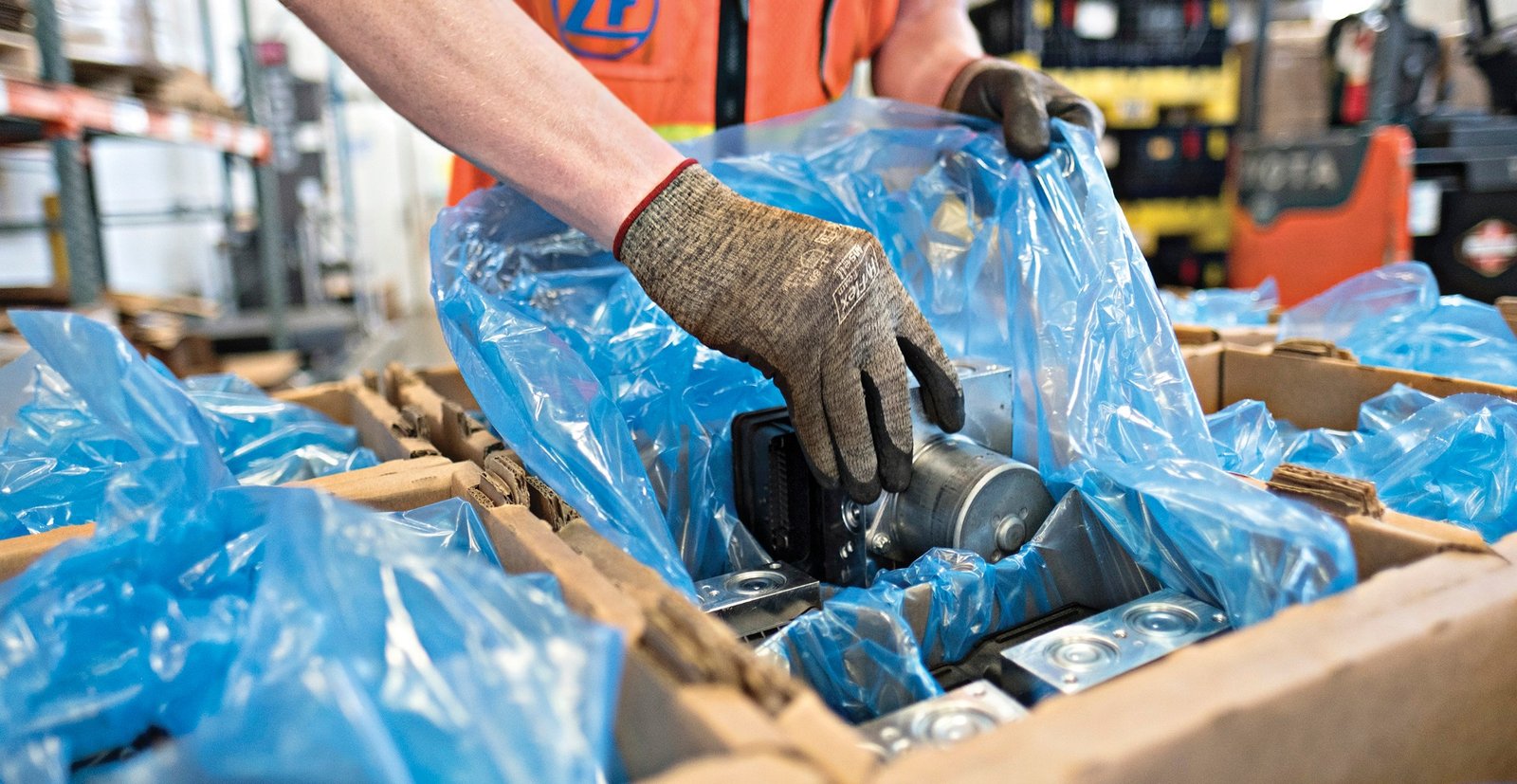
Contact and vapour-phase inhibitors help protect metal components inside enclosed packaging.
See what
you protect.
Transparent film constructions allow visual inspection of packed parts.
Clean surfaces.
Considered packaging.
VCI packaging offers an alternative to oil and grease-based protection for suitable applications.
Meet Plast VCI
Protection starts
inside the film.
Bajaj Plast VCI Masterbatches are offered in polypropylene (PP) and polyethylene (PE) carrier resins. Select the carrier to suit the film polymer, processing route and approved application.
Inhibitor species released from the film migrate through the enclosed package and interact with susceptible metal surfaces, helping suppress corrosion reactions. Performance depends on the inhibitor chemistry, metal, enclosed volume, film construction and integrity of the package—not simply on the presence of VCI granules.

The bigger picture
Engineered into film.
Designed around protection.
Explore VCI packaging in real applications, from individual components to industrial loads.
Carrier resin selection
PP or PE.
The right carrier matters.
Match the concentrate to the polymer system before selecting the processing conditions.
| Selection point | PE-carrier VCI masterbatch | PP-carrier VCI masterbatch |
|---|---|---|
| Resin system | Compatible PE blends, including LDPE/LLDPE film formulations. Confirm other PE resin combinations by grade. | Compatible PP formulations. Confirm the specific PP resin and film route with Bajaj. |
| Film route | Blown or cast film where the selected grade is approved for that process. | PP film processes within the grade’s validated thermal window. CPP or oriented structures require application-specific approval. |
| Technical focus | Dispersion, melt compatibility, sealing, gauge distribution and inhibitor retention. | Carrier compatibility, actual melt temperature, residence time and survival of the active system through conversion. |
| Multilayer use | Define the VCI-containing layer, its mass fraction and the diffusion path toward the packed metal. Do not assume that an outer-layer dose gives equivalent internal protection. | |
PP and PE carrier grades are not automatically interchangeable. Carrier selection does not establish metal compatibility; the inhibitor package must also suit the metal or alloy.
A closer look at packaging
Every part.
Every package.
Considered.
Build the protection around the product, the enclosure and the journey.
Explore the film formats →
Start with the component.
Match the inhibitor system to the metal or alloy. Surface condition, cleanliness and residual process chemicals all belong in the packaging brief.

Build the enclosure.
Select a suitable film format and confirm its closure, puncture resistance and handling performance for the actual load.

Think beyond the packing line.
Consider storage, transport and reopening. Validate the complete pack under conditions representative of its intended use.
How VCI masterbatch is made
From formulation.
To functional granules.
A technical overview of the compounding route for PP- and PE-carrier VCI concentrates.
The sequence below explains the general manufacturing principle. The selected Bajaj grade determines the proprietary recipe, equipment settings and release specification.
Define the protection brief.
Identify the target metals, packaging format, carrier polymer and intended conversion conditions. Select an inhibitor system compatible with both the metal and the polymer processing window.
Select and meter ingredients.
Combine the chosen PP or PE carrier with the specified VCI package and compatible formulation aids. Controlled weighing and feeding establish the concentrate composition; formulation changes require revalidation.
Disperse through melt compounding.
Distribute the active system within the polymer melt using controlled mixing. Balance dispersion against thermal and shear exposure so the carrier processes effectively without unnecessarily degrading or losing inhibitor components.
Control the thermal history.
Manage actual melt temperature, residence time and throughput to suit the formulation. Venting and downstream handling must be compatible with the volatile active system; a standard aggressive vacuum setting should not be assumed suitable.
Cool and pelletise.
Convert the compound into manageable granules using a cooling and pelletising route suited to the formulation. Control residual moisture and fines; avoid cooling or drying conditions that promote active loss.
Verify and protect the batch.
A grade-specific quality plan should cover granule consistency, processability, dispersion and functional performance in a representative film. Seal and identify the material for traceability and storage under the specified conditions.
How to use Bajaj VCI masterbatch
From granules.
To protective film.
Control the formulation, extrusion and finished package as one system.
Confirm the grade and documents.
Use the Bajaj TDS and processing guidance for the selected PP- or PE-carrier grade. Confirm the recommended dosage, permitted thermal window, storage conditions and intended metal compatibility before the trial.
Prepare a compatible resin blend.
Select the film resin and review every additional component: colour, slip, antiblock, filler, recycled resin and other additives. Their presence can change film properties or inhibitor behaviour; assess the complete formulation.
Meter by total blend weight.
Set the approved masterbatch percentage using calibrated feeding equipment. Account for all other additives within the total 100% formulation. Maintain consistent mixing and feeding to limit concentration variations along the roll.
Extrude within the approved window.
Set the barrel and die profile for the resin and the VCI grade together. Check actual melt temperature rather than relying only on heater set-points. Avoid extended hot holds, excessive shear and repeated thermal processing.
Form and convert the film.
For blown film, control cooling, bubble stability and gauge distribution; for cast film, control drawdown and chill-roll conditions. Convert into bags, liners or wraps and verify seal integrity, puncture resistance and the required dimensions.
Validate before commercial release.
Test corrosion protection on the relevant metal with the intended pack, film gauge and exposure conditions. Also check mechanical, optical and sealing properties. Retain a clear link between trial formulation, processing record and approved specification.
Calculate the blend correctly.
Illustration only: a 100 kg total blend at 3% masterbatch contains 3 kg masterbatch and 97 kg of the remaining formulation. This is a calculation example, not a Bajaj dosage recommendation.
For a multilayer film, whole-film masterbatch content equals the sum of each layer’s mass fraction multiplied by its masterbatch concentration. For example, a layer making up 30% of film mass at 3% masterbatch contributes 0.9% to the whole film. Equal whole-film percentages do not necessarily give equal corrosion protection.
VCI films & sub-applications
Many ways to wrap.
One protective purpose.
Explore film formats and related laminated packaging for your next application.

VCI 2D bags
Flat-bag formats for individual metal components.

VCI 3D bags
Shaped packaging for larger assemblies and loads.

VCI poly rolls
Roll stock for conversion into protective packaging.

VCI shrink film
A fitted packaging format for metal products.

VCI safe foil
Flexible protective wrapping for metal parts.

VCI steel wrap
Wrapping formats for steel products.

VCI laminated tarpaulin
Laminated protective packaging constructions.

VCI laminated paper
A related packaging format with a VCI PE layer.
Protection in perspective
Flexible formats.
Industrial possibilities.

Film with a purpose.
Choose the resin blend, gauge and VCI grade together for the intended packaging application.

Wrap around the requirement.
Evaluate wrapping and closure as part of the protection system for machinery and larger components.
Application photographs illustrate packaging formats. Confirm grade suitability and performance for your particular metal and pack.
Film features & benefits
More confidence.
From packing to unpacking.
Corrosion inhibition.
Help preserve metal surfaces while components are enclosed.
Packaging versatility.
PE-carrier grades for compatible polyethylene film systems; PP-carrier grades for approved polypropylene film systems.
Metal-specific selection.
Ferrous, non-ferrous and multi-metal options.
Additional functionality.
Discuss colour, antistatic or UV-stable variants with Bajaj.
Specify the complete film. Not just the additive.
Ask for a trial against your actual metal, film construction, pack dimensions and storage conditions. Agree on acceptance criteria before approving a commercial formulation.
Optional properties require the appropriate grade and formulation. VCI addition alone does not establish barrier performance, mechanical strength or a guaranteed protection period.
Using the finished VCI film
The final step.
Pack for performance.
Clean, dry parts.
Pack clean and dry components using clean handling practices. Check compatibility of any residual process chemicals or surface treatments; VCI is not a rust-removal treatment.
Close the package.
Use the validated orientation for a one-sided or multilayer film. Close the bag or wrap securely, protect sharp edges and avoid punctures or openings that allow inhibitor vapour to escape.
Protect the enclosure.
Inspect closure integrity through handling and storage. Follow the approved instructions after opening or repacking; verify the package for the intended transport and environmental conditions.
Technical qualification
Measure the film.
Validate the protection.
| Check | What to assess | Why it matters |
|---|---|---|
| Formulation & processing | Carrier compatibility, dosage, dispersion, actual melt temperature and residence history. | A visually acceptable film may still have inadequate retained VCI activity. |
| Physical film performance | Gauge uniformity, tensile behaviour, tear, puncture and seal strength against the pack specification. | The enclosure must survive conversion, loading and transport. |
| Corrosion performance | Representative metal coupons or parts, agreed exposure conditions, comparison controls and acceptance criteria. | Performance is specific to the metal and packaging system. |
| Optical & surface properties | Clarity or haze, appearance, blocking and coefficient of friction where relevant. | Inspectability and machine handling must remain fit for the application. |
| Documentation | Current TDS, SDS, batch information and grade-specific compliance statements. | Use documented evidence for purchasing and customer approvals. |
A salt-spray result alone does not define the service life of a sealed VCI pack. Agree on a test programme representative of the actual application; request the method, conditions and acceptance criteria behind any performance claim.
Why choose Bajaj Masterbatches?
Two carrier platforms.
One application-led approach.
PP and PE
carrier choice.
Bajaj offers VCI masterbatches in PP and PE carriers, allowing selection around the base polymer rather than assuming one carrier fits every film.
Build around
your film.
Include resin grade, film thickness, layer structure and processing route in your request.
Specify the
complete pack.
Describe the closure method, storage duration, shipment route and exposure conditions for a focused grade discussion.
A few things to know.
Can a PE-carrier grade be used in PP film?
Do not substitute carriers without approval. Confirm compatibility, dispersion and the VCI thermal window for the actual PP film process. A PP-carrier grade is a separate formulation choice, not evidence that every PP processing route is suitable.
Does VCI improve film strength or moisture barrier?
VCI provides a corrosion-inhibiting function. Strength, shrink, stretch, sealing and barrier behaviour depend on the resin blend, film construction and processing. Test these properties independently.
Which dosage should I use?
Request the current grade-specific TDS and recommended let-down ratio from Bajaj. Confirm the formulation through film trials before production.
How long will a VCI film protect my parts?
Ask for validation covering your complete pack and intended exposure period. Do not assume a fixed protection duration from the masterbatch name alone.
Can I combine VCI with other additives?
Share your complete formulation, including pigments and other additives, when requesting a grade. Ask Bajaj to review the combination and confirm trial requirements.
What should I request before purchase?
Ask for the applicable TDS, SDS, metal compatibility information and relevant test documentation, alongside processing guidance for the proposed grade.
Let’s talk VCI
Your next film.
A smarter starting point.
Bring your packaging brief to Bajaj.
Request a grade recommendation and technical data.