PP Base Filler
Masterbatch
A precision‑engineered ultra‑fine CaCO₃ compound in a virgin polypropylene carrier — built for stiffness, throughput and formulation economics.
What is PP Base Filler Masterbatch?
PP Base Filler Masterbatch is a functional compound built by homogeneously dispersing ultra‑fine particle‑size Calcium Carbonate (CaCO₃) into a virgin Polypropylene (PP) carrier resin, at precisely engineered loading ratios and combined with a tailored performance‑additive package.
Unlike a generic mineral filler, every formulation is customised around the end application — injection moulding, blow moulding, raffia/woven sack, or BOPP and blown film — so the resin system behaves predictably under real production conditions rather than only in a lab data sheet.
- Ultra‑fine, tightly controlled CaCO₃ particle size distribution
- Virgin polypropylene carrier for consistent melt behaviour
- Application‑specific additive engineering, not a one‑size‑fits‑all blend

Why PP Base Filler, and why now?
Virgin plastics are refined from petroleum feedstock, so resin pricing inexorably tightens whenever oil and gas supply contracts. Bajaj fillers are decoupled from that volatility — available consistently through the year, with pricing that climbs at a materially slower pace.
The result compounds over time: filled formulations become more commercially attractive year after year. Every converter has access to the same base resins; the formulation advantage — and the market edge — comes from how intelligently the filler is engineered into it.
- Stable, predictable input cost versus feedstock‑linked resin pricing
- Formulation headroom to outperform competitors on identical resin
- A durable cost‑performance edge in a fiercely competitive supply market
Why Bajaj Masterbatches?
Bajaj began operations three decades ago in Nagpur, Maharashtra, and has grown into a group of four dedicated manufacturing entities — Bajaj Plast, Bajaj Polyblends, Bajaj Masterbatches and Bajaj Superpack India — each engineered around consistent, reproducible quality.
The group is an ISO 9001:2015 company certified by TÜV Nord, with an in‑house R&D sector and a dedicated Quality Department validating every batch against stringent, repeatable standards before it reaches a converter's hopper.
Engineered for measurable process gains
Four core advantages carry across every PP Base Filler grade, independent of the end application it's engineered for.
Improves Stiffness
Higher flexural modulus and dimensional stability across moulded and extruded parts.
Improves Strength
Reinforced tensile and impact performance without sacrificing processability.
Better Printability
Improved surface receptivity and ink adhesion for downstream branding and lamination.
Enhances Processability
Even flow and stable back‑pressure keep output consistent line after line.
What it changes on the shop floor
Every benefit below is tied to a real production variable — cost, clarity, compliance or output — not a marketing abstraction.
Cost & Yield
- Meaningful resin cost optimisation at customised loading ratios
- 25–30% more quantity per roll in film applications
- Cost‑effective partial substitute for virgin polymer resin
Mechanical & Optical
- Higher stiffness, tenacity and dimensional stability
- Improved opacity, clarity and covering power
- Better heat resistance and reduced post‑shrinkage
Safety & Sustainability
- Non‑toxic, food‑grade compliant formulations
- Eco‑friendly composition suitable for hygiene‑grade uses
- Consistent, reproducible batch‑to‑batch results
How a PP Base Filler batch is engineered
From mineral to pellet, every stage is controlled to keep dispersion, particle size and melt behaviour inside a tight process window.
Mineral selection & micronisation
High‑purity Calcium Carbonate is sourced and ground to an ultra‑fine, tightly controlled particle size distribution — the foundation of consistent optical and mechanical behaviour downstream.
Surface treatment
Particles are surface‑coated to improve wetting and compatibility with the polypropylene matrix, reducing agglomeration and improving dispersion quality at high filler loadings.
Precision compounding
Treated CaCO₃, virgin PP carrier resin and a performance‑additive package are dosed at exact ratios and melt‑compounded on twin‑screw extrusion lines under controlled shear and temperature profiles.
Homogenisation & degassing
The melt is homogenised and degassed to eliminate volatiles and voids, protecting downstream film clarity, tensile strength and surface finish.
Strand pelletising & cooling
The homogenised melt is extruded into strands, water‑cooled and pelletised into uniform, free‑flowing granules ready for metering at the converter.
Quality validation
Every batch is tested for particle dispersion, melt flow index (MFI), moisture and ash content in‑house before release — the same discipline behind Bajaj's ISO 9001:2015 certification.
Three grades. One filler platform.
Each grade is a distinct formulation, engineered for a different point in the conversion process.
PLAST STIFF
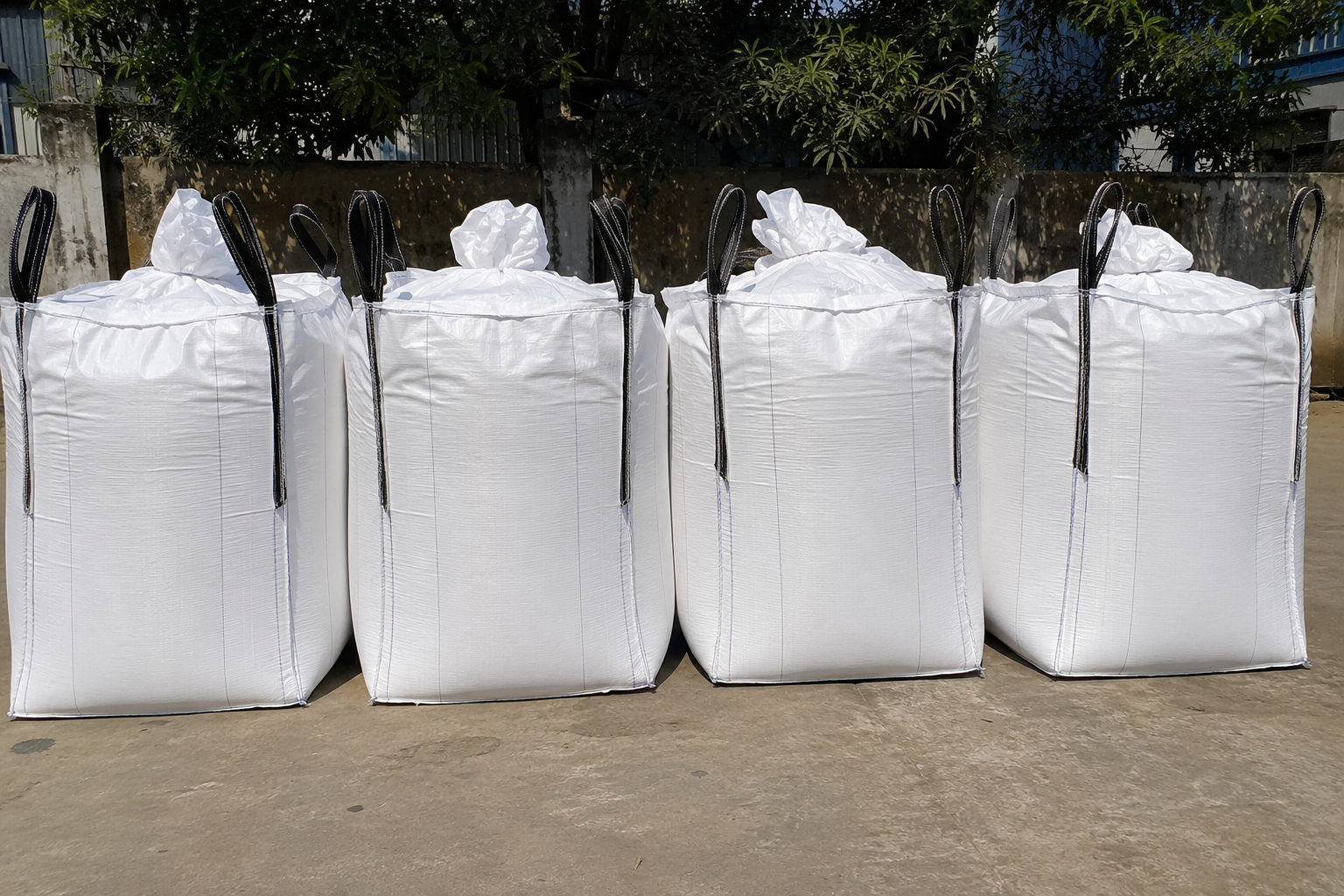
An ultra‑fine CaCO₃ blend with virgin PP and performance additives, proportioned for stiffness‑critical raffia and woven‑sack applications.
- Consistent results
- Excellent anti‑fibrillation
- Less powder formation
- Improved dimensional stability
- Better heat resistance
- Cost optimisation
- Improves stiffness
- Anti‑slip property
- Improves tape tenacity
- Improves cloth stability
- Improves printability
PLAST FAB
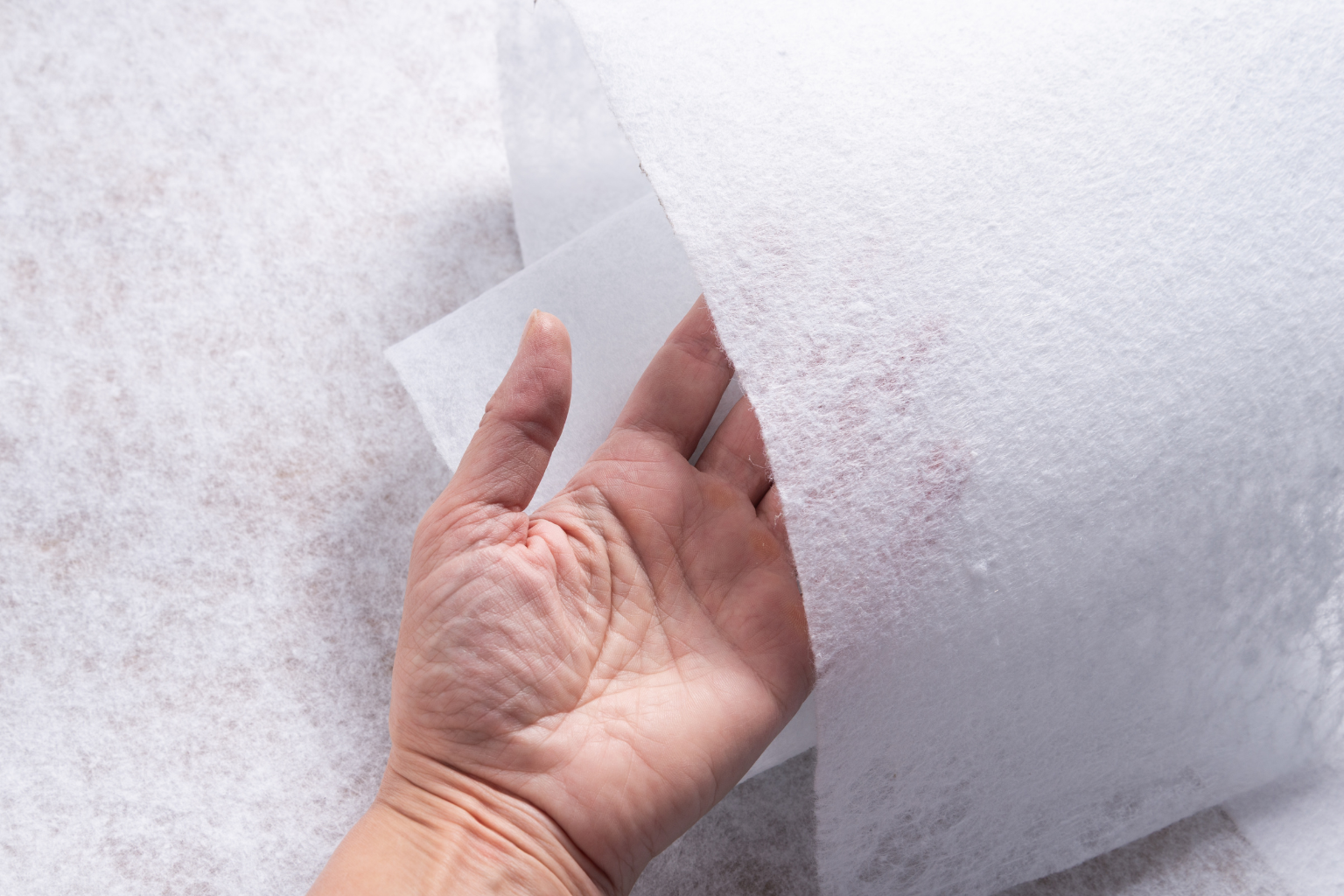
A CaCO₃ / virgin PP / additive system tuned for non‑woven fabric — softening hand‑feel while holding mechanical strength.
- Matte, soft non‑woven feel
- Enhances opacity & covering power
- Cotton‑like tactile strength
- Improves air filtration & absorption
- 30–60% customisable usage
- Fast dispersion during extrusion
- Cost‑effective resin substitute
- Non‑toxic & eco‑friendly
- Food‑grade compliant
- Health & hygiene grade compatible
PLAST MODIFIER (PP)
A performance‑modifying compound of mineral filler, elastomers and additives engineered for stringent multilayer‑film applications.
- Even flow, uniform back‑pressure
- Reduces post‑shrinkage of film
- Higher impact strength
- Improved flexural rigidity
- Better draw‑down, film structure
- Improves printability
- Better adhesive lamination
- Improved opacity
- Increases machine output
- 25–30% more quantity per roll
Which grade is right for you?
A quick cross‑reference of the attribute each grade optimises for.
Clarity, hardness, cost
- Clarity & smoothness
- Food‑grade compliant, non‑toxic
- Eco‑friendly
- Improves printability
- Cost benefit, improved hardness
Feel, adhesion, filtration
- Productivity increase
- Improves adhesion & printability
- Cotton‑soft feel
- Air filtration, non‑toxic
- Suited to extrusion coating / lamination
Dispersion, output, compliance
- Excellent dispersion
- Food‑grade compliant, non‑toxic
- Eco‑friendly
- Improves printability
- Cost benefit, improved hardness
Built for real conversion lines
The same filler platform, tuned differently for four major converting processes.
Formulated for the line.
Engineered for the margin.
Three decades of masterbatch engineering, distilled into one PP Base Filler platform — Plast Stiff, Plast Fab and Plast Modifier (PP).