
From Colour Reference to Production: How to Achieve Consistent Colour in Plastic Products
Choosing an attractive colour for a plastic product may look simple on a design sheet, but reproducing that colour consistently on an actual production line requires much more than selecting a shade number.
A colour approved on paper, a computer screen or even another material can appear different after it is converted into a plastic product.
The final appearance can be influenced by the polymer, masterbatch formulation, dosage, processing conditions, product thickness, surface texture and even the natural colour of the base resin.
For manufacturers, therefore, successful colour development is not simply about asking:
“Which colour do we need?”
The more important question is:
“How do we reproduce the required colour consistently in our actual plastic product?”
This is where a properly developed colour masterbatch becomes an important part of the manufacturing process.
Colour Matching Starts With the Final Product
One of the most common mistakes in colour development is focusing entirely on a shade reference without considering where that colour will actually be used.
Before developing a colour masterbatch, the final application should be understood.
For example, the same visual colour requirement may be used for:
- Injection-moulded furniture
- HDPE bottles
- Plastic containers
- Pipes and profiles
- Woven sacks
- Household products
- Industrial components
- Blow-moulded products
- Packaging applications
- Automotive plastic components
Although the desired colour may be similar, the masterbatch requirements can be different.
The formulation therefore needs to be considered together with the polymer and processing application.
How Can a Manufacturer Specify the Required Colour?
There are several practical ways to communicate a colour requirement to a masterbatch manufacturer.
1. Physical Plastic Sample
An approved plastic component is often one of the most useful colour references.
It gives the colour development team information not only about the shade but also about:
- Surface appearance
- Gloss level
- Opacity
- Product thickness
- Visual depth of colour
Whenever available, an approved production sample can provide a realistic target for colour development.
2. Standard Colour Reference
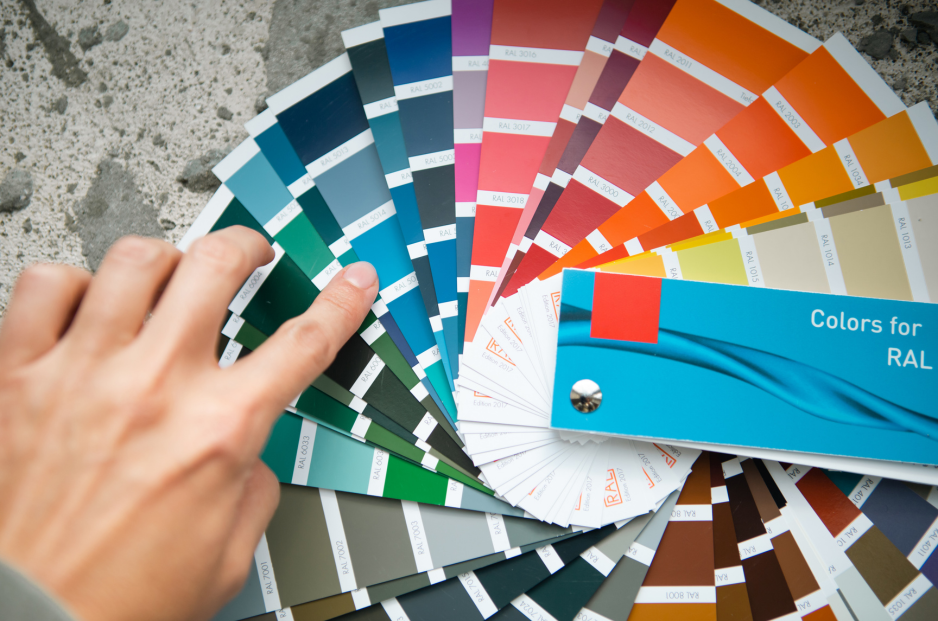
International colour systems such as RAL can also be used to communicate a required shade.
RAL provides standardized colour references and also offers dedicated plastic samples for colour matching and quality-control applications.
A standard colour reference is particularly useful when designers, buyers, suppliers and manufacturers need a common colour specification.
However, it should be considered a starting reference rather than the complete masterbatch specification.
3. Customer-Approved Shade Sample
Some manufacturers already have their own approved brand or product colour.
In such cases, the customer can provide an existing component, colour plaque or previously approved sample for matching.
This is especially useful when maintaining colour identity across several production batches or product categories.
4. Custom Colour Requirement
Sometimes there is no predefined colour code.
The customer may simply require:
- A particular corporate colour
- A brighter version of an existing shade
- A deeper colour
- A pastel shade
- A high-opacity colour
- A translucent appearance
- A colour matching another product
In these cases, a custom colour masterbatch can be developed according to the required visual and technical characteristics.
Why the Base Polymer Matters
Colour does not exist independently from the material in which it is used.
Different polymers can have different natural appearances and processing characteristics.
Common examples include:
PP – Polypropylene
HDPE – High-Density Polyethylene
LDPE – Low-Density Polyethylene
LLDPE – Linear Low-Density Polyethylene
A colour formulation developed for one polymer should therefore not automatically be assumed to give exactly the same result in every other resin.
For better colour development, manufacturers should communicate the actual polymer and grade they intend to use.
Virgin and Recycled Resin Can Produce Different Colour Results
The natural colour of the base resin is another important consideration.
A clean virgin polymer may provide a different background compared with:
- Reprocessed material
- Recycled polymer
- Off-white resin
- Naturally tinted resin
- Resin containing filler or other additives
If the base material itself varies from batch to batch, maintaining the exact same final colour can become more challenging.
For this reason, colour masterbatch development should ideally consider the same type of raw material that will be used during commercial production.
Product Thickness Changes Colour Perception
Imagine producing the same coloured polymer as:
- A thin film
- A 1 mm component
- A thick injection-moulded article
The visual result may not appear identical.
Thickness influences how light interacts with the coloured plastic.
RAL’s own plastic colour samples are offered with different sample thicknesses specifically to demonstrate colour appearance at different opacity levels.
This is why a laboratory colour plaque should preferably represent the thickness and appearance of the customer’s actual product as closely as practical.
Glossy and Matt Surfaces Can Make the Same Colour Look Different
Surface finish is another frequently overlooked factor.
A highly polished plastic surface reflects light differently from:
- Matt surfaces
- Textured surfaces
- Rough moulded surfaces
- Embossed surfaces
As a result, two products manufactured with the same colour formulation may appear slightly different if their surface finishes are different.
RAL’s dedicated plastic references also use different surface textures to help professionals assess how colour appearance changes with surface structure.
The final colour approval should therefore consider the intended surface finish.
A Practical Colour Masterbatch Development Process
A structured colour-development process can make colour approval easier and more repeatable.
Step 1: Define the Colour Target
The customer provides the required colour using:
- Physical component
- Standard colour reference
- Plastic plaque
- Customer-approved sample
- Custom colour description
Step 2: Identify the Polymer
The next step is to establish the actual polymer being processed.
For example:
PP | HDPE | LDPE | LLDPE or another suitable thermoplastic
The resin grade and natural appearance should also be communicated wherever possible.
Step 3: Understand the Processing Method
Colour masterbatch is used across different manufacturing technologies, including:
- Injection moulding
- Blow moulding
- Film extrusion
- Sheet extrusion
- Pipe extrusion
- Raffia processing
- Thermoforming
- Other thermoplastic conversion processes
Processing conditions can influence the way pigments and polymer behave during production.
Therefore, masterbatch development should consider the intended application rather than focusing only on colour appearance.
Step 4: Understand the Product Requirement
Colour is only one part of the final specification.
The customer may additionally require properties such as:
- High opacity
- High brightness
- Outdoor durability
- Heat resistance
- Specific dispersion performance
- Consistent appearance
- Suitable processing behaviour
These requirements should be discussed before finalizing the formulation.
Step 5: Develop the Colour Formulation
Based on the provided information, an appropriate combination of pigments, carrier system and supporting ingredients can be developed.
The aim is not simply to create a visually attractive masterbatch pellet.
The real objective is to produce the required colour after the masterbatch has been processed into the customer’s final polymer product.
Step 6: Produce and Evaluate a Trial Sample
A laboratory or production trial helps evaluate the developed formulation.
The sample should be compared with the agreed colour reference under controlled conditions.
Colour assessment can include both:
Visual Evaluation
and
Instrumental Colour Measurement
Instrumental tools can support objective colour comparison, while final visual assessment remains important because customers ultimately see the finished product rather than only numerical colour data.
Step 7: Validate Under Actual Production Conditions
The strongest validation takes place in the customer’s actual manufacturing environment.
The trial allows the processor to verify:
- Shade
- Dispersion
- Dosage
- Surface appearance
- Opacity
- Processing behaviour
- Final product appearance
Once approved, the formulation can be established as the reference for future production.
Colour Masterbatch Is More Than Pigment Concentration
A common misconception is that a colour masterbatch is simply a high concentration of pigment mixed with polymer.
In practice, an effective colour masterbatch must balance several requirements.
It should provide:
Uniform Colour Distribution
Pigments should disperse properly through the polymer to create an even appearance.
Processing Compatibility
The masterbatch should be suitable for the intended resin and manufacturing process.
Colour Strength
The required shade should be obtained at an appropriate addition level according to the developed formulation.
Reproducibility
Once a colour is approved, future batches should be manufactured under controlled specifications to support consistent results.
Application Performance
The formulation may also need to consider heat exposure, outdoor use or other application-specific requirements.

Why Batch-to-Batch Colour Consistency Matters
Imagine a manufacturer producing thousands of plastic products every month.
The first production batch is approved.
The second is slightly lighter.
The third is slightly darker.
Even if every product is technically functional, visible colour variation can create problems in:
- Product assembly
- Retail display
- Brand appearance
- Customer approval
- Export shipments
- Repeat orders
Colour consistency therefore becomes a quality-control requirement rather than simply an aesthetic preference.
A standardized masterbatch formulation, controlled raw materials and clearly defined colour specifications help support repeatable production.
Common Reasons for Colour Variation in Plastic Products
When colour problems occur, the masterbatch itself should not automatically be assumed to be the only cause.
Processors should review the entire production system.
Common variables include:
Variation in Masterbatch Dosage
Inconsistent dosing can alter colour intensity.
Change in Base Resin
Changing polymer grade, supplier or recycled-material content can affect the final appearance.
Uneven Mixing
Poor masterbatch distribution can create streaks or colour variation.
Processing Temperature Changes
Excessive or inconsistent thermal conditions may affect some colour systems.
Product Thickness Variation
Different wall thicknesses can change perceived colour depth.
Surface Finish Changes
A new mould texture or surface condition may change the way the colour appears.
Contamination From Previous Production
Residual colour in the screw, barrel, die or processing system can influence the next shade.
Correct colour troubleshooting therefore requires examining the complete processing condition.
RAL Code vs. Finished Plastic Colour: What Manufacturers Should Know
A RAL number is extremely useful for communicating a target colour, but it does not replace application-specific colour development.
RAL describes its colour standards as material-independent, while also offering dedicated polypropylene plastic standards because material, thickness, surface texture and lighting influence the overall perception of colour.
For plastic manufacturers, the practical workflow should therefore be:
Colour Reference → Polymer Selection → Masterbatch Development → Plastic Trial → Evaluation → Production Approval
rather than simply:
RAL Number → Finished Product
This approach helps transform a colour reference into a usable production specification.
Information to Share When Requesting a Colour Masterbatch
To speed up colour development, customers can provide the following information when sending an enquiry:
Colour Requirement
RAL reference, physical sample or approved product.
Polymer
PP, HDPE, LDPE, LLDPE or other resin.
Application
Injection moulding, blow moulding, film, extrusion, woven sack or other process.
Final Product
Bottle, container, furniture, pipe, film, component, sheet, etc.
Base Resin Colour
Natural, transparent, white, recycled or other.
Required Appearance
Opaque, bright, pastel, translucent, glossy or other.
Special Requirements
Outdoor use, heat exposure or other application-specific performance requirements.
Existing Sample
Provide the currently approved sample whenever available.
The more complete the input data, the better the colour-development process can be aligned with actual production conditions.
Bajaj Colour Masterbatch Solutions
At Bajaj Masterbatch, colour development is approached as a combination of colour requirement, polymer compatibility and end-use application.
Our colour masterbatch solutions are developed for various thermoplastic-processing applications and can be customized according to customer requirements.
Whether the starting point is:
- A RAL reference
- An existing plastic component
- A customer-approved colour
- A brand shade
- A completely new colour requirement
the objective is to develop a masterbatch suitable for the intended polymer and manufacturing process.
From Colour Idea to Production Reality
A colour selected by a designer becomes valuable only when it can be reproduced effectively in manufacturing.
That transition requires more than choosing a colour code.
It requires understanding:
Material. Process. Product. Surface. Thickness. Colour.
When these factors are considered together, colour masterbatch development becomes more controlled, and manufacturers gain a stronger foundation for maintaining consistent product appearance across production runs.
Your Colour. Your Polymer. Your Application. One Engineered Masterbatch Solution.
Looking for a custom colour masterbatch for your plastic product?
Share your colour reference, polymer type, processing application and final product requirement with Bajaj Masterbatch to begin the colour-development process.
About Bajaj Plast Pvt. Ltd.
Bajaj Plast Pvt. Ltd. is a leading manufacturer of high-quality masterbatch solutions, dedicated to innovation, sustainability, and excellence. With a strong focus on customer satisfaction and cutting-edge technology, we are committed to delivering superior products that meet the evolving needs of the polymer industry.

 BAJAJ PLAST PVT LTD