
Antiblock Masterbatch for Multilayer Films: Engineering Surface Separation, Clarity and Converting Performance
Introduction
In flexible packaging, film quality depends on more than thickness uniformity, tensile strength and visual appearance. The interaction between contacting film surfaces also determines how reliably a roll unwinds, a bag opens and a web moves through converting equipment.
For polyethylene and polypropylene films, antiblock masterbatch selection is a surface-engineering task. Particle characteristics, active concentration, layer placement and processing history must work together to achieve the required separation behaviour while maintaining optical and packaging performance.
This becomes particularly important in multilayer structures, where the formulation at the exposed surface can differ substantially from the composition of the complete film.
1. Diagnose the Contact Interface Before Changing the Formulation
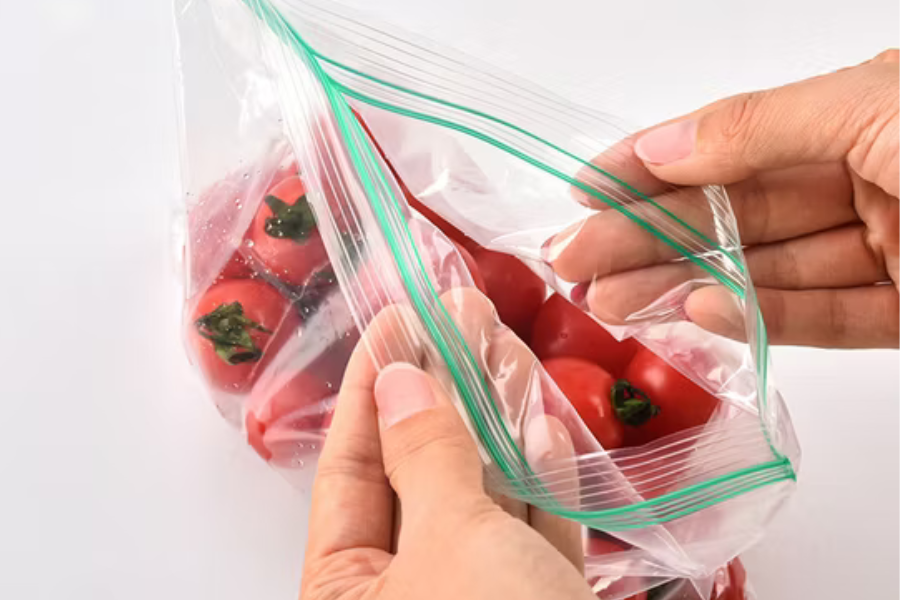
Blocking is unwanted adhesion between adjacent film surfaces. Close contact allows intermolecular attractions to develop; temperature and pressure can increase that adhesion during processing or storage. Low-molecular-weight constituents that reach the surface can also contribute. Consequently, a change in winding conditions or storage history can alter blocking even when the formulation remains unchanged.
The first investigation should identify which surfaces are sticking: the internal faces of a collapsed blown-film tube, successive layers within a wound roll, or finished bags during stacking.
Blocking and coefficient of friction (COF) describe related but different behaviour:
Blocking load:
the load required to separate adhered film layers under a defined test method.
Static COF:
- resistance to the initiation of sliding
Kinetic COF:
- resistance during continued sliding.
These measurements answer different questions. A low COF result alone does not establish satisfactory bag opening after storage. Record both separation behaviour and friction for the actual surface pair used in production
2. Engineer Particle Size, Distribution and Optical Compatibility
Particulate antiblocks create microscopic surface projections, or asperities. These projections reduce intimate film-to-film contact and help opposing surfaces separate. Their effectiveness depends on the number and geometry of particles reaching the surface, as well as dispersion within the polymer.
For technical evaluation, compare the following characteristics rather than relying only on additive chemistry:
| Parameter | Technical significance | Selection consideration |
|---|---|---|
| Median particle size, | Describes the midpoint of the reported particle-size distribution | Interpret against film gauge, skin-layer thickness and the supplier’s measurement method |
| Coarse-particle fraction | Oversized particles and agglomerates can compromise surface uniformity and filtration | Request upper-size distribution data and relevant sieve-residue limits |
| Particle shape and distribution | Influence surface geometry and optical uniformity | Evaluate the balance between separation efficiency and haze |
| Refractive-index compatibility | Affects light scattering at the particle–polymer interface | Assess haze in the actual resin blend and film thickness |
| Dispersion quality | Determines whether particles are distributed effectively or remain as clusters | Inspect film defects and extrusion-pressure behaviour during trials |
Particle-size distribution and refractive-index compatibility are established selection factors; engineered particles with controlled geometry can improve optical uniformity. Coarse particles may also increase filter-pressure buildup.
Synthetic amorphous silica, natural silica and talc are not interchangeable formulations. Their optical effect and effective loading depend on the specific grade. Compare candidates at equivalent blocking performance, rather than assuming equal weight addition produces equal results. Technical data for an individual synthetic silica cannot be applied to every silica-based masterbatch.
Also verify the carrier polymer, active content and melt-flow test conditions on the masterbatch technical data sheet before selecting a grade for PE or PP processing.
3. Calculate Active Loading at the Film Surface
Masterbatch addition percentage and active antiblock concentration are different quantities. A trial specification should state both.
For a formulation with no other antiblock source:
Active antiblock, ppm = masterbatch addition, wt% × active content in masterbatch, wt% × 100
For example, a hypothetical masterbatch containing 10 wt% active antiblock, added at 1.5 wt%, supplies:
1.5 × 10 × 100 = 1,500 ppm active antiblock
This equals 0.15 wt% active material in the receiving blend. It is an illustrative mass-balance calculation, not a recommended dosage for a Bajaj grade.
Multilayer films require a layer-specific calculation. Mineral antiblocks function through surface exposure; their placement therefore matters. Antiblock use in the skin layers is an established approach in BOPP film design. Applying that principle to another coextruded structure requires evaluation of its exposed layers and contacting surfaces.
Consider an A/B/C structure with 15/70/15 mass proportions, with 1,500 ppm active antiblock in each outer layer and none in the core:
| Layer | Share of film mass | Active concentration within the layer | Contribution to whole-film concentration |
|---|---|---|---|
| A: outer skin | 15% | 1,500 ppm | 225 ppm |
| B: core | 70% | 0 ppm | 0 ppm |
| C: outer skin | 15% | 1,500 ppm | 225 ppm |
| Complete film | 100% | — | 450 ppm |
The exposed layers each contain 1,500 ppm even though the whole-film average is 450 ppm. Reporting only the average obscures this distinction.
Use actual layer mass fractions for this calculation. Thickness fractions are equivalent only when layer densities are effectively the same. Account for antiblock already present in the resin or other concentrates when establishing total active loading.
4. Balance Antiblock with Slip and Downstream Surface Requirements
Conventional fatty-amide slip additives, including erucamide and oleamide, migrate toward the film surface and form a lubricating layer that reduces friction. Their mechanism differs from the physical separation provided by inorganic antiblock particles. This is why combined slip–antiblock formulations should be assessed for both COF development and blocking resistance.
The interaction between the two additives is formulation dependent. Silicas with high adsorption capacity can retain part of the slip package, affecting the amount available to develop its intended surface effect. Specific surface area and oil-absorption behaviour are therefore useful screening parameters alongside particle size. Poor dispersion can additionally produce specks and contribute to screen blockage.
For a practical qualification programme, evaluate:
COF at defined intervals after extrusion, such as 24, 48 and 72 hours, where relevant to the production schedule.
Blocking after storage conditions representative of the customer’s use.
Print adhesion or laminate bond strength when the treated surface undergoes those operations.
Seal strength and hot tack when anti-block is present in a sealing layer.
These intervals are an example trial schedule, not universal conditioning requirements. Establish acceptance limits for the finished packaging structure.
5. Validate the Film Under Controlled Processing and Storage Conditions
A useful trial compares the existing formulation with candidate grades or active concentrations while holding the main production variables constant. The following sequence is a recommended qualification approach.
Establish a baseline. Record resin blend, film gauge, layer proportions, existing additive package, line output, cooling conditions, winding settings and time between extrusion and testing. These records make formulation comparisons interpretable.
Track processing stability. Monitor melt pressure, screen-pressure trend and visible defects. If haze or speck count rises, investigate the resin and additive dispersion before attributing the change solely to higher antiblock concentration.
Measure separate performance requirements. Use appropriate methods for each property:
| Property | What the result establishes | |
|---|---|---|
| Film blocking | Existing blocking load using the parallel-plate method | |
| Static and kinetic friction | Resistance to starting and maintaining sliding | |
| Haze and luminous transmittance | Quantified optical behaviour | |
| Seal strength | Strength of a seal in flexible barrier materials | |
| Hot tack | Seal strength during the early cooling period |
ASTM D3354 measures existing blocking; it does not by itself establish susceptibility under every future storage condition. Define an additional conditioning protocol when comparing storage scenarios, and document temperature, pressure and duration.
For friction testing, identify the film surfaces and counterface being tested. Film-to-film and film-to-equipment measurements represent different contacts. Maintain consistent conditioning and test timing when comparing results.
Evaluate sealing over the intended operating window rather than at one convenient jaw temperature. A cooled seal-strength result and a hot-tack result answer different packaging-line questions.
Choose the lowest active level that consistently meets the agreed blocking, optical, friction and sealing requirements, then confirm it on the intended converting line.
6. Bajaj Antiblock Masterbatch for Application-Specific Film Development
Bajaj Masterbatch offers Plast Antiblock, with listed options including AB, AB Special and AB + SLIP. The published application range includes PE bags, blown films, cast films, BOPP films and food-packaging films.
Selecting among these options should begin with the film structure and performance target. Share the resin blend, total thickness, layer proportions, current formulation, blocking symptoms, target COF and optical limits when requesting a recommendation.
Grade-specific active content, carrier compatibility and recommended addition level should come from the applicable technical data sheet. For food-packaging projects, request documentation covering the selected grade and intended application.
Develop a film formulation around measurable performance. Contact Bajaj Masterbatch to discuss Plast Antiblock options for your film structure, converting process and end-use requirements.
About Bajaj Plast Pvt. Ltd.
Bajaj Plast Pvt. Ltd. is a leading manufacturer of high-quality masterbatch solutions, dedicated to innovation, sustainability, and excellence. With a strong focus on customer satisfaction and cutting-edge technology, we are committed to delivering superior products that meet the evolving needs of the polymer industry.

 BAJAJ PLAST PVT LTD