
Decoding Whiteness in Plastic Films: What It Is and Why It Sells the Product
First Impressions Are Made in Milliseconds
Before a customer reads a single word on a package, their eye registers colour and brightness. A dull, slightly yellow-tinted film reads as “cheap” almost instantly — even if the product inside is identical to a competitor’s. This is the quiet commercial power of whiteness in plastic film: it’s rarely the headline spec sheet item, but it’s often the reason one pack “looks premium” and another doesn’t.
For manufacturers of LDPE and LLDPE films used in packaging, agriculture, and industrial applications, whiteness isn’t a cosmetic afterthought — it’s a measurable, controllable property that starts with masterbatch formulation.
What "Whiteness" Actually Means in a Technical Sense
The Whiteness Index (WI) is a numerical value describing how close a film’s surface colour comes to a pure, neutral white — as opposed to appearing cream, grey, or blue-tinted. It’s measured using a spectrophotometer, which analyzes how the film reflects light across the visible spectrum and calculates a single index number from that reflectance data.
A higher Whiteness Index means:
- The film reflects light more evenly across all visible wavelengths
- There’s minimal yellow or grey undertone
- The surface appears bright and clean to the human eye
Whiteness is a distinct measurement from opacity (which describes how much light passes through the film). A film can technically be very opaque while still looking dull or off-white — which is why whiteness needs to be engineered and checked on its own terms.
What Actually Drives Whiteness in a Film
| Factor | Role in Whiteness |
|---|---|
| Titanium dioxide (TiO₂) grade and purity | Primary light-scattering pigment; higher purity grades scatter light more efficiently and resist yellowing |
| TiO₂ particle size and dispersion | Poorly dispersed TiO₂ creates uneven whiteness, streaking, or visible specks |
| Optical brighteners | Absorb UV light and re-emit a faint blue tone that counteracts natural yellow undertones, boosting perceived brightness |
| Base resin quality | Recycled or lower-grade resin can carry a yellow or grey base tint that fights against the whitening masterbatch |
| Processing temperature | Excess heat during extrusion can thermally degrade TiO₂ or the resin, introducing a yellow cast |
| Filler selection | Certain fillers used for cost reduction can dull whiteness if not carefully balanced against the TiO₂ loading |
Signs Your Film Has a Whiteness Problem
If any of the following show up on the production floor or in customer feedback, whiteness formulation is worth revisiting:
- Finished rolls look slightly yellow or “off” under daylight, even though they passed under factory lighting
- Whiteness varies noticeably from one batch to the next, even with the same nominal formulation
- Printed logos and colours look muted rather than sharp against the film background
- Customers or brand owners flag the packaging as looking “less premium” than a competitor’s, without being able to point to a specific defect
- Streaking or mottling is visible when the film is held up to strong light
Getting Consistent Whiteness, Batch After Batch
Start with a high-purity TiO₂ base
Not all titanium dioxide grades perform equally — light-scattering efficiency and resistance to yellowing vary significantly between grades.
Dial in dispersion, not just loading.
Adding more TiO₂ doesn’t fix poor dispersion; it just wastes pigment while streaks and unevenness persist.
Control processing temperature.
Even a well-formulated masterbatch can pick up a yellow tint if the extrusion process runs hotter than the formulation was designed for.
Test under real lighting, not just factory lighting.
Whiteness that looks fine under fluorescent factory lights can shift visibly under daylight or retail lighting — always cross-check.
Re-verify whiteness whenever the resin source changes
Switching resin batches or suppliers, especially with any recycled content, can quietly shift the baseline tint your masterbatch is working against.
Use optical brighteners deliberately.
A small, well-calibrated dose of brightener can noticeably lift perceived whiteness without overloading the formulation.
Industries That Rely on High Opacity & Whiteness
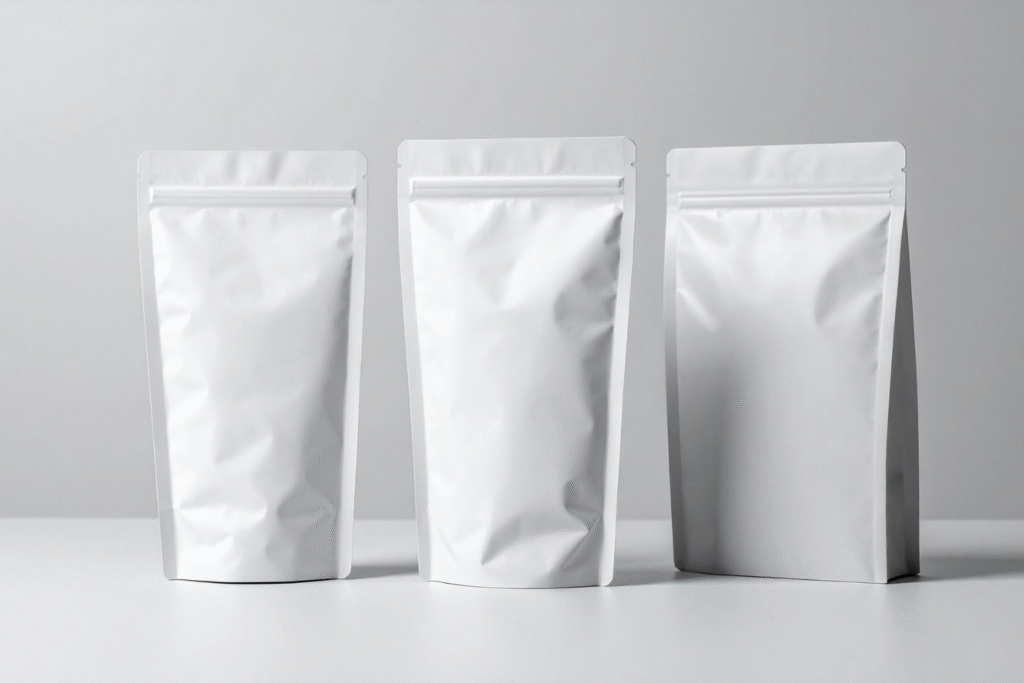
Flexible Packaging:
For milk, detergent, and processed food films
Agricultural Films:
For mulch and greenhouse applications

Construction:
For protective sheets and barriers that need strong light blocking.
Electronics:
For appliance films requiring opacity and a clean white finish.

Medical Packaging:
Where purity and visual cleanliness are key

Each of these sectors demands custom color dispersion, optical balance, and UV protection, which only a precisely engineered masterbatch can deliver.
What Happens if Opacity or Whiteness Is Too Low?
Problems Due to Low Opacity
- Light damage to dairy/food contents
- Faded or dull packaging
- Poor print visibility
- Customer complaints due to translucent appearance
Problems Due to Low Whiteness
- Yellowish, cheap-looking packs
- Color mismatch during lamination
- Poor brand impression
- Dull printed colors
A balanced masterbatch ensures both properties remain within your target range every time.

Frequently Asked Questions
Is a higher Whiteness Index always better?
Not necessarily. The right target depends on the application — a premium retail pouch usually wants very high whiteness, while an industrial or agricultural film may prioritize opacity or cost efficiency over maximum brightness.
Can whiteness be fixed by simply adding more TiO₂?
Only up to a point. Beyond a certain loading, additional TiO₂ gives diminishing returns and can increase cost and processing difficulty without meaningfully improving the visual result — dispersion quality and brightener use matter just as much.
Why does the same formulation sometimes produce different whiteness results?
This is usually a dispersion or process-control issue rather than a formulation issue — inconsistent mixing, temperature swings, or variation in the base resin’s underlying tint can all shift the final result even when the recipe hasn’t changed.
Does whiteness affect print quality?
Yes. A brighter, more neutral white base creates stronger contrast for printed inks, making logos and graphics appear sharper and more vibrant than they would on a duller or yellow-tinted surface.
The Bottom Line
Whiteness in plastic film is a controllable, measurable outcome of pigment quality, dispersion, and process discipline — not a matter of chance. Getting it right, and keeping it consistent across every production batch, comes down to formulating with the right TiO₂ grade, dispersing it properly, and validating results the way a customer will actually see the film: in daylight, next to their brand’s printed design.
If your film production is struggling with inconsistent or lackluster whiteness, it’s worth reviewing the masterbatch formulation and dispersion process together rather than treating them as separate problems.
About Bajaj Plast Pvt. Ltd.
Bajaj Plast Pvt. Ltd. is a leading manufacturer of high-quality masterbatch solutions, dedicated to innovation, sustainability, and excellence. With a strong focus on customer satisfaction and cutting-edge technology, we are committed to delivering superior products that meet the evolving needs of the polymer industry.

 BAJAJ PLAST PVT LTD