
Melt Flow Index Explained for Better Masterbatch Selection
In plastic processing, choosing the correct polymer is only one part of achieving reliable production. It is equally important to understand how the material flows and performs when exposed to heat and pressure. Melt Flow Index (MFI) is one of the key parameters used to evaluate this processing behaviour.
MFI indicates how readily a molten polymer moves under specified conditions, directly influencing processability, masterbatch dispersion, surface quality, and the performance of the finished product. At Bajaj Masterbatch, we work closely with manufacturers to match masterbatch formulations with suitable base polymers, helping deliver stable processing, uniform results, and consistent product quality.
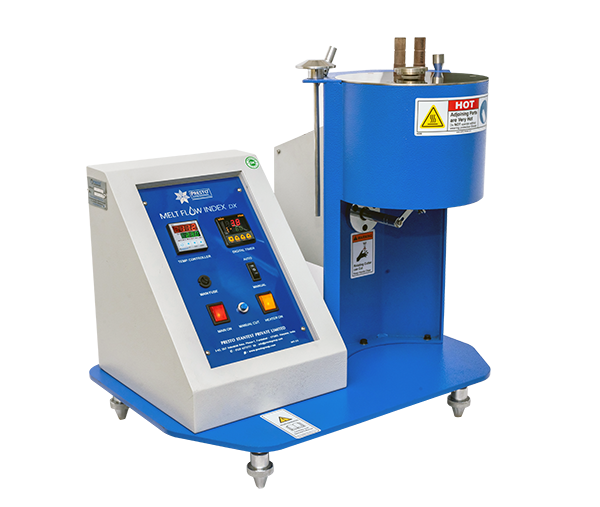
What Is Melt Flow Index (MFI)?
Melt Flow Index (MFI), also known as Melt Flow Rate (MFR), measures how easily a plastic material flows when melted under specific conditions of temperature and pressure.
It is typically expressed in grams per 10 minutes (g/10 min).
What Is Melt Flow Index (MFI)?
- Indicates the flow behavior of the polymer
- Helps in selecting the right processing method
- Impacts the mixing and dispersion of additives
In simple terms:
- Higher MFI = Easier flow (lower viscosity)
- Lower MFI = Thicker flow (higher viscosity)
How Melt Flow Index Impacts Plastic Processing
The Melt Flow Index directly affects how a polymer flows and performs during extrusion, moulding, and plastic film production.
Low MFI Materials
- Higher viscosity
- Better strength and durability
- More difficult to process
High MFI Materials
- Lower viscosity
- Easier to process
- Faster filling in molds
Choosing the right MFI ensures smooth processing and consistent output.
Why Melt Flow Index Matters When Choosing a Masterbatch
For effective performance, the masterbatch must mix evenly with the base polymer. When their melt flow characteristics are not properly matched, the materials may not blend uniformly, resulting in poor pigment or additive dispersion, uneven appearance, processing difficulties, and variations in final product quality.
Key Impact Areas
Dispersion Quality
Matching MFI ensures that additives distribute evenly within the polymer.
Processing Stability
Proper MFI alignment prevents flow issues during extrusion or molding.
Surface Finish
Inconsistent MFI can lead to defects such as streaks or uneven texture.
Mechanical Properties
Improper selection may weaken the final product structure.

The Importance of Matching Melt Flow Index
For effective performance, the MFI of the masterbatch should be close to or slightly higher than the base polymer.
General Rule
- Masterbatch MFI ≥ Base polymer MFI
This ensures:
- Better mixing
- Smooth flow during processing
- Consistent final product quality
Low MFI vs. High MFI: Key Processing Differences
| Parameter | Low MFI Polymer | High MFI Polymer |
|---|---|---|
Flowability | Low | High |
Processing Ease | Moderate | Easy |
Strength | High | Moderate |
Dispersion | Challenging | Easier |
Application | Structural parts | Thin-wall products |
This comparison highlights how MFI selection affects both processing and performance.
Industries Where MFI Matching Matters Most
Injection Molding
High MFI materials are preferred for complex molds and faster cycle times.

Blow Molding
Requires controlled MFI to maintain shape and uniform thickness.

Packaging Industry
Film and flexible packaging require balanced MFI for clarity, strength, and smooth extrusion.

Automotive Components
Lower MFI materials are often used for strength and durability.
Across these industries, selecting the correct MFI ensures both performance and efficiency.

The Effect of Melt Flow Index on Product Performance
Incorrect MFI matching can lead to several issues:
- Poor dispersion of additives
- Surface defects
- Inconsistent product appearance
- Reduced mechanical strength
- Increased rejection rates
On the other hand, proper MFI alignment improves:
- Product consistency
- Surface finish
- Processing efficiency
- Overall product performance
How Manufacturers Can Choose the Right MFI
To select the right masterbatch, manufacturers should consider:
- Base polymer MFI Processing method
- Product design requirements
- Desired mechanical properties
Aligning these factors ensures better compatibility and performance.
Conclusion
Melt Flow Index is an important processing parameter that influences how a polymer flows, mixes, and performs during manufacturing. It can directly affect production stability, processing speed, surface finish, and the quality of the final plastic product. A clear understanding of MFI enables manufacturers to select suitable polymers and compatible masterbatch formulations for their applications.
Matching the melt flow characteristics of the masterbatch with the base resin supports uniform dispersion, stable processing, and consistent production results. With proper formulation guidance and application support from Bajaj Masterbatch, manufacturers can improve material compatibility, optimize processing conditions, and achieve more reliable product performance.
About Bajaj Plast Pvt. Ltd.
Bajaj Plast Pvt. Ltd. is a leading manufacturer of high-quality masterbatch solutions, dedicated to innovation, sustainability, and excellence. With a strong focus on customer satisfaction and cutting-edge technology, we are committed to delivering superior products that meet the evolving needs of the polymer industry.
