
BAJAJ PLAST

Plast Flame Retardant - FR
Overview
Overviewing
Flame Retardant

Introduction
The inherent flammability of many plastics, especially those with a high carbon content, requires that measures be taken to allow their safe use where the potential for fire exists. For many resins, the most cost effective method of increasing fire safety is to add a flame retardant additive [1] during processing.
The use of flame retarded, or ignition resistant, plastics may be required by regulation or can be specified by the user. The fact that flame retarded plastics diminish damage and decrease fatalities resulting from fires is readily established by looking at statistics related to television fires. It has been estimated [2] that in 1976, there were about 11,000 reported fires in the USA involving television sets. In 1992, this number had decreased to about 1,200, despite the far greater number of television sets in operation. A direct cause of this improvement in fire safety was the adoption of a voluntary standard to strengthen the ignition resistance of the television set. Flame retardant additives in the plastic television case and the interior circuit boards enabled manufacturers to meet the requirements of the voluntary standard.
The choice of flame retardant to use in a particular plastic is not arbitrary. Some flame retardants are too volatile and some are not volatile enough to function properly with a selected resin. One flame retardant may adversely affect the physical properties of a resin while another may not.
Matching a flame retardant to a resin requires a knowledge of combustion chemistry as well as physical chemistry.
Unfortunately, the choice of flame retardant is also dependent upon which test a manufacturer is attempting to satisfy. Different countries have different tests and different flammability requirements. A flame-retarded product may be certified to be marketed in one country, but the same product may not meet the standards of another country. Harmonization of fire safety standards is truly an international problem.
Besides imparting ignition resistance, the ideal flame retardant should have a number of other attributes. It should be easy to incorporate and, by necessity, be compatible with the other attributes. It is should not severely alter the physical properties of the resin. It is preferably color-less, with good UV stability when needed, effective in small amounts, and inexpensive. Of less, but good UV stability when needed, effective in small amounts, and inexpensive. Of less particular importance is that the use of the additive should not result in the corrosion of processing equipment or expose workers or consumers to harmful dust, fumes, or odors.
Published information indicates that the sales of US flame retardants in 1995 were on the order of $700 million (USD) [3]. A comprehensive study of the flame retardant industry is available from SRI Consulting [4].

FLAME RETARDANT MECHANISMS
Flame retardants generally impart their properties to plastics in the condensed or the gas phase. In the condensed phase, the additive can remove thermal energy from the substrate by functioning as a heat sink or by participating in char formation to form a barrier against heat and mass transfer. The additive can also provide flame retardancy by conduction, evaporation, or mass dilution or by participating in endothermic chemical reactions. Char-forming systems, also called intumescent systems, form a foamy, porous protecting barrier on the plastic to shield it from further pyrolysis and combustion. Most intumescent systems require an acid source (catalyst), a char-forming compound (carbonific), and a gas-evolving compound (spumific). In a typical system, a phosphorus compound promotes the charring of a substrate (typically a carbon-oxygen compound or oxygen-containing polymer) and this char is foamed by gases released during decomposition of a nitrogen compound. The acid component is typically phosphoric acid or a suitable derivative such as ammonium polyphosphate. Typical carbonifics include pentaerythritol and other polyols. Common spumifics include urea, melamine, and dicyandiamide. Commercial intumescent systems containing the catalyst, carbonific, and spumific are available.
A coordinated sequence of chemical and physical reactions is necessary for a good intumescent coating to form. The timing of acid release, degradation of the carbonific, and evolution of gas must be closely coupled. In addition, the viscosity of the mass while these processes occur must be such that the small bubbles produced result in a multicellular char that eventually gels and solidifies. Polyamides [5] and polyolefins, such as polypropylene (PP) [6], are some of the resins where additives promoting intumescence have been found to be effective flame retardants.
Other additives function as flame retardants in the condensed phase, not by forming an intumescent layer, but by depositing a surface coating which insulates the polymer from the heat source and retards the evolution of additional fuel. Some silicone flame retardants for polyolefins are thought to deposit silicon dioxide (sand) on the polymer surface [7].
Resorcinol diphenylphosphate (RDP) is an organophosphate which provides flame retardancy in the condensed phase by a unique mechanism. RDP apparently catalyzes the Fries rearrangement of several resins (PC, PC/ABS, PPO) to give phenolic-containing decomposition products. These products can undergo transesterification with RDP to form non-volatile, non-combustible, phosphorus species on the surface of the resin [8]. This “surface barrier” may inhibit the diffusion of combustible gases to the flame. Aromatic sulfonate salts are also thought to impart flame retardancy to PC by catalyzing the Fries rearrangement [9].
The largest volume flame retardant, alumina trihydrate (ATH), functions in the condensed phase, not as a char former or protective layer former, but as a heat sink and a source of a non-combustible gas (H2O) for fuel dilution. ATH starts to decompose at 230 ∘C and eventually loses 34.5% of its mass as water vapor. Magnesium hydroxide decomposes at a higher temperature (340 ∘C) with a 31% mass loss. ATH and magnesium hydroxide also decompose endothermically and remove heat from the condensed phase which decreases
the rate of polymer decomposition. The enthalpy of decomposition for alumina trihydrate is +280cal/mole while that for magnesium hydroxide is +328cal/mole. Substantial quantities of these additives are needed to impart flame retardancy to a resin. A resin formulation containing 40 to 60% (by weight) ATH is typical.
Melamine and some melamine derivatives appear to provide flame retardancy through a number of different mechanisms [10]. Melamine sublimes rather than melts and can cool (heat sink) a polymer such as polyethylene (PE) when the plastic is subjected to heat. Melamine vapor, having a high nitrogen content, can act as an inert diluent in the flame. Once in the flame, the melamine can dissociate, providing another heat sink. Melamine cyanurate also functions as a heat sink and an inert gas source in polyamides, while melamine polyphosphate provides fire retardancy in an intumescent manner [11].
The styrenic polymers melt, drip, and depolymerize to form volatile monomers, dimers, and trimers when exposed to heat. Typically, these polymers require a flame retardant that functions in the gas phase rather than the condensed phase. A possible exception is polystyrene foam where hexabromocyclododecane (HBCD) is a common flame retardant additive. HBCD is thought to promote a decrease in the polymer molecular weight and viscosity, resulting in the foam shrinking away from the combustion source [12].
Flame retardants operating in the gas phase interrupt the combustion chemistry of the fire. During combustion, polymer fragments interact with oxygen and other highly reactive species in a chain reaction to form oxygen radicals, hydroxyl radicals, and hydrogen radicals. Certain plastic additives, mainly those containing halogen or phosphorus, can chemically interact with these radicals to form less energetic species and, in effect, interrupt the chain propagation necessary for fire initiation or continuation.
Some important reactions in the combustion of hydrocarbons involve reactions 12.1,12.2 and 12.3.
If the hydrogen-oxygen reaction can be interrupted, the combustion of the fuel can be retarded [13]. Halogen halides are efficient flame quenchers and their effectiveness follows the order HI>HBr>HCl>HF on a molar basis. The flame quenching effects are thought to be caused by inhibition of chain branching reactions 12.1 and 12.2 by the action of halogen halide to produce the less reactive halogen radical (reactions 12.4 and 12.5).
Many chlorinated and brominated flame retardants, especially aliphatic types, release HX upon heating. However, in practice, it has been found that improved flame retardancy often
results from halogenated materials when metal oxides, such as antimony oxide, are added. In World War II, a combination of chlorinated paraffin, antimony oxide, and binder was used as a fire retardant and waterproofing treatment for canvas. The use of organohalogen-antimony oxide is a true case of synergism because antimony oxide by itself imparts minimal flame retardancy to most materials.
Many investigators agree that the formation of volatile antimony species (antimony trihalide, antimony oxyhalide) is responsible in great part for the synergistic effect. The action of halogen-antimony oxide has been explained on the basis of two separate flame inhibition effects [14]. The halogen compound decomposes on heating to form HX, which reacts with antimony oxide to form volatile antimony halide. The antimony halide can interrupt the combustion process by removing hydrogen radicals in the flame by a multi-step process. The antimony oxide catalyzed recombination of hydrogen radicals presents the second mode of inhibiting combustion.
Organohalogen compounds that do not generate HX upon heating rely on the polymer to initiate the reaction with antimony oxide. For example, high impact polystyrene (HIPS) formulated with decabromodiphenyloxide and antimony oxide can generate hydrocarbon radicals at high temperatures. The radical can react with the organohalogen to initiate formation of antimony tribromide, leading to combustion inhibition [15] (reactions 12.13–12.16).
Some phosphorus flame retardants can also be effective in the gas phase. Volatile molecules such a triphenylphosphate can fragment in the flame to give small, phosphorus-containing radicals that can combine with hydrogen radicals to help quench the flame.
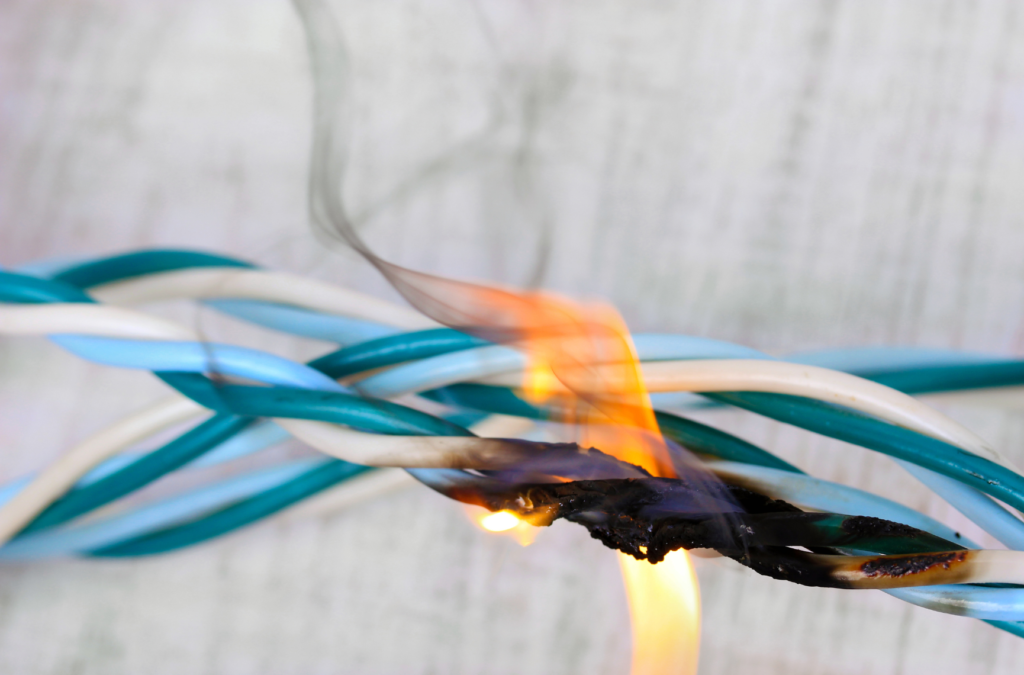
Typical Flame Retardant Formulations
he world of plastics can be separated into two general classes: thermoplastics and thermosets. The variety of flame retardants applicable to these two major groups is quite varied. Thermoplastics (ABS, PC/ABS, HIPS, EPS, PP, PE, PA, PC, PBT) can usually be formulated with halogen-containing and non-halogen containing additives that increase the ignition resistance of the resin to high fire safety standards, such as 5VA or V−0 by the UL−94 test. The actual use of the additive depends on the fire rating desired and the composition and amount of other additives in the resin. Table 12.1 lists flame retardants typically used with specific thermoplastic resins.
Thermoset plastics (epoxy, unsaturated polyester, PUR) are commonly treated by adding flame retardants that chemically react with a resin precursor. Some non- reactive additives, however, are also used. Table 12.2 lists flame retardants typically used with thermoset resins.
The synergist used with many halogenated flame retardants is antimony oxide. The use of this additive has been driven by its relatively low cost and its effectiveness in reducing the amount of halogen-containing material required to meet a particular standard. Other synergists, such as sodium antimonate, iron oxide, zinc borate, zinc phosphate, and zinc stannate have also been used in a variety of plastics. Small amounts of Teflon1 are often incorporated into the formulation to retard dripping.
For most thermoplastics containing non-reactive flame retardants, the components are mixed and extruded. The extrudates are pelletized and molded or blown into the desired shape. For small scale testing, the mixing and heat treatment may be accomplished in a Brabender batch mixer. Test specimens can be formed by compression molding, injection molding, or extrusion. For thermosets requiring a reactive flame retardant, small scale reactions are mixed by hand or mechanically in suitable containers to generate test products.
Evaluation of Flame Retardants
The testing of formulations containing flame retardants can be done on a laboratory scale with a simple Bunsen burner or on a larger scale using an actual controlled fire, such as practiced in one of the fire testing institutes (Southwest Research Institute, Underwriters Laboratory, etc.). For rapid evaluation of flame retardant effectiveness, many researchers in the USA determine the UL-94 rating and the limiting oxygen index (LOI). In Europe, the German DIN 4102, the British BS 476 Part 7, and the French NF P 92-50 are used to test building materials and to assign flammability ratings.
The “Standard Test Method for Measuring the Minimum Oxygen Concentration to Support Candle-Like Combustion of Plastics (Oxygen Index),” or LOI, has the advantage of providing numerical data regarding a formulation containing a flame retardant. The procedure involves burning a vertically supported test specimen in a mixture of oxygen and nitrogen that is flowing upwards through a transparent chimney. The test material is ignited at its upper end and the burning is observed in O2/N2 mixtures of varying composition. In general, the higher the oxygen concentration required for combustion, the more resistant the formulation is to ignition. For a resin such as HIPS, a formulation which gives a LOI of 28 or more can be considered to be effectively flame retarded. Unfortunately, no direct correlation has been observed between the LOI and the performance of the plastic in actual fires. The LOI method has been standardized by the American Society for Testing and Materials as ASTM D 2863 and by the International Organization for Standardization as ISO 4589-2. The LOI can be used to investigate the mechanism of flame retardancy by comparing results obtained from N2/O2 mixtures with those obtained from N2/O2/mixtures. A flame retardant operating in the gas phase should have more of an effect on LOI than on LNOI because the different nature of the flame. A flame retardant operating in the condensed phase should show the same behavior in both systems. The comparative testing is a useful indicator, but it is not conclusive.
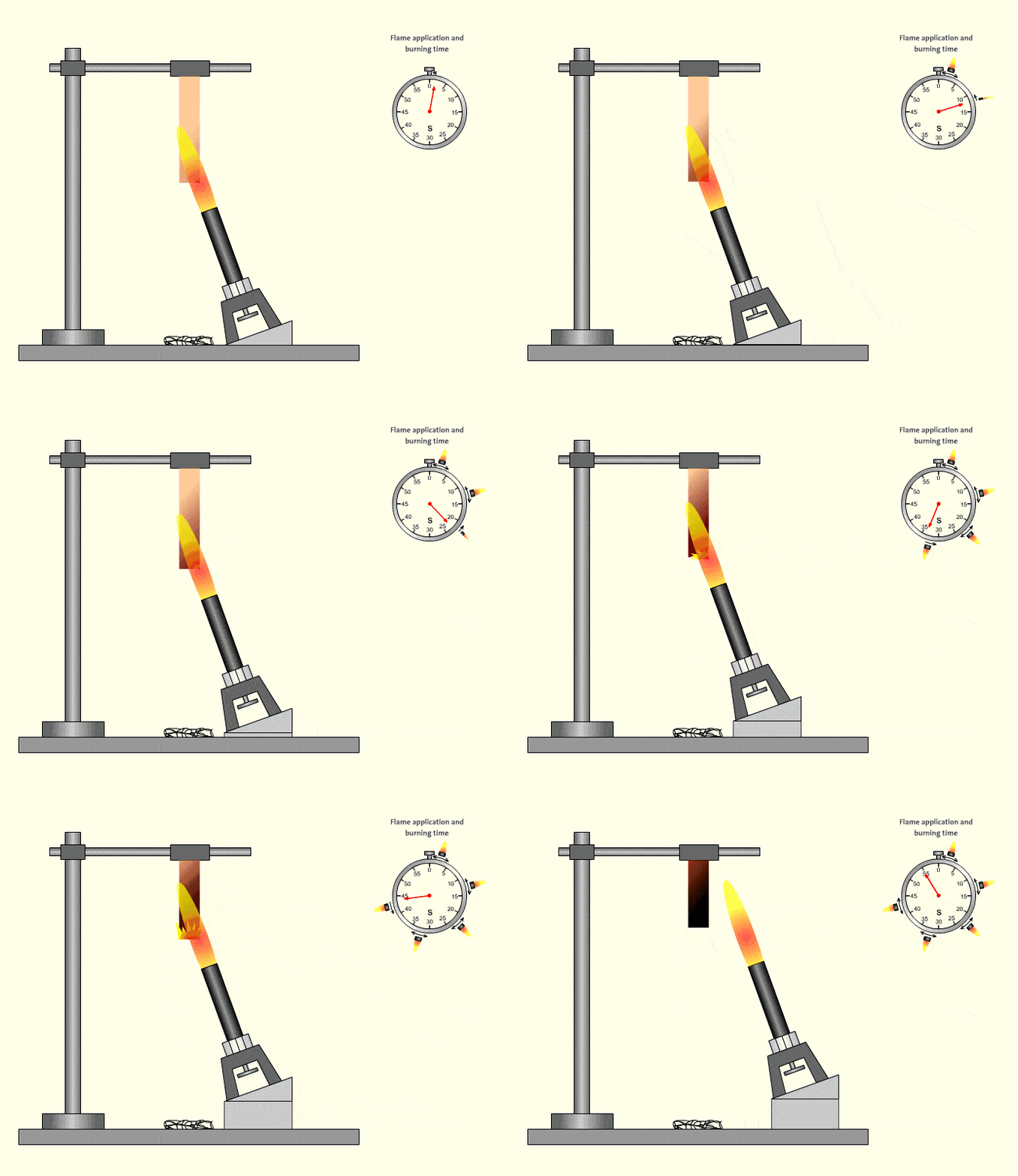
The preferred rapid test for flame retardancy effectiveness for many additives is the Underwriters Laboratory UL-94. This test assigns a V-0, V-1, or V-2 rating to a plastic. The V-0 classification is typically mandated for those applications where the flame retardancy requirement is most severe. In the UL-94 test, a sample of specified dimensions is suspended vertically over a piece of surgical cotton. The sample is heated with a Bunsen burner for 10 seconds followed by a 10-second application after the first test sample extinguishes. Five identical samples are evaluated in each UL-94 test. The sample is classified V-0, V-1, or V-2 based on the following criteria:
V-0
afterflame time <10 sec
sum of afterflame times (10 flame applications) ≤50 sec
no burning drips igniting the cotton
samples do not burn completely to the clamp
afterglow after removal of ignition ≤30 sec
V-1
afterflame time <30 sec
sum of afterflame times (10 flame applications) ≤250 sec
no burning drips igniting the cotton
samples do not burn completely to the clamp
afterglow after removal of ignition source ≤60 sec
V-2
afterflame time <30 sec
sum of afterflame times (10 flame applications) ≤250 sec
ignition of cotton by burning drips
samples do not burn completely to the clamp
afterglow after removal of ignition source ≤60 sec
Often the sample thickness (3.2mm,1.6mm) is specified as part of the rating.
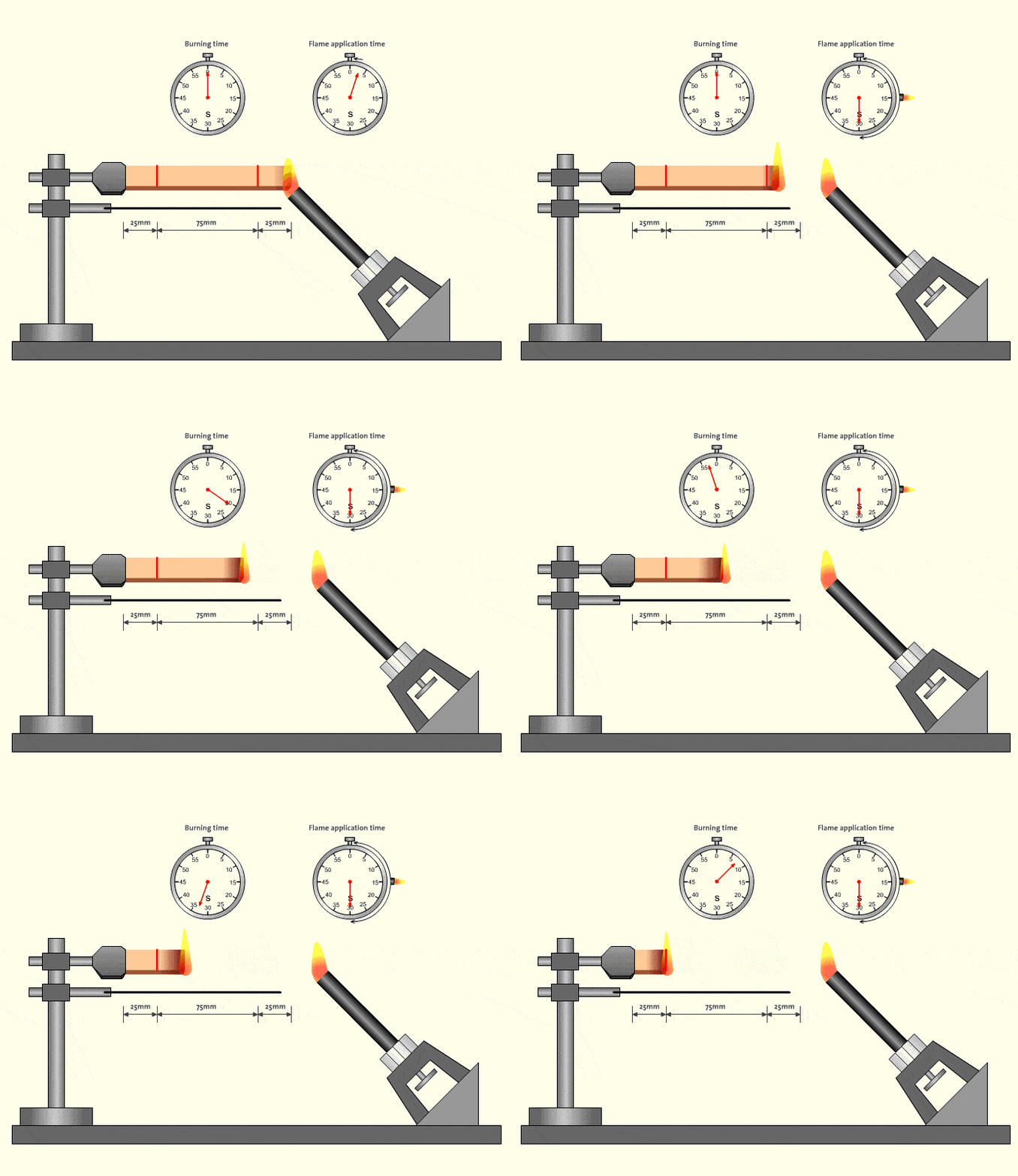
A less rigorous test in the UL-94 series is the 94-HB. The sample scribed with marks 25.4 mm and 102 mm from one end is mounted horizontally, and the Bunsen flame is applied for 30 seconds. The extent of the burning is measured and ratings are assigned on the basis of the mean values from three determinations:
HB-1 burning rate between marks ≤38 mm/min
HB-2 burning rate between marks ≤76 mm/min
HB-3 extinguishment occurs before the 102 mm mark.
Another variation of the UL-94 test is the UL-94 5V. This test gives comparative burning characteristics of different samples, but the main emphasis is whether burn-through occurs. The procedure involves applying a 125 mm flame to the corner of a test specimen five times for five second intervals, recording the afterflame and afterglow times, and observing whether the flame burned through the sample. Material classified as 5VA has a combined afterflame and afterglow time of less than 60 seconds with no burn-through of the test plaque. A 5VB classification indicates that the sample has a combined afterflame and afterglow time of less than 60 seconds but exhibits burn-through.
Several methods have been published in an attempt to standardize the UL-series of tests. ASTM D 635 describes UL-94HB; ASTM D 3801 describes UL-94 V-0; ASTM D 4804 describes UL-94 V-0 for flexible plastics; and ASTM D 5048 describes UL-94 5V. ISO 1210 combines the UL-94 HB and V-0 tests; ISO 9773 equates to ASTM D4804; and ISO 10351 is equivalent to ASTM D5048.
The cone calorimeter is more frequently used to evaluate flame retardant formulations. In this small scale test, a sample (typically 102 mm×102 mm×12.7 mm) is subjected to thermal radiation (heat flux) from a cone-shaped heater under a high flow of air. The gases generated by heating the sample are ignited with a spark and the mass rate loss of the sample is obtained by monitoring the weight change with time. Exit gases such as CO, CO2, and O2 are measured using gas analyzers. The rate of heat release is calculated on the basis of oxygen consumption.

Different formulations can be conveniently compared in a short time using the cone calorimeter. The principal advantage of this equipment is that much of the data gathered from cone measurements correlates with actual fires. For example, heat flux and heat release data are known for wire and cable and wall coverings. The significant disadvantage of the cone is the initial expense of the equipment and the inconvenience of constructing a laboratory to perform the testing. The measurement of heat release with the cone calorimeter has been standardized as ASTM E 1354 and ISO 5660-1. These two tests differ slightly in that ASTM E 1354 determines smoke obscuration as well as heat release and ignitability.
Full scale tests normally involve the finished article. Some common procedures are the Steiner Tunnel Test, ASTM E 84, room corner tests, and the CAL 133 Test. The Steiner Tunnel Test evaluates the flame spread potential of such products as electrical cables, wall coverings, and insulation foam. The test specimen is attached to the ceiling of the tunnel and then exposed to flames from a gas burner for 10 minutes. The maximum flame spread, temperature, and smoke are measured. The flame spread index, which is a function of the flame spread versus time, is compared to the corresponding data generated from red oak flooring and non-asbestos mineral fiber.
ISO 9705 contains a variety of procedures for carrying out room corner tests. With this method, three walls of a small room are lined with test material and irradiated with a gas burner at specific power from a specific location. The principal measurement is oxygen consumption. The actual evaluation of the effectiveness of the flame retardancy is whether flames can reach the outer extremities of the test material and whether flashover of the room occurs. ISO 9705 is being used to identify the limits for the seven classes (EUROCLASSES A1, A2, B, C, D, E, F) of European wall and ceiling linings used in building products. The products will be marked to indicate whether the flame retardancy meets the highest standard (A1) or the lowest (F).
A new test procedure, the Single Burning Item (SBI), is also being developed for classifying building products in a harmonized European system. With the SBI, two test samples (500 mm×1500 mm and 1000 mm×1500 mm) are mounted in a corner configuration where they are subjected to a gas flame ignition source. The heat release rate and the smoke production rate from the fire are measured. Properties such as the occurrence of burning droplets/particles and flame spread are visually observed [16].
The CAL 133 Test is used in the USA almost exclusively with upholstered furniture. A fire source is directly applied to the article. Visual examination and measurements of such parameters as smoke, heat, and gas release can be used to evaluate the effectiveness of the component parts of the furniture in resisting fire.
Technological Trends
Future developments in flame retardants may well be driven by the search for products that meet the classic definition of a preferred flame retardant (inexpensive, easy to use, minimal effect on the physical properties of the resin, etc.), and are more “environmentally friendly” (recyclable, no potential to produce corrosive or toxic materials, etc.). Organohalogen and organic compounds are now the world’s dominant flame retardants in terms of sales dollars and volume. Many of the inorganic flame retardants, although seemingly “environmentally friendly,” dramatically affect the physical properties of the plastic. The organo-halogens have shown consistent growth over the past 20 years, especially with exponential increases in the sales of computers and other electronic equipment. However, the potential for the generation of corrosive gases during combustion and concerns in Europe about exposure to ultratrace halogen-containing contaminants have led to considerable interest in alternative methods of flame retardancy.

Among the organobromine flame retardants, the brominated diphenyleoxides (pentabromo- diphenyloxide, Octabromodiphenyleoxide, Decabromodiphenyleoxide) have been the focus of numerous industry, governmental, and academic investigations. Brenner found that traces of polybrominated dibenzodioxins (PBDDs) and polybrominated dibenzofurans (PBDFs) were emitted during the processing of PBT resin with decabromodiphenyloxide and antimony oxide [17]. The brominated dibenzodioxins and brominated dibenzofurans are thought to have toxicity similar to their chlorinated analogs. Laboratory experiments by Dumler [18] and Lahanatis [19] indicated that burning formulations containing brominated diphenylethers could produce measureable quantities of PBDD/PBDFs. This suggested that a smoldering electronic fire might be a potential source of dioxins. Other halogenated flame retardants such as hexabromocyclododecane, ethylene-bis-tetrabromophthalimide, and brominated polystyrene do not appear to generate these contaminants upon heating [20], but the laboratory studies with the brominated diphenylethers have led to questions about all organohalogen flame retardants.
Thorough analysis of decabromodiphenyloxide has shown that it contains none of the toxic 2,3,7,8-substituted PBDD/PBDFs at concentration levels required by the US Environmental Protection Agency (EPA) D/F Test Rule [21]. Nonetheless, the German chemical industry has adopted a voluntary ban on brominated diphenylethers. All of the halogenated flame retardants sold in Germany must meet stringent requirements on PBDD/PBDFs concentrations. For the organobromine compounds, German legislation (Chemicals Banning Ordinance) prohibits marketing goods which contain more than 1μg/kg of the sum of
2,3,7,8-tetrabromodibenzodioxin
2,3,7,8-tetrabromodibenzofuran
1,2,3,7,8-pentabromodibenzodioxin
2,3,4,7,8-pentabromodibenzofuran
or more than 5μg/kg of the sum of the first four and the sum of
1,2,3,4,7,8-hexabromodibenzodioxin
1,2,3,6,7,8-hexabromodibenzodioxin
1,2,3,7,8,9-hexabromodibenzodioxin
1,2,3,7,8-pentabromodibenzofuran.
The German Chemicals Banning Ordinance has no provisions addressing the production of polyhalogenated dibenzodioxins or polyhalogenated dibenzofurans from the burning of formulations containing halogenated flame retardants. Other regulations govern incinerator emissions. Interestingly, studies have shown that the combustion of municipal waste
Research in the area of nanocomposites may yield a generation of flame retardant additives which are effective and environmentally friendly. Already, workers at Cornell University and the National Institute of Standards and Technology (NIST) have demonstrated that intercalated polymer-clay nanocomposites prepared from polystyrene, nylon-6, and poly-propylene-graft-maleic anhydride have substantially lower peak heat release rates (HRR) than the pure polymers [27]. The HRR reduction for polystyrene was comparable to that achieved with a very high loading of decabromodiphenyloxide/antimony oxide, a common flame retardant for polystyrene. The advantages of nanocomposites are the fact that small (3% to 6%) loadings are used to impart flame retardancy and the physical properties of the resin are not adversely impacted. In the case of nylon-6, the properties actually seemed to be improved.
The polymer-clay nanocomposites can be prepared by combining the appropriately modified clay and polymer. For example, melt blending polystyrene with bis(dimethyl)-bis(octadecyl)ammonium-exchanged montmorillonite, yields a nanocomposite with an intercalated structure. The treatment of the clay with an alkylammonium salt removes the sodium ions and results in an organophilic instead of a hydrophilic clay. Cone calorimeter measurements suggest that the flame retardancy of these resin-clay nanocomposites is achieved by thermal decomposition to form a char layer that acts as an insulator and slows the escape of potential fuel. One objective that still remains to be met with the nanocomposites, however, is the achievement of a V-0 rating in the common UL-94 test.
Another area of interest are additives that promote cross-linking in plastics when they are exposed to conditions normally resulting in thermal decomposition [28]. The cross-linking would decrease the fuel volatility and possibly provide a char layer as a protective barrier.
 BAJAJ PLAST PVT LTD