
Light-Diffusion Masterbatch for Greenhouse Films: A Technical Procurement Guide
Introduction
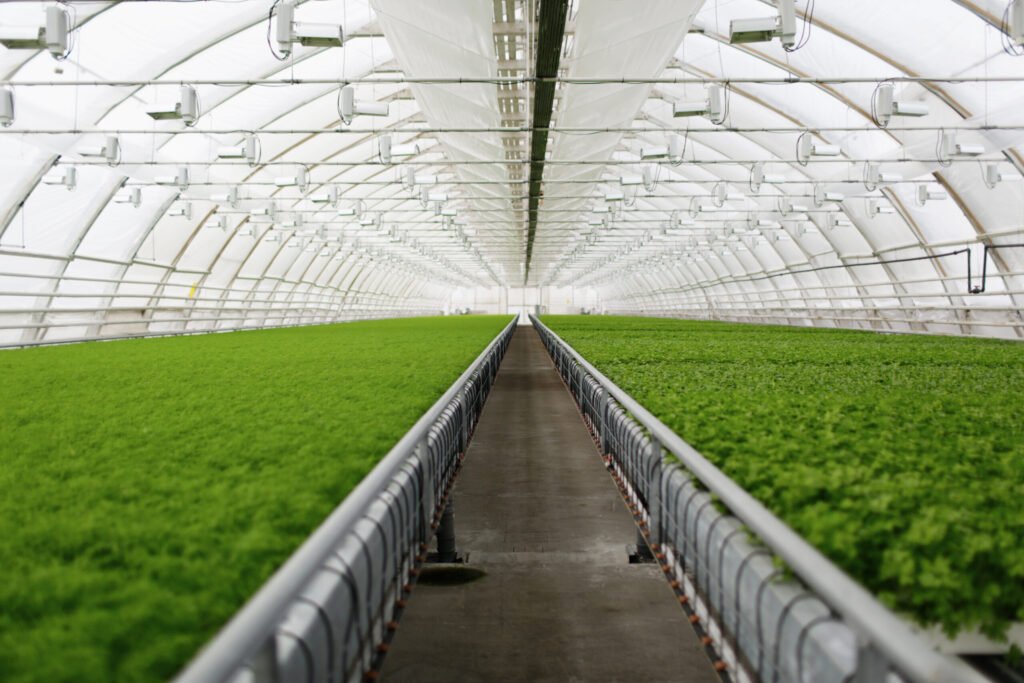
Greenhouse film is a deceptively simple-looking product. To a grower it is just “the plastic on the roof.” To a formulator or a masterbatch purchase manager, it is a precision optical and thermal filter that has to manage two physically distinct parts of the electromagnetic spectrum at once , visible light coming in, and long-wave thermal radiation trying to get out , while surviving 12 to 48 months of UV exposure, agrochemical contact, and mechanical stress in the field.
The global greenhouse film market is currently valued in the range of USD 7.8–8.6 billion (2025–2026) and is projected to grow at a compound annual rate of roughly 8% through the early-to-mid 2030s, with Asia-Pacific accounting for the largest share of volume and LDPE remaining the dominant resin platform at roughly 46–47% share. Within that volume, functional masterbatches — IR-blocking, light-diffusion, UV-stabilization, anti-fog/anti-drip — are the primary value-add lever for film producers, and increasingly the deciding factor in which converter wins a season’s order from a commercial grower.
This article looks at the two technologies that do most of the agronomic heavy lifting: IR-blocking (thermal) masterbatch and light-diffusion masterbatch — their underlying physics, how they’re formulated, how they’re measured, and what a procurement or technical team should be asking suppliers before signing a contract.
1. The Spectral Problem: Why Plain Polyethylene Film Falls Short
Solar radiation reaching a greenhouse spans roughly 290 nm (UV) through the visible range (380–720 nm, the photosynthetically active radiation or PAR band that drives photosynthesis) and on into the near-infrared (out to roughly 2,500–3,000 nm). A bare PE film is reasonably good at letting all of this through — which is exactly the problem at night.
After sunset, soil, plant tissue, and structural surfaces inside the greenhouse re-radiate the heat they absorbed during the day as long-wave (thermal) infrared radiation, concentrated in the 7–14 µm band. By Planck’s law, a surface at typical nighttime greenhouse temperatures (around 288 K / 15°C) radiates its peak energy density at approximately 10 µm — squarely inside this window. Standard low-density polyethylene is largely transparent in this exact range, so that thermal energy simply passes back out through the roof. This is the core reason unmodified PE greenhouses lose heat quickly on clear nights and are prone to chilling injury and condensation cycling.
Ethylene-vinyl acetate (EVA) copolymer films perform somewhat better on their own, because the carbonyl (C=O) and ester groups introduced by the vinyl acetate comonomer have their own absorption bands that extend into the mid-IR. In side-by-side testing, this gives unmodified PE/EVA film a baseline thermal (IR) efficiency around 50%, versus roughly 24% for unmodified LDPE — a meaningful native advantage, but still well short of what’s needed for serious thermal management in a cold-climate or shoulder-season application.
This gap is what IR-blocking masterbatch is designed to close.
2. Light-Diffusion Masterbatch: Mechanism and Agronomic Value
3.1 Haze, clarity, and what they actually measure
Haze (%) = (Diffuse Transmittance / Total Transmittance) × 100
A second, less commonly specified but agronomically important parameter is clarity, which captures how tightly the scattered light cone spreads at small angles — two films can report identical haze values and still behave very differently under crop canopy, because clarity (and the related scattering-angle coefficient) determines how “soft” versus “milky” the diffusion actually looks and performs.
3.2 The physical mechanism: refractive index mismatch
Diffusion masterbatches work by dispersing fine particles whose refractive index differs from that of the host polyethylene (n ≈ 1.51–1.53). Common diffusing agent classes include:
- Precipitated or ground calcium carbonate (n ≈ 1.59)
- Synthetic amorphous silica (n ≈ 1.45–1.46)
- Barium sulfate (n ≈ 1.64)
- Talc (n ≈ 1.54–1.59)
- Engineered polymeric/acrylic microspheres, used in premium grades where minimizing PAR transmission loss matters more than raw cost
When particle size falls in the same general range as visible wavelengths (roughly 1–10 µm), the refractive index mismatch produces Mie-regime scattering — light bends around and through each particle rather than passing straight through, redistributing direct beam radiation into diffuse radiation without necessarily removing it from the usable PAR budget. This is the critical distinction from simple opacifying or whitening agents: a well-designed diffusion package scatters light rather than absorbing or blocking it.
As with IR additives, particle size drives the haze/clarity/gloss balance directly. In comparative blown-film testing, adding ~7.5% of a fine mineral diffusing filler to unfilled LDPE took diffuse light transmission from roughly 8% to 28–32%, and haze from roughly 10% to 36–43%, with the finer particle grades consistently producing the lower-haze, higher-clarity result and the coarser grades producing the strongest overall scattering.
3.3 The haze/PAR transmission trade-off — and why it's not optional
Every diffusion system trades some total light transmission for scatter. In one widely cited engineering reference range for greenhouse screening films, the practical “sweet spot” sits around haze 70–86% combined with clarity 18–35%; push haze too high or clarity too low and backscatter losses start removing light from the system entirely rather than just redistributing it.
What haze target is “correct” depends entirely on climate and crop:
- High-radiation, hot climates (intense, near-equatorial or high-altitude sun): haze above ~60% is generally preferred to reduce leaf scorch and canopy stress.
- Low-light, cold, or frequently overcast climates: haze below ~25% is generally preferred, since every percentage point of total transmission lost matters more than the diffusion benefit when ambient light is already the limiting factor.
3.4 Why growers actually pay for this
The agronomic case for diffusion is well documented in controlled trials. Research conducted at Wageningen University in the Netherlands found that diffuse greenhouse covering materials increased summer sweet pepper production by 5–6%, increased cucumber fruit count by 7.8% with a 4.3% weight increase, and produced tomatoes averaging roughly 8.5 grams heavier per fruit than equivalent crops under clear film; for potted chrysanthemum, the cultivation cycle was shortened by roughly 25%. The mechanism behind these gains is consistent across crops: diffuse light eliminates hard shadow lines, pushes usable PAR deeper into the lower canopy, reduces localized leaf-surface overheating and transpiration stress, and produces a more uniform internal greenhouse temperature profile — all of which translate into more total leaf area photosynthesizing efficiently across the day rather than a smaller area photosynthesizing at saturation while the rest sits in shadow.
4. Engineering Combination Films: Where the Two Technologies Meet
Most commercial greenhouse films today are not single-function products — they stack IR-blocking, diffusion, UV stabilization, and anti-fog/anti-drip into one structure, usually via three- or five-layer coextrusion rather than a mono-film. This is where formulation discipline (and supplier technical competence) really shows up, because each additive package competes for the same optical budget.
Representative PAR transmission benchmarks across film categories illustrate the cumulative cost of stacking functions:
| Film type | Typical PAR transmission |
|---|---|
| UV-stabilized clear film | 88–91% |
| Anti-condensation film | 82–87% |
| Diffusion combination film | 77–88% |
The wide range on the combination film reflects exactly how much formulation skill matters here — the difference between a mediocre and an excellent combination film is largely a function of particle size selection, dispersion quality, and layer placement, not the raw additive type. As a general rule of thumb used in extension and grower literature, each percentage point of PAR transmission gained or lost translates roughly to a percentage point of plant growth rate during light-limited periods of the season — which is precisely why purchase managers should treat PAR transmission spec sheets as a financial document, not just a technical one.
Practical formulation strategies worth specifying or asking suppliers about:
Layer placement in coextrusion
Concentrating the IR additive and diffusion filler in a core or inner layer (rather than the weather-facing outer layer) preserves outer-layer gloss and surface durability while still achieving the bulk optical effect, and can reduce the total filler loading needed for a given haze/IR-efficiency target.
Anti-fog/anti-drip compatibility
High-surface-area mineral fillers used for both IR-blocking and diffusion can adsorb anti-fog surfactant actives onto their particle surface, reducing the anti-fog masterbatch’s effective dosage at the film surface. This is a known interaction, not a formulation accident — it typically requires either dosing anti-fog additive at a higher rate to compensate, or specifying surface-treated/hydrophobized grades of the mineral filler designed specifically to minimize this adsorption effect.
Slip additive interference
Migratory slip agents (e.g., erucamide) used for anti-block can similarly disrupt anti-fog surface chemistry; formulators commonly need to coordinate these systems rather than treat them as independent line items.
5. Resin Platforms and Market Context
LDPE remains the dominant resin for greenhouse film by value and volume , prized for cost, optical clarity, and weatherability, with LLDPE gaining share in markets requiring higher tear and puncture resistance (notably Europe and North America, often for export-oriented horticulture) and PE blends used where maximum native IR performance and film flexibility at low temperature are priorities. The 150–200 micron thickness band dominates the market at roughly 52–53% share, reflecting the balance most growers strike between multi-season durability and material cost; 9-meter width is the leading structural format globally.
Two trends worth tracking for procurement planning:
Recyclability and mono-material design
Regulatory and end-customer pressure — including public R&D funding directed at recyclable agricultural film design — is pushing converters toward formulations (including masterbatch carrier and additive selection) that don’t compromise mechanical recycling streams. Heavy-metal-free stabilizer packages are now the baseline expectation, not a premium feature.
Spectral engineering beyond haze and IR
Emerging technologies — including quantum-dot-based light-spectrum conversion films now attracting significant venture investment — point toward a next generation of films that don’t just diffuse or block radiation but actively shift its spectral composition to match crop-specific photosynthetic or photomorphogenic response curves. This is still an emerging category, but it signals where premium-tier masterbatch formulation is heading
6. Procurement Specification Checklist
For purchase managers evaluating IR-blocking or diffusion masterbatch suppliers, the technical data sheet should answer all of the following — and if a supplier can't produce data against a method/standard, that itself is a useful signal:
| Parameter | Method / Standard | Why it matters |
|---|---|---|
| IR efficiency (%) | DIN EN 13206, FTIR, 7–13 µm (1430–770 cm⁻¹) | Direct measure of thermal barrier performance |
| Haze (%) and clarity (%) | ASTM D1003 | Quantifies diffusion strength and scatter angle quality |
| PAR transmittance (%) | Spectrophotometry, 400–700 nm | Direct proxy for photosynthetic potential / yield impact |
| Active filler particle size (d50, d97) | Laser diffraction | Predicts haze/gloss/IR trade-off and dispersion risk |
| Masterbatch active content (%) and recommended let-down ratio | Supplier COA | Determines dosing accuracy and cost-in-use |
| Carrier resin MFI/density vs. base resin | Supplier COA | Prevents dispersion defects (gels, fish-eyes) in blown film |
| Anti-fog/anti-drip/UV package compatibility | Supplier technical bulletin or trial data | Avoids surface-chemistry conflicts post-extrusion |
| Weatherability / accelerated aging data | QUV or xenon-arc exposure, correlated to field months | Validates claimed service life (12/24/36+ months) |
| Dispersion quality / gel and fish-eye count | Optical scanning on cast film | Predicts converter-line runnability and film defects |
| Regulatory status | REACH SVHC declaration, heavy-metal-free statement | Compliance and downstream recyclability |
| Recyclability / mono-material compatibility | Supplier statement, compatible with mechanical recycling streams | Increasingly a buyer requirement, not just a marketing point |
7. Processing Notes for Converters
A few process-side details that affect how well any IR or diffusion masterbatch performs once it leaves the lab and hits a production blown-film line:
Compounding method.
Co-rotating twin-screw extrusion is the standard for dispersing mineral fillers into a carrier resin at the masterbatch stage; it provides the distributive and dispersive mixing needed to break down filler agglomerates without excessive shear heat that could degrade carrier or active additive.
Moisture management.
Many mineral fillers (especially natural silicates) are mildly hygroscopic. Vacuum venting during masterbatch compounding, and proper drying/storage of the finished masterbatch before use, prevents volatiles from creating bubble instability or surface defects during film blowing.
Feed system design.
When functional masterbatches are let down at higher ratios (or when multiple masterbatches — IR, diffusion, UV, anti-fog — are co-fed), gravimetric dosing with separate feeders for each concentrate, rather than dry-blending in a single hopper, materially improves batch-to-batch consistency on long production runs.
Screw and die considerations.
Coarser diffusion or IR fillers can be more abrasive and may warrant hardened screw/barrel components for high-volume production, an often-overlooked total-cost-of-ownership factor when comparing masterbatch suppliers on price per kilogram alone.
Bottom Line for Purchasing Decisions
IR-blocking and light-diffusion masterbatch are not interchangeable commodity additives — they solve two different physics problems (long-wave thermal retention versus visible-light scattering), they’re measured against two different standards (DIN EN 13206 versus ASTM D1003), and they compete for the same finite optical budget when combined in one film. The suppliers worth building a long-term contract with are the ones who can hand over particle-size data, IR-efficiency curves, haze/clarity trade-off data, and documented compatibility with your specific anti-fog and UV packages — not just a haze percentage on a one-page spec sheet.
For a purchase manager, the right question isn’t “what’s your IR-blocking masterbatch’s price per kilo.” It’s “show me the IR efficiency curve, the PAR transmission at your recommended let-down ratio, and your compatibility data with our anti-fog system” — because in greenhouse film, the additive that looks cheapest on the invoice is frequently the one that costs the grower the most in lost yield over a season.
About Bajaj Plast Pvt. Ltd.
Bajaj Plast Pvt. Ltd. is a leading manufacturer of high-quality masterbatch solutions, dedicated to innovation, sustainability, and excellence. With a strong focus on customer satisfaction and cutting-edge technology, we are committed to delivering superior products that meet the evolving needs of the polymer industry.

 BAJAJ PLAST PVT LTD