
Bajaj Masterbatch — Engineered for Industry
UV Stabilizer Masterbatch
for FIBC Bulk Bags
Advanced photostabilisation chemistry that preserves tensile integrity, retards polymer chain scission, and extends service life under prolonged ultraviolet exposure.
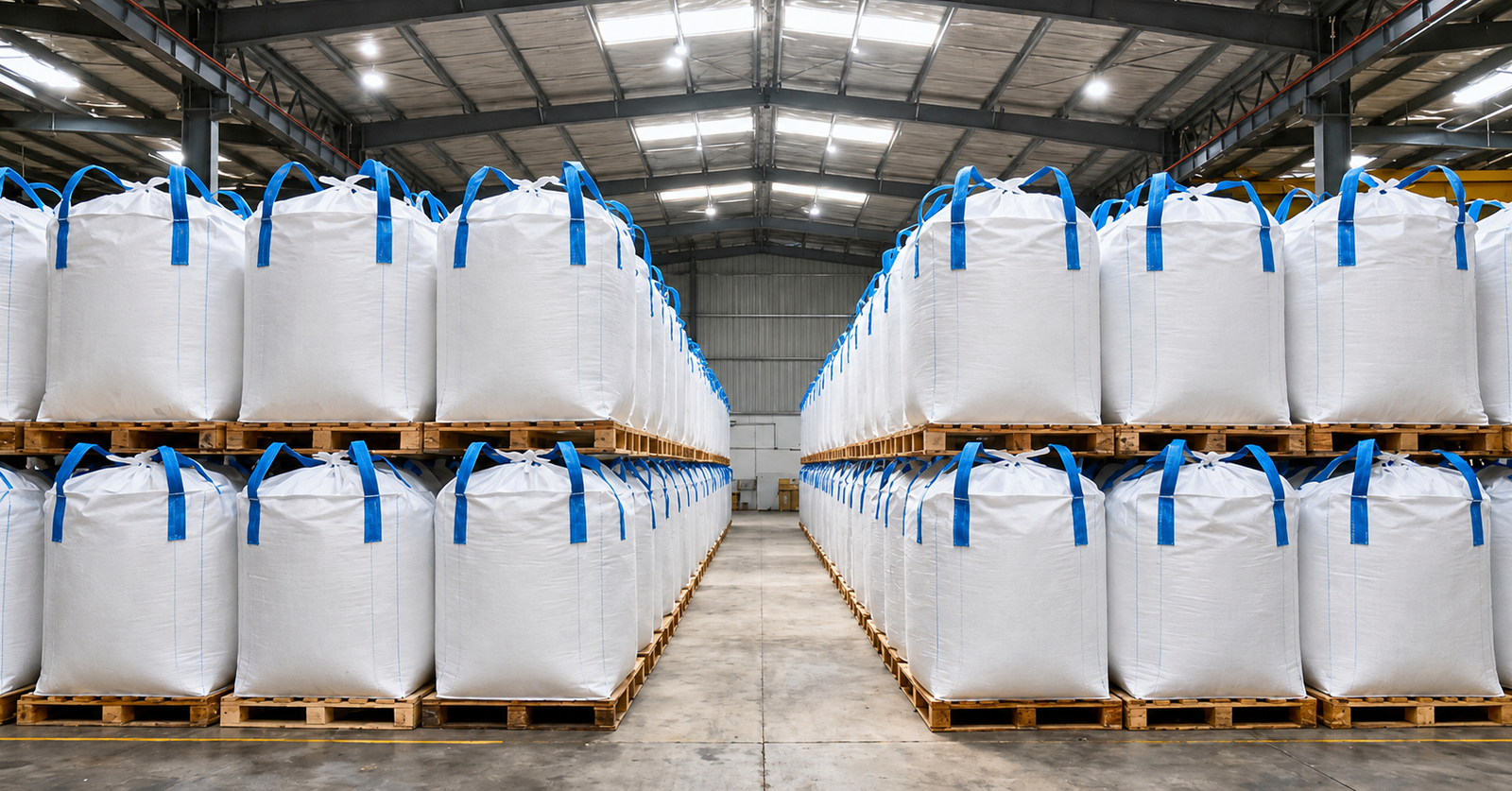
The Science Behind the Need
Why UV Stabilisation is
Non-Negotiable for FIBC Bags
Polypropylene, while mechanically robust, is inherently photosensitive. UV rays between 290–400 nm — Norrish Type I & II — that cleave polymer backbone bonds, causing catastrophic loss of elongation, tensile strength, and impact resistance. For FIBC bags exposed to open-air storage, this is a critical safety risk.
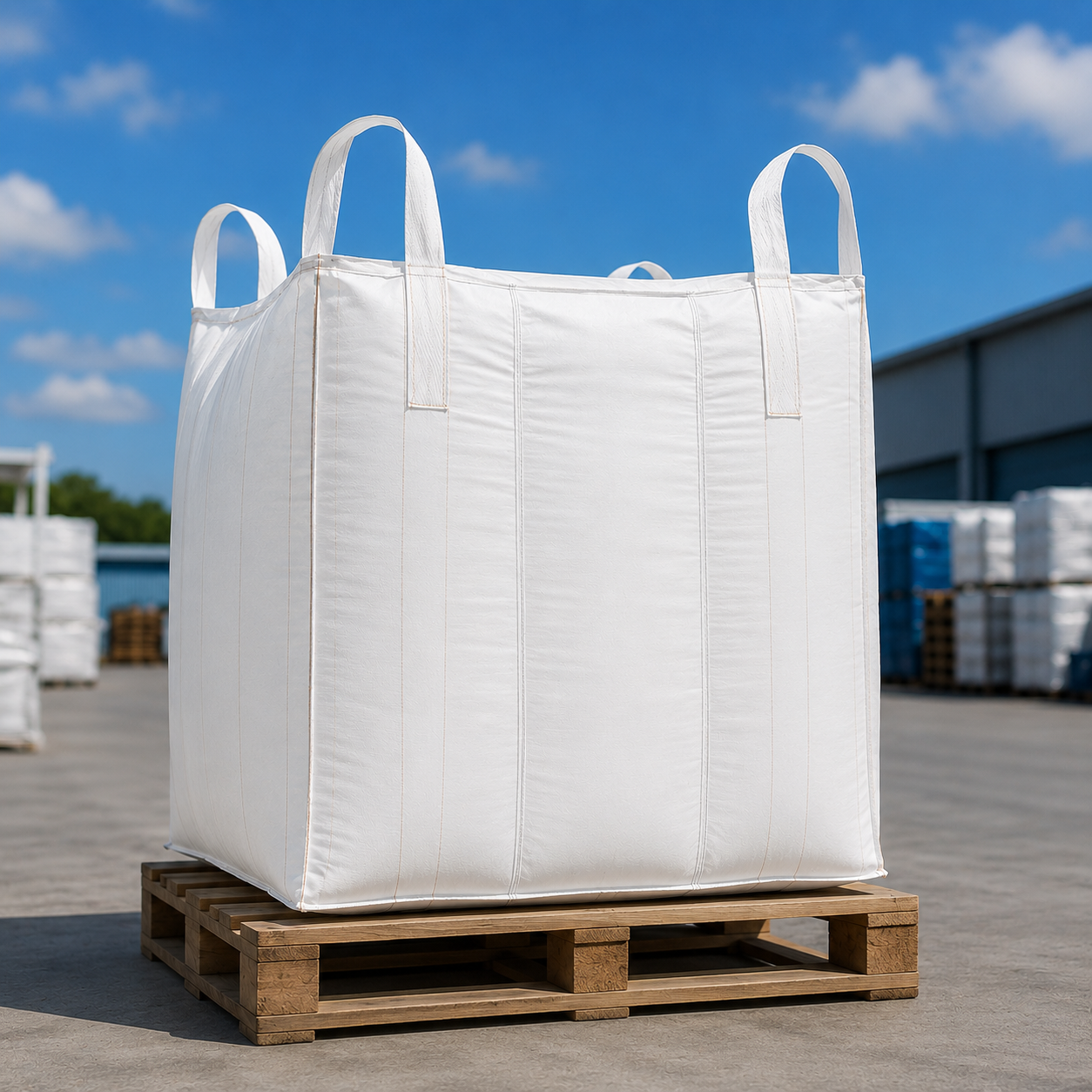
Photochemical Degradation Pathway
How Ultraviolet Radiation Destroys Polypropylene at the Molecular Level
- UV photons (290–360 nm) are absorbed by PP chromophores, exciting electrons to singlet state and initiating hydroperoxide formation via alkyl radical intermediates.
- Hydroperoxides (ROOH) decompose homolytically at elevated temperatures, generating alkoxy (RO•) and peroxy (ROO•) radicals that propagate chain scission.
- Norrish Type II reactions create terminal vinyl unsaturation (C=C), accelerating subsequent oxidation cycles and increasing carbonyl index (CI) exponentially.
- Macroscopic consequences include surface chalking, micro-cracking, brittleness at seams and lift loops, and ultimately catastrophic delamination of woven PP tapes.
- Without HALS or UV Absorber intervention, this degradation cascade reduces elongation at break from >25% to <5% within 400 hours of xenon arc exposure.
FIBC Classification
Types of Bulk Bags & Their
UV Stabilisation Requirements
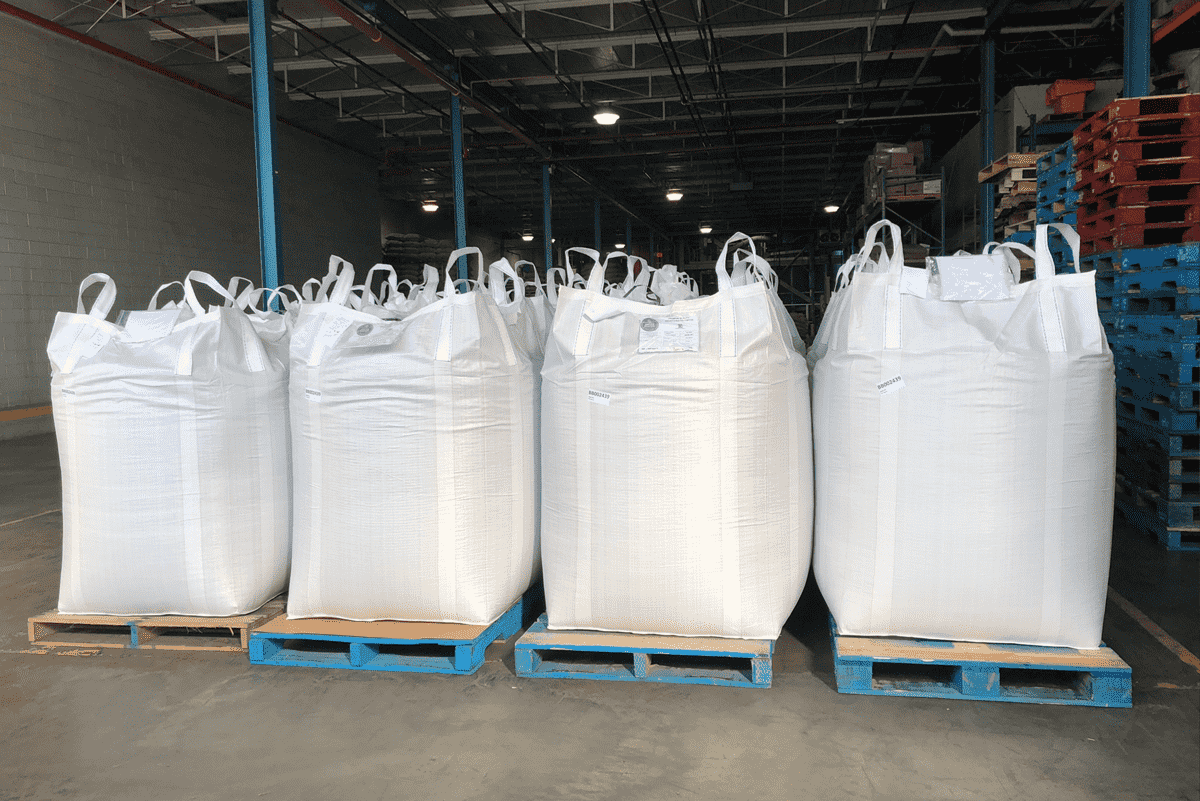
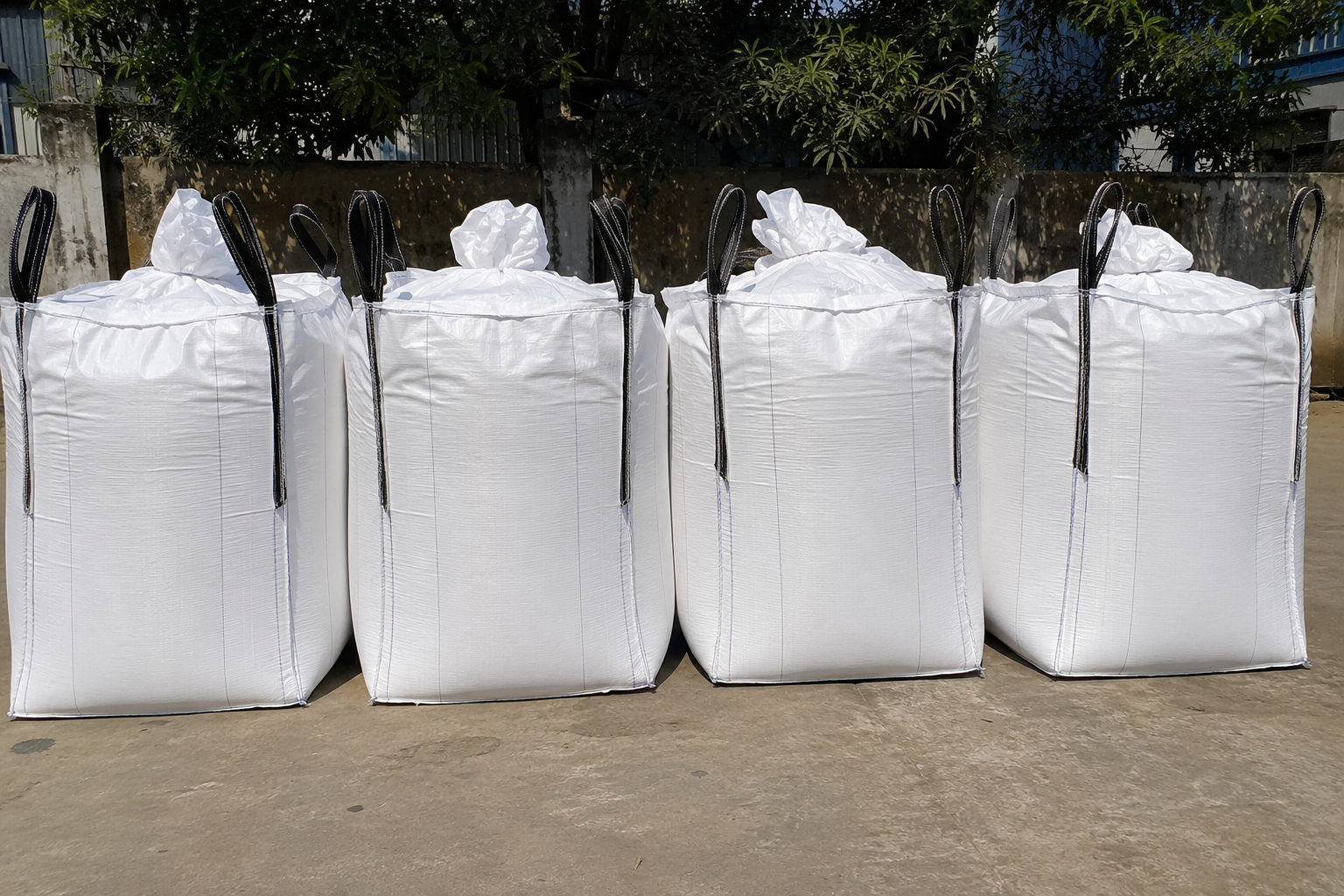
The ISO 21898 and EFIBCA standards classify FIBC bags into four types — A, B, C, and D — each with distinct electrostatic and structural requirements, all of which benefit critically from targeted UV stabilisation.
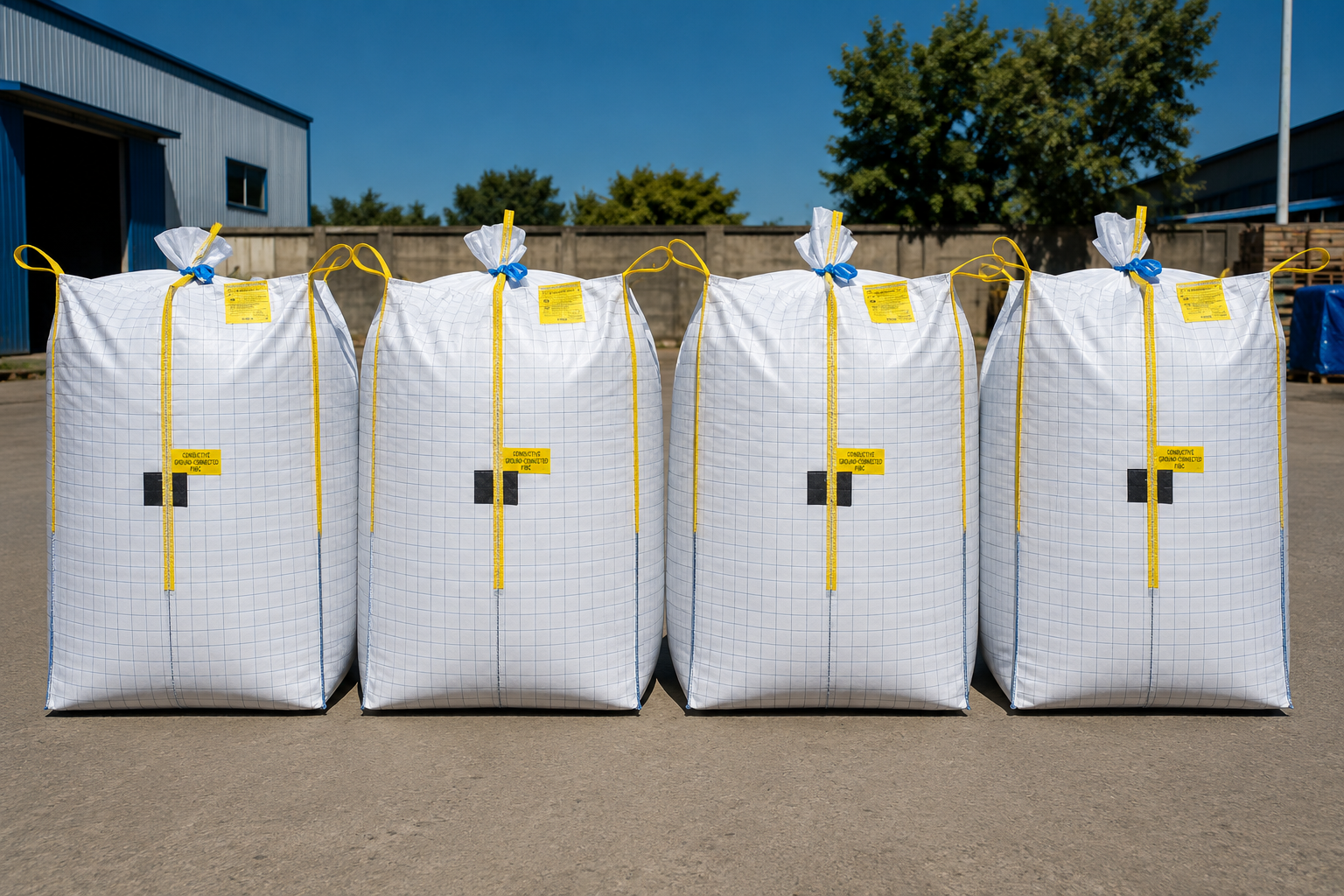
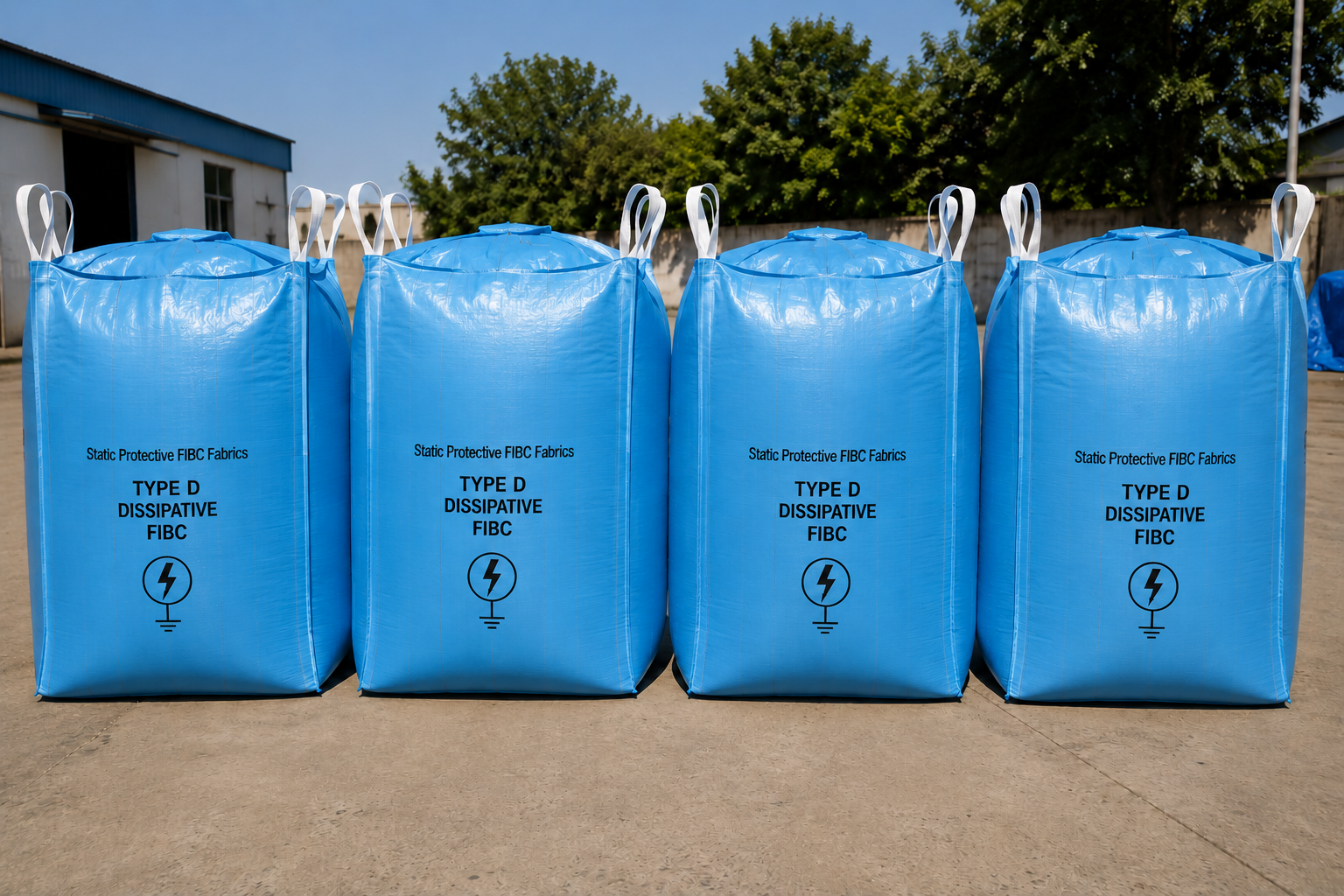
Photostabilisation Chemistry
Three Pillars of UV Protection
in Bajaj Masterbatch
Bajaj UV Masterbatch incorporates a synergistic combination of HALS, UV Absorbers, and Antioxidants — each targeting a distinct phase of the photo-oxidative degradation cascade.
Production Technology
Manufacturing Process of
FIBC Bags with UV Masterbatch
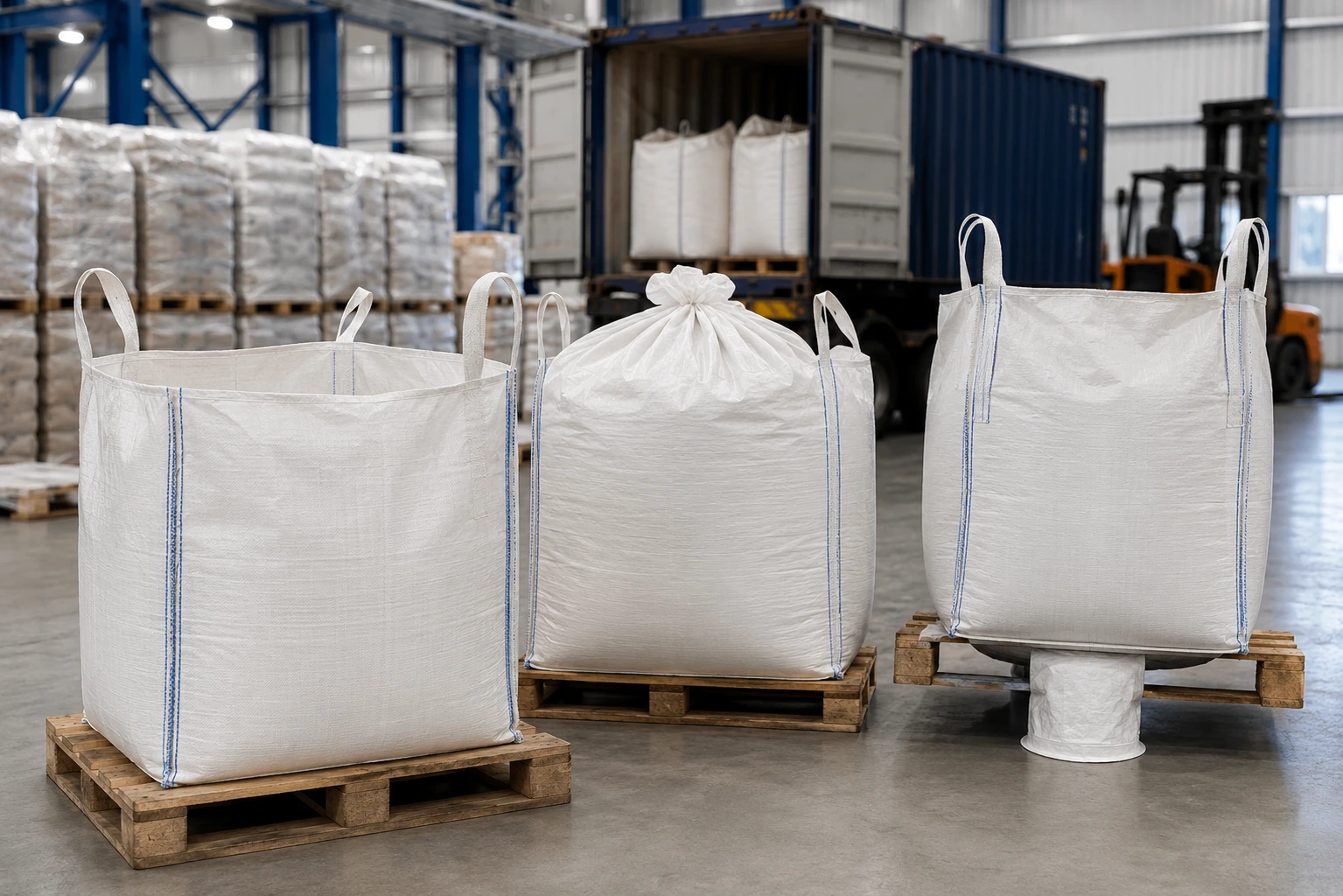
The integration of Bajaj UV Masterbatch into FIBC production begins at the primary extrusion stage and continues through weaving, lamination, and conversion — ensuring homogeneous photostabiliser distribution throughout the entire fabric matrix.
Measured Performance
Quantified Results After
Bajaj UV Masterbatch
Bajaj's UV masterbatch formulations have been validated against unstabilised PP controls and competitive alternatives across FIBC manufacturers in Gujarat, Maharashtra, and Andhra Pradesh.
"UV-stabilised FIBC bags retain 70–90% tensile strength even after months of direct solar exposure — compared to less than 50% for non-stabilised alternatives."
Bajaj Masterbatch Field Performance Data — UV Stabilised FIBC Programme
After-Treatment Performance
Key Features of FIBC Bulk Bags
with Bajaj UV Masterbatch
Critical Importance
Key Benefits & Importance of
UV Masterbatch for Bulk Bags
The Bajaj Advantage
Why Bajaj UV Masterbatch for FIBC Bulk Bags
Bajaj Masterbatch brings over three decades of polymer additive expertise, application-specific formulation capability, and a deep understanding of FIBC manufacturing process constraints.
Performance Benchmarking
Bajaj UV Masterbatch vs Standard
& Unstabilised PP
Application Sectors
 BAJAJ PLAST PVT LTD